
The French have been menacing the British-held …
Years: 1756 - 1756
May
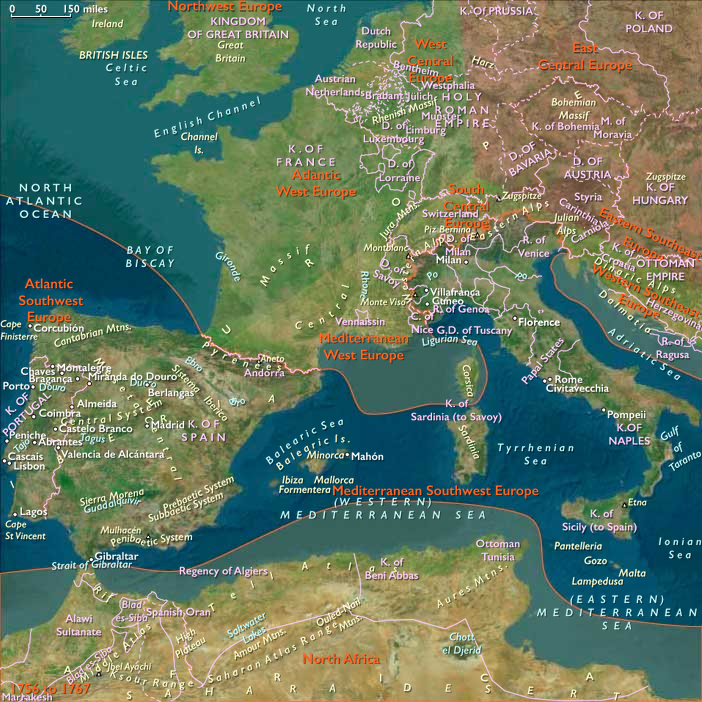
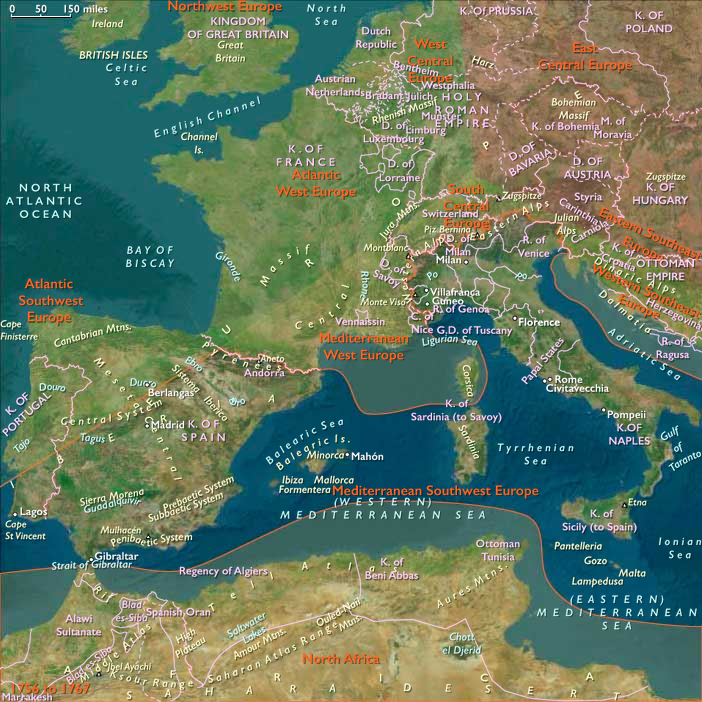
The French have been menacing the British-held garrison on Minorca, which had come under British control during the War of the Spanish Succession in 1708.
On the approach of the Seven Years' War, it had been threatened by a French naval attack from Toulon, and is invaded in 1756.
Great Britain and France had commenced hostilities in the New World colonies earlier in 1754 (the French and Indian War), and at this point the conflict is going poorly for Great Britain.
The government is anxious to protect her presence closer to home, and is concerned that the French might even be planning to invade Great Britain themselves (as France had attempted in previous wars by supporting the Stuart claimants to the throne during the Jacobite Wars).
The long-expected French move on Minorca finally causes the British government to act, albeit too belatedly, and a squadron of ten ships of the line has been dispatched from Gibraltar to its defense, under the command of Vice-Admiral John Byng, who had quickly been promoted to Admiral for the purpose.
Byng, serving in the Channel at the time, had been ordered to the Mediterranean to relieve the British garrison of Fort St Philip, at Port Mahon.
Despite his protests, he had been given insufficient money and time to prepare the expedition properly.
His fleet had been delayed in Portsmouth for five days while additional crew were found.
By April 6, the ships had been sufficiently manned and put to sea, arriving at Gibraltar on May 2.
Byng's marines had been landed to make room for the soldiers who were to reinforce the garrison, and he fears that, if he meets a French squadron, he will be dangerously undermanned.
His correspondence shows that he left prepared for failure, that he did not believe that the garrison could hold out against the French force, and that he was already resolved to come back from Minorca if he found that the task presented any great difficulty.
He writes home to that effect to the Admiralty from Gibraltar, whose governor refuses to provide soldiers to increase the relief force.
Byng sails on May 8, 1756.
On the approach of the Seven Years' War, it had been threatened by a French naval attack from Toulon, and is invaded in 1756.
Great Britain and France had commenced hostilities in the New World colonies earlier in 1754 (the French and Indian War), and at this point the conflict is going poorly for Great Britain.
The government is anxious to protect her presence closer to home, and is concerned that the French might even be planning to invade Great Britain themselves (as France had attempted in previous wars by supporting the Stuart claimants to the throne during the Jacobite Wars).
The long-expected French move on Minorca finally causes the British government to act, albeit too belatedly, and a squadron of ten ships of the line has been dispatched from Gibraltar to its defense, under the command of Vice-Admiral John Byng, who had quickly been promoted to Admiral for the purpose.
Byng, serving in the Channel at the time, had been ordered to the Mediterranean to relieve the British garrison of Fort St Philip, at Port Mahon.
Despite his protests, he had been given insufficient money and time to prepare the expedition properly.
His fleet had been delayed in Portsmouth for five days while additional crew were found.
By April 6, the ships had been sufficiently manned and put to sea, arriving at Gibraltar on May 2.
Byng's marines had been landed to make room for the soldiers who were to reinforce the garrison, and he fears that, if he meets a French squadron, he will be dangerously undermanned.
His correspondence shows that he left prepared for failure, that he did not believe that the garrison could hold out against the French force, and that he was already resolved to come back from Minorca if he found that the task presented any great difficulty.
He writes home to that effect to the Admiralty from Gibraltar, whose governor refuses to provide soldiers to increase the relief force.
Byng sails on May 8, 1756.
Locations
People
Groups
- Austria, Archduchy of
- Brunswick-Wolfenbüttel, Duchy of
- Saxony, Electorate of
- Holy Roman Empire
- Hesse-Kassel, Landgraviate of
- France, (Bourbon) Kingdom of
- Bavaria, Electorate of
- Brunswick-Lüneburg, Electorate of (Electorate of Hanover)
- Spain, Bourbon Kingdom of
- Prussia, Kingdom of
- Britain, Kingdom of Great
- Russian Empire
Topics
Commodoties
Subjects
Regions
Subregions
Related Events
Showing 10 events out of 26811 total
Years: 1756 - 1756
May
Locations
People
Groups
- Austria, Archduchy of
- Brunswick-Wolfenbüttel, Duchy of
- Saxony, Electorate of
- Holy Roman Empire
- Hesse-Kassel, Landgraviate of
- France, (Bourbon) Kingdom of
- Bavaria, Electorate of
- Brunswick-Lüneburg, Electorate of (Electorate of Hanover)
- Spain, Bourbon Kingdom of
- Prussia, Kingdom of
- Britain, Kingdom of Great
- Russian Empire
Topics
Commodoties
Subjects
Regions
Subregions