
The Congress of Vienna, led by Prince …
Years: 1814 - 1814
November
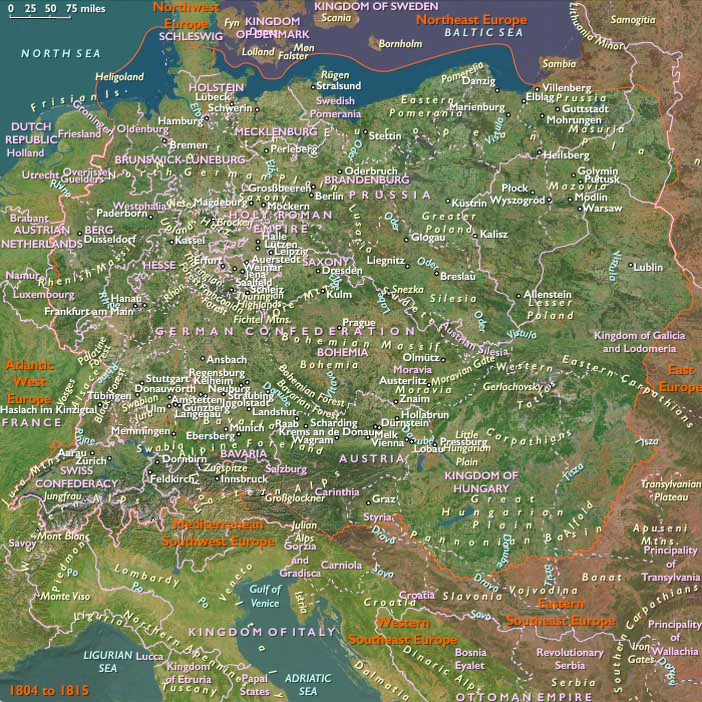
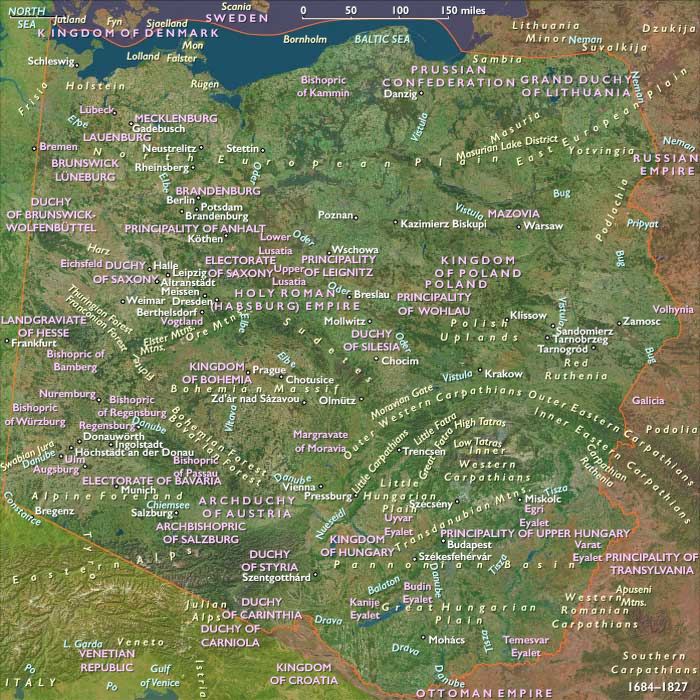
The Congress of Vienna, led by Prince Klemens von Metternich, formally opens in Austria on November 21 to settle the many issues arising from the French Revolutionary Wars, the Napoleonic Wars, and the dissolution of the Holy Roman Empire, with the European powers agreeing upon the redrawing of national borders following the victory over France; it will last until June 9, 1815.
The Treaty of Chaumont in 1814 has reaffirmed decisions that had been made already and that will be ratified by this more important Congress.
They include the establishment of a confederated Germany, the division of Italy into independent states, the restoration of the Bourbon kings of Spain, and the enlargement of the Netherlands to include what in 1830 will become modern Belgium.
The Treaty of Chaumont became the cornerstone of the European Alliance that formed the balance of power for decades.
Other partial settlements had already occurred at the Treaty of Paris between France and the Sixth Coalition, and the Treaty of Kiel that covered issues raised regarding Scandinavia.
The Treaty of Paris had determined that a "general congress" should be held in Vienna and that invitations would be issued to "all the Powers engaged on either side in the present war".
The opening had been scheduled for July 1814.
The Treaty of Chaumont in 1814 has reaffirmed decisions that had been made already and that will be ratified by this more important Congress.
They include the establishment of a confederated Germany, the division of Italy into independent states, the restoration of the Bourbon kings of Spain, and the enlargement of the Netherlands to include what in 1830 will become modern Belgium.
The Treaty of Chaumont became the cornerstone of the European Alliance that formed the balance of power for decades.
Other partial settlements had already occurred at the Treaty of Paris between France and the Sixth Coalition, and the Treaty of Kiel that covered issues raised regarding Scandinavia.
The Treaty of Paris had determined that a "general congress" should be held in Vienna and that invitations would be issued to "all the Powers engaged on either side in the present war".
The opening had been scheduled for July 1814.
Locations
People
- Arthur Wellesley, 1st Duke of Wellington
- Charles Maurice de Talleyrand-Périgord
- Charles XIII of Sweden
- Frederick VI of Denmark and Norway
- Karl Nesselrode
- Klemens von Metternich
- Robert Stewart, Viscount Castlereagh
- Wilhelm von Humboldt
Groups
- Papal States (Republic of St. Peter)
- Portuguese Empire
- Sweden, (second) Kingdom of
- Denmark-Norway, Kingdom of
- Norway, dependent Danish kingdom of
- Portugal, Bragança Kingdom of
- Prussia, Kingdom of
- Mecklenburg-Schwerin, (restored) Duchy of
- Pomerania, Swedish
- Russian Empire
- Netherlands, Southern (French)
- Britain (United Kingdom of Great Britain and Ireland)
- Switzerland
- France, (first) Empire of
- Austrian Empire
- Italy, Bonapartist Kingdom of
- Bavaria, Kingdom of
- Württemberg, Kingdom of
- United Netherlands, Sovereign Principality of the
- Spain, Bourbon Kingdom (first restoration) of
- Denmark, Kingdom of
- Norway, dependent Swedish kingdom of
- Sweden and Norway, Union between the Kingdoms of
- Hanover, Kingdom of
Topics
Subjects
Regions
Subregions
Related Events
Showing 10 events out of 21089 total
Years: 1814 - 1814
November
Locations
People
- Arthur Wellesley, 1st Duke of Wellington
- Charles Maurice de Talleyrand-Périgord
- Charles XIII of Sweden
- Frederick VI of Denmark and Norway
- Karl Nesselrode
- Klemens von Metternich
- Robert Stewart, Viscount Castlereagh
- Wilhelm von Humboldt
Groups
- Papal States (Republic of St. Peter)
- Portuguese Empire
- Sweden, (second) Kingdom of
- Denmark-Norway, Kingdom of
- Norway, dependent Danish kingdom of
- Portugal, Bragança Kingdom of
- Prussia, Kingdom of
- Mecklenburg-Schwerin, (restored) Duchy of
- Pomerania, Swedish
- Russian Empire
- Netherlands, Southern (French)
- Britain (United Kingdom of Great Britain and Ireland)
- Switzerland
- France, (first) Empire of
- Austrian Empire
- Italy, Bonapartist Kingdom of
- Bavaria, Kingdom of
- Württemberg, Kingdom of
- United Netherlands, Sovereign Principality of the
- Spain, Bourbon Kingdom (first restoration) of
- Denmark, Kingdom of
- Norway, dependent Swedish kingdom of
- Sweden and Norway, Union between the Kingdoms of
- Hanover, Kingdom of
Topics
Subjects
Regions
Subregions