
The Treaty of Bonn, which calls itself …
Years: 921 - 921
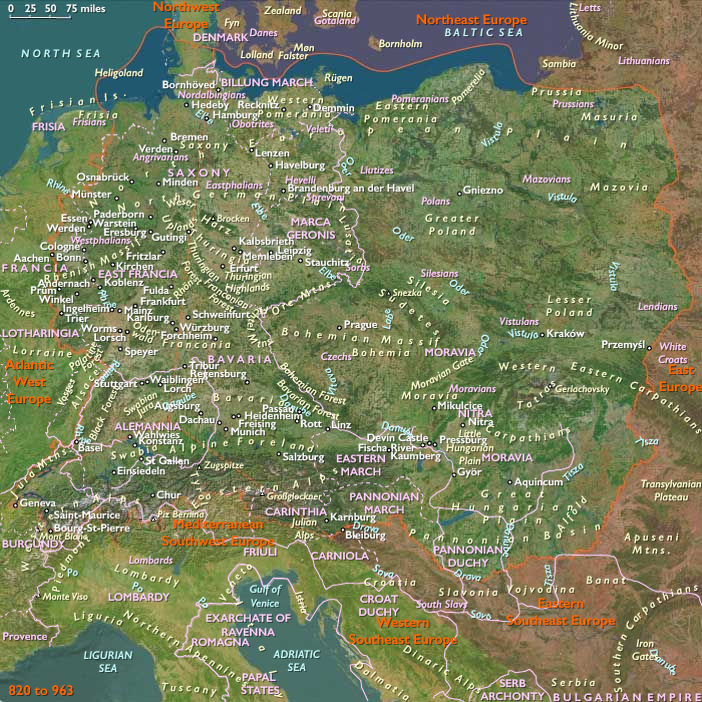
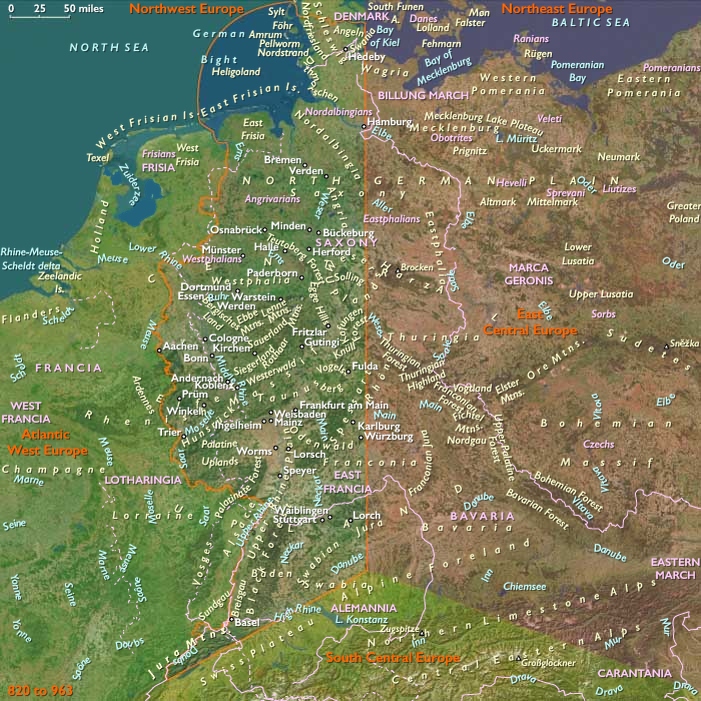
The Treaty of Bonn, which calls itself a "pact of friendship" (amicitia), is signed between Charles III of France and Henry I of Germany on November 7, 921, in a brisk ceremony aboard a ship in the middle of the Rhine not far from Bonn.
The use of the river, which is the border between their two kingdoms, as a neutral territory has extensive Carolingian precedents and was also used in classical antiquity and in contemporary Anglo-Saxon England.
The treaty recognizes the border of the two realms and the authority of their respective kings.
It confirms the legitimacy of Henry's election by the German princes and of Charles's rule over Lotharingia through the election by its princes.
In the treaty, Henry is titled rex Francorum orientalium (King of the East Franks) and Charles rex Francorum occidentalium (King of the West Franks) in recognition of the division it makes of the former Frankish Empire.
Charles and his bishops and counts sign first, both because he has been king longer and because he is of Carolingian stock.
Locations
People
Groups
- Franks
- Germans
- Francia Occidentalis (West Francia, or France), Kingdom of
- Francia Orientalis (East Francia), Kingdom of
- Lotharingia, Duchy of
Subjects
Regions
Subregions
Related Events
Showing 10 events out of 53292 total
Years: 921 - 921
Locations
People
Groups
- Franks
- Germans
- Francia Occidentalis (West Francia, or France), Kingdom of
- Francia Orientalis (East Francia), Kingdom of
- Lotharingia, Duchy of
Subjects
Regions
Subregions