
The traditional European warfare method of hand-to-hand …
Years: 1241 - 1241
April
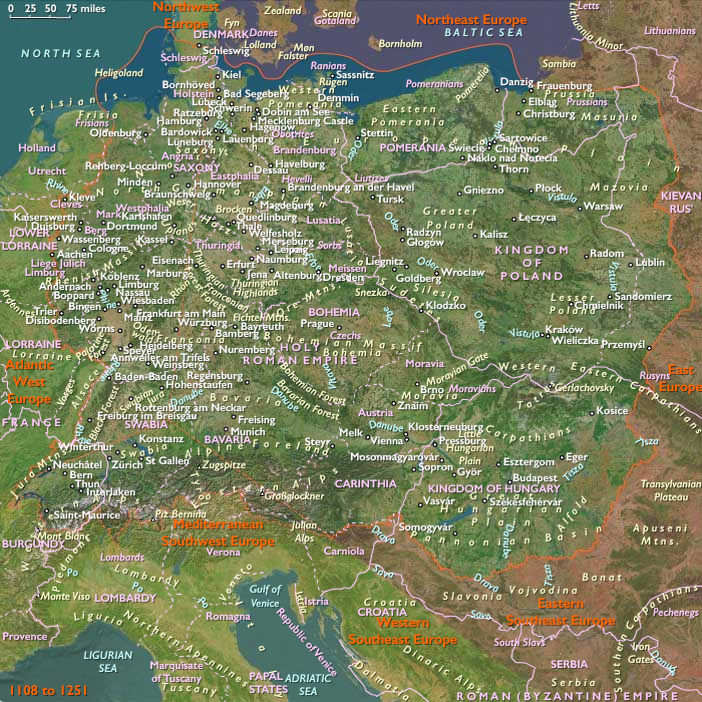
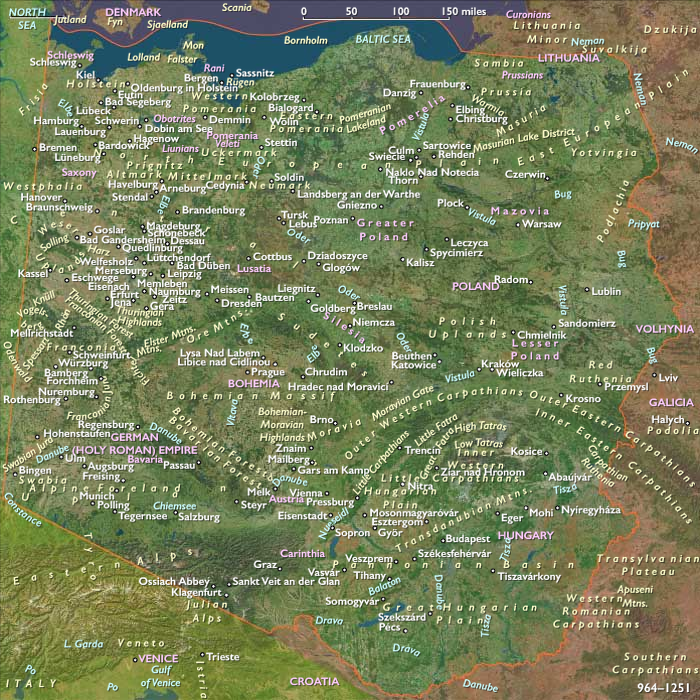
The traditional European warfare method of hand-to-hand combat between knights ends in catastrophe when it is deployed against the Mongol forces, as the Mongols are able to keep a distance and triumph with superior tactics.
The Mongol diversionary force, a detachment (no more than two tumens) from the army of Subutai, demonstrates the advantages of the tactical mobility and speed of horseback archers.
The Mongol tactics are essentially a long series of feigned attacks and faked withdrawals from widely dispersed groups, which are designed to inflict a constant slow drain by ranged fire, disrupt the enemy formation and draw larger numbers away from the main body into ambush and flank attacks.
These standard Mongol tactics, used in virtually all of their major battles, are made possible by continual training and superb battlefield communication, which uses a system of flags.
The Mongol commander finds the highest ground at the battle site, seizes it and uses it to communicate to his noyans and lesser commanders their orders for troop movement.
The Mongol system is a stark contrast to the European systems, in which knights advance with basically no communication with supporting forces.
Henry divides his forces into four sections: the Bavarian miners led by Boleslav of Moravia; the conscripts from Greater Poland along with some Krakovians led by Sulislaw; the brother of the slain palatine of Kraków; the army of Opole under Mieszko, possibly with some Teutonic Knights; and, under Henry's personal command, the Silesians, Moravians, Templars and Hospitallers.
The Mongols have much success in the battle by feigning their retreat.
After the European knights detach from the main body of allied forces in pursuit of the fleeing Mongols, the invaders are able to separate the knights from the European infantry and defeat them one by one.
The army of Henry II is almost destroyed—Henry and Boleslav of Moravia are killed and estimates of casualties range from two thousand to forty thousand, essentially the entire army.
The Templar Grand Master Ponce d'Aubon will report to King Louis IX of France that the military order had lost five hundred of their number, among them nine brothers, three knights and two sergeants.
Mongol casualties are unknown; a perfect execution of their standard tactics would have minimized losses, but the Mongols endured sufficient casualties to dissuade them from attacking the Bohemian army.
Henry had been struck down and beheaded while attempting to flee the battlefield with three bodyguards, and the Mongols parade his head on a spear before the town of Legnica, which resists entry.
The Mongols flatten it.
The Mongols do not take Legnica castle, but have a free rein to pillage and plunder Silesia, before moving off to join their main forces in Hungary.
Locations
People
- Batu Khan
- Boleslaw V the Chaste
- Béla IV
- Frederick II, Duke of Austria and Duke of Styria
- Henry II of Silesia
- Subutai
- Wenceslaus I of Bohemia
Groups
- Germans
- Hungarian people
- Slavs, West
- Poles (West Slavs)
- Hungary, Kingdom of
- Hospitallers of St. John of Jerusalem
- Templar, Knights (Poor Knights of Christ and of the Temple of Solomon)
- Mongols
- Poland during the period of fragmentation, Kingdom of
- Austria, Archduchy of
- Moravian Margravate
- Teutonic Knights of Acre (House of the Hospitalers of Saint Mary of the Teutons in Jerusalem)
- Bohemia, Kingdom of
- Mongol Empire
Topics
- Crusades, The
- Poland, Fragmentation of
- Mongol Conquests
- Mongol Invasion of Europe
- Mongol Invasion of Poland
- Legnica, (Liegnitz) or Wahlstadt, Battle of
Commodoties
Subjects
Regions
Subregions
Years: 1241 - 1241
April
Locations
People
- Batu Khan
- Boleslaw V the Chaste
- Béla IV
- Frederick II, Duke of Austria and Duke of Styria
- Henry II of Silesia
- Subutai
- Wenceslaus I of Bohemia
Groups
- Germans
- Hungarian people
- Slavs, West
- Poles (West Slavs)
- Hungary, Kingdom of
- Hospitallers of St. John of Jerusalem
- Templar, Knights (Poor Knights of Christ and of the Temple of Solomon)
- Mongols
- Poland during the period of fragmentation, Kingdom of
- Austria, Archduchy of
- Moravian Margravate
- Teutonic Knights of Acre (House of the Hospitalers of Saint Mary of the Teutons in Jerusalem)
- Bohemia, Kingdom of
- Mongol Empire
Topics
- Crusades, The
- Poland, Fragmentation of
- Mongol Conquests
- Mongol Invasion of Europe
- Mongol Invasion of Poland
- Legnica, (Liegnitz) or Wahlstadt, Battle of
Commodoties
Subjects
Regions
Subregions