
The Tower of Kamianiec, today often called …
Years: 1289 - 1289
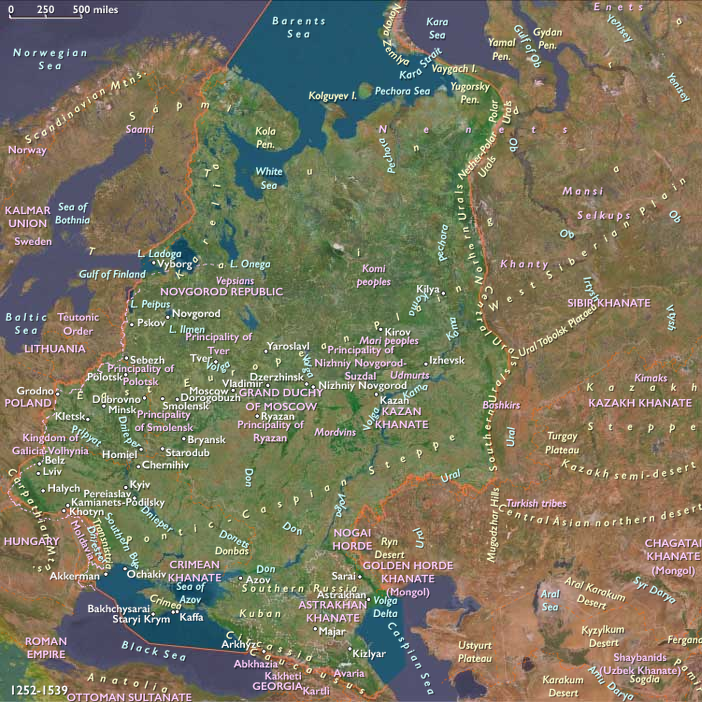
The Tower of Kamianiec, today often called by the misnomer the White Tower (Belarusian: Bielaya Vieža or Belaya Vezha), has been erected from 1271–1289 by the architect Oleksa as a frontier stronghold on the northern border of the principality of Volhynia.
It is the only such tower remaining to this day in the area.
The name Bielaja Vieža (Belaya Vezha), which literally means White Tower or White Fortress in Belarusian, presumably derives from the tower's proximity to the Belavezhskaya Pushcha Forest, but not from its color, which has been brick-red through the ages, never white.
The first record in the chronicles about the foundation of the tower dates from 1276.
It was erected in the 1270s.
The castle has been built as an enclosed community.
Like many European castles, it has a great round tower, on the raised mound (motte), enclosed by a moat and the river on the northern side, and an adjoining enclosure (bailey).
This type of the motte-and-bailey castle had appeared in the tenth and eleventh centuries between the Rhine and Loire rivers and eventually spread to most of western Europe and even to the area of the present Belarus.
The red-brick tower with service and residential rooms on five levels inside is actually a donjon or a keep, that will be quite common in France and England until the sixteenth century.
It is thirty meters (ninety-eight feet) high; the red brick walls are about 2.5 m (8.2 ft) thick, with a pitched roof at the top.
The tower is entirely built of brick, which makes it unique, as brick construction will rarely be used in this part of Europe until the close of the Middle Ages, as brick production is costly: until the sixteenth century, mostly rubbleworks will prevail in fortifications and churches and monasteries; only some parts of exteriors being built of brick.
The tower traces the influence of Western Europe, where brickwork is used extensively in the late thirteenth—early fourteenth century.
Unlike the narrow loopholes on lower levels, the pointed big lancet windows and niches on the upper floor are excellent examples of early Gothic architecture in Belarus.
The openings of the windows and niches are plastered and whitewashed.
The windows are designed to permit the entry of light into the apartments, where the nobility would live during sieges.
Glass windows are another contribution to Gothic architecture; the residents were apparently eager to make themselves at home in the keep.
The upper part of the tower is furnished with battlements and a pattern of surface modeling of the brickwork, several ring dog-tooth courses running below the battlements.
The brickwork features a peculiar Baltic bond: a course consists of two stretchers and one header.
Locations
Groups
Topics
Commodoties
Subjects
Regions

Subregions
Years: 1289 - 1289
Locations
Groups
Topics
Commodoties
Subjects
Regions
Subregions