
The tolerance of Jews in the Venetian …
Years: 1541 - 1541
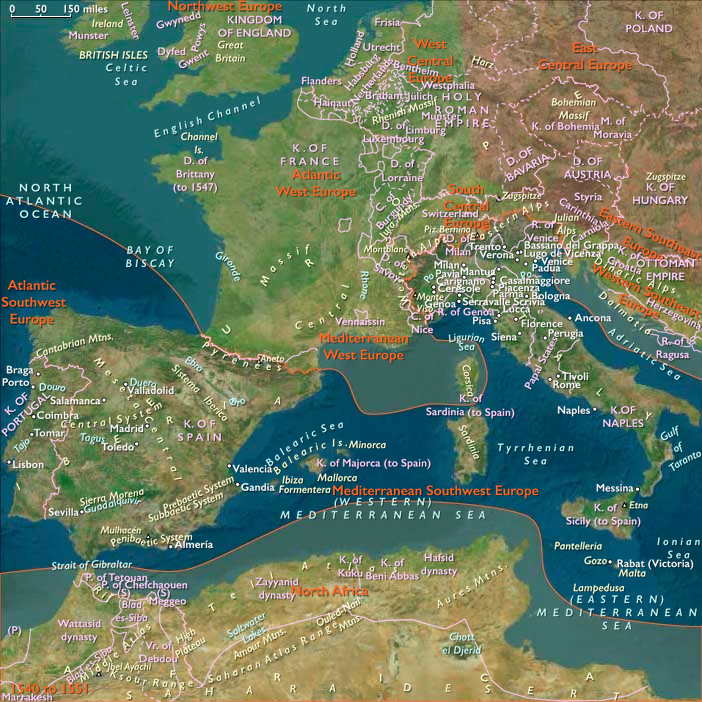
The tolerance of Jews in the Venetian Republic had come to an end following the 1509 influx of Sephardic Jews expelled from the Iberian Peninsula in 1492, and some public figures had talked of deporting or isolating the Venetian Jews.
The Jews of Venice had not been expelled, as had been the case in many European countries, but the Venetian Ghetto had been instituted in 1516 to contain them.
Surrounded by canals, the area is only linked to the rest of the city by two bridges, which are closed from midnight until dawn and during certain Christian festivals, when all Jews are required to stay in the Ghetto.
The area has such a dense population that – uniquely in Venice – buildings rise to six or more stories.
There are numerous benevolent institutions (today, the Jewish Ghetto is still home to five synagogues.
They are known for their interiors, the oldest, the Scuola Grande Tedesca, dating from 1528.
The Scola Levantina had been established in 1538.)
Despite the restrictions on movement and terribly cramped conditions, the Jewish population grows, and in 1541, the quarter is enlarged to cover the neighboring Ghetto Vecchio.
Because of the increased participation of Sephardic Jews in Balkan commerce, the Venetian Senate in 1541 grants Levantine Jews permission to reside in Venice.
This is an attempt by Italian princes to enrich themselves at the expense of local interests rather than to improve the lot of Jews.
Locations
Groups
Topics
Regions
Subregions
Related Events
Showing 10 events out of 36788 total
Years: 1541 - 1541
Locations
Groups
Topics
Regions
Subregions