The third Saxon kingdom, that of Wessex, …
Years: 519 - 519
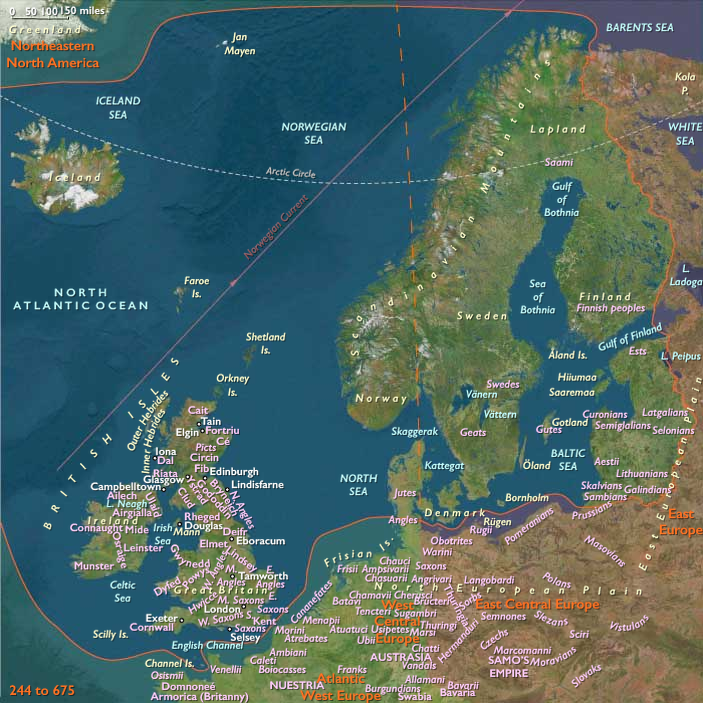
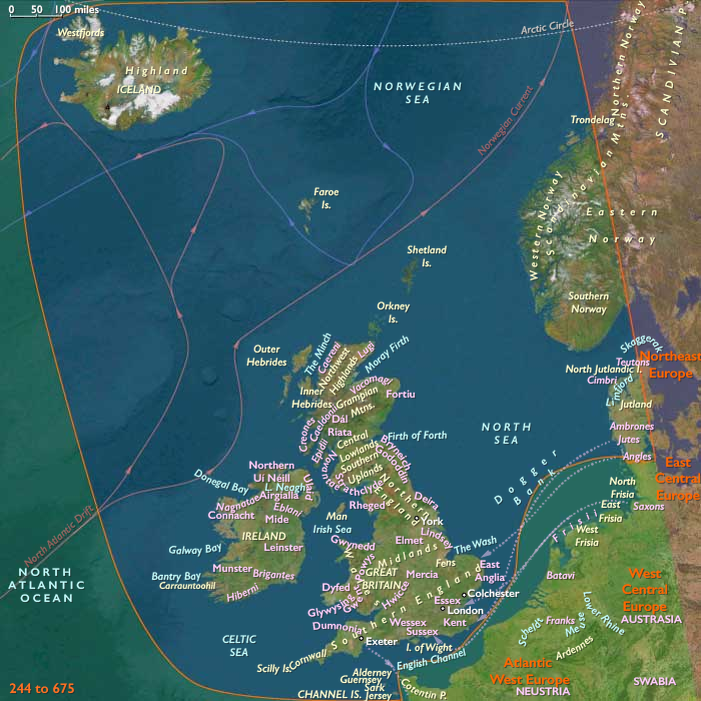
The third Saxon kingdom, that of Wessex, is established by 519.
Cerdic according to the Anglo-Saxon Chronicle becomes the first king of Wessex.
A line along the old Roman Road later called Fosse Way separates the Britons in the west from the Saxons in the east.
Locations
People
Groups
Topics
Commodoties
Subjects
Regions
Subregions
Related Events
Filter results
Showing 10 events out of 58191 total
A serious riot occurs in Luoyang in 519, after the official Zhang Zhongyu proposes that the civil service regulations be changed to disallow soldiers to become civilian officials.
The soldiers become angry and storm both the ministry of civil service and the mansion of Zhang Zhongyu's father, Zhang Yi, killing Zhang Yi and serious injuring Zhang Zhongyu and his brother Zhang Shijun.
Empress Dowager Hu arrests eight leaders of the riot and executes them but pardons the rest, to quell the unrest.
She also rejects the proposal to change the civil service regulations.
This event is often seen as the turning point and the start of the unrest that will eventually tear Northern Wei apart.
Despite these events, Empress Dowager Hu continues to tolerate corruption, and she often gives exuberant awards to officials, draining the treasury; the pressure on the treasury and the burden on the people are further increased by her orders that each province is to build a tower dedicated to the Buddha.
Sometime before 520, Empress Dowager had forced Emperor Xiaoming's uncle Yuan Yi the Prince of Qinghe, who is popular with the people and the officials because of his abilities and humility, to have an affair with her.
Yuan Yi thereafter becomes the effective leader of government, and he tries to reorganize the administration to decrease corruption.
He particularly tries to curb the powers of Empress Dowager Hu's brother-in-law Yuan Cha and the eunuch Liu Teng.
Yuan Cha therefore falsely accuses him of treason, but he is cleared after an investigation.
Fearful of reprisals, Yuan Cha and Liu persuade Emperor Xiaoming that Yuan Yi is trying to poison him and carried out a coup against Empress Dowager Hu and Yuan Yi, killing Yuan Yi and putting Empress Dowager Hu under house arrest.
Yuan Yong becomes titular regent, but Yuan Cha becomes the actual power.
Vitalian, once back in northern Thrace, had gone into hiding, while many of his erstwhile aides were captured and executed.
Nothing is known of him for the next three years, although a short remark by a chronicler seems to indicate that he resurfaced and led another armed rebellion during the last months of Anastasius's life.
Justin I, the new emperor, had quickly moved to strengthen his rule, dismissing a number of potential rivals or enemies.
At the same time, he had called upon Vitalian to come to Constantinople.
Upon his arrival, Vitalian is made magister militum in praesenti, named honorary consul, and soon after raised to the rank of patricius.
As a well-known champion of Chalcedonian orthodoxy, Vitalian is to play a role in the new regime's reaffirmation of the Chalcedonian doctrines and reconciliation with Rome.
He plays an active role in the negotiations with the Pope, and in 519, he is one of the prominent men who escorts a papal delegation into the capital.
On March 28, the Eastern and Western churches reconcile their differences, ending the Acacian Schism.
Jabalah, the son of Ghassanid ruler Al-Harith (Arethas in Greek sources) and grandson of the sheikh Tha'laba, first appeares in the historical sources in 498 during the reign of Eastern Roman emperor Anastasius I, when, according to Theophanes the Confessor, the Diocese of the East suffered from large-scale Arab raids.
The head of one of the Arab groups invading imperial territory was Jabalah, who raided Palestine before being defeated and driven back by the Imperial dux, Romanus.
Romanus then proceeded to evict the Ghassanids from the island of Iotabe (modern Tiran), which controlled trade with the Red Sea and which had been occupied by the Arabs since 473.
After a series of hard-fought engagements, the island returned to Imperial control.
Anastasius had concluded a treaty of alliance in 502 with the Kindaites and Ghassanids, turning them into imperial allies (foederati).
With the outbreak of the Anastasian War against Sassanid Persia, the Ghassanids had fought on Constantinople’s side, although only one operation, an attack against the Lakhmid capital of Hirah in July 513, is explicitly attributed to them.
The Ghassanids have settled deep inside the Roman limes, and in a Syriac source for July 519 they are attested as having their "opulent" headquarters at al-Jabiya (Gabitha) in the Gaulanitis (Golan Heights), where Jabalah had succeeded his father as king over his tribe.
The Romans, after the devastating earthquake of 518, rebuild a Greek colony called Lychnidos, which by the second century had become a post on the Via Aegnatia to Bitola and Greece.
Christians torch synagogues in Ravenna in 519, after which Theodoric compels the city government to pay for rebuilding.
A rebellion against the Yamato court in 527 In Japan's Tsukushi Province (now nearby Ogori city in Fukuoka Prefecture) is named after its leader, Iwai, who is believed by historians to have been a powerful governor of Tsukushi.
Quelled by the Yamato court, the rebellion plays an important part in the consolidation of early Japan.
East Central Europe (520–531 CE): Gepid-Lombard Rivalry, Frankish Influence, and Regional Realignments
Between 520 and 531 CE, East Central Europe—including Poland, Czechia, Slovakia, Hungary, and those portions of Germany and Austria lying east of 10°E and north of a line stretching from roughly 48.2°N at 10°E southeastward to the Austro-Slovenian border near 46.7°N, 15.4°E—entered a period characterized by increasing rivalry and periodic conflict between the dominant Gepids and their expanding Lombard (Langobardi) neighbors. This era witnessed heightened external interest from the Frankish kingdom to the west and the Byzantine Empire to the southeast, influencing regional political dynamics. Amid these shifting alliances and rivalries, important regional settlements such as Augusta Vindelicorum (Augsburg) continued to grow, serving as strategic commercial and administrative centers. Concurrently, proto-Slavic communities maintained their cultural resilience and adaptive stability.
Political and Military Developments
Intensified Gepid-Lombard Rivalry
-
Rivalry between the Gepids and Lombards intensified notably during this period, frequently erupting into armed conflicts. This competition shaped territorial boundaries and influenced regional alliances, contributing to sustained geopolitical instability, especially around the central Carpathian Basin and adjacent regions.
Increasing Frankish and Byzantine Involvement
-
The growing strength of the Frankish kingdom to the west and strategic interests of the Byzantine Empire in the southeast became more prominent during this era, influencing the regional balance of power. Both powers sought diplomatic relationships with the Gepids and Lombards to advance their interests and counter each other's influence in East Central Europe.
Regional Realignments and Stabilization
-
Despite frequent conflicts, both Gepid and Lombard territories experienced internal consolidation, creating more clearly defined spheres of control. Territories such as modern eastern Austria, western Hungary, and Czechia came increasingly under Lombard influence, while central and eastern Hungary remained Gepid strongholds.
Economic and Technological Developments
Stability and Regional Trade Expansion
-
Increased political consolidation in both Gepid and Lombard territories allowed further expansion and stability of regional trade networks, notably linking centers such as Augusta Vindelicorum (Augsburg), Vindobona, Carnuntum, and Aquincum. Local economies experienced modest growth through stable agricultural production, livestock raising, and strengthened commercial exchanges.
Continued Infrastructure Maintenance
-
Infrastructure such as roads and fortifications continued receiving limited maintenance and improvements under Gepid and Lombard authority, primarily to ensure military mobility, communication, and regional trade.
Cultural and Artistic Developments
Gepid-Lombard Cultural Exchanges
-
Cultural and artistic expression reflected the intensified interactions between Gepid and Lombard communities. Material culture—particularly jewelry, weaponry, and pottery—showcased blended Germanic traditions, incorporating Gepid and Lombard styles along with subtle Frankish and Byzantine influences.
Proto-Slavic Cultural Resilience
-
Proto-Slavic communities maintained strong cultural continuity, carefully absorbing external influences while preserving traditional communal structures, religious practices, and craftsmanship.
Settlement and Urban Development
Growth of Augusta Vindelicorum (Augsburg)
-
Augusta Vindelicorum (Augsburg) continued thriving as a significant regional urban and commercial center, benefiting from increased stability, trade, and connectivity fostered by the region’s growing political coherence.
Continued Importance of Regional Settlements
-
Key settlements, including former Roman towns such as Carnuntum, Vindobona, and Aquincum, maintained their regional significance, providing vital administrative, military, and economic functions under stable Gepid and Lombard rule.
Social and Religious Developments
Strengthened Tribal Elites among Gepids and Lombards
-
Social structures among the Gepids and Lombards solidified further, revolving around powerful warrior elites whose legitimacy rested upon military success, effective diplomacy, and adherence to traditional Germanic religious and cultural practices.
Proto-Slavic Social Cohesion and Stability
-
Proto-Slavic societies maintained stable internal cohesion, emphasizing community solidarity and continuity in traditional social and religious practices, successfully navigating external geopolitical pressures and maintaining cultural identity.
Long-Term Consequences and Historical Significance
The era 520–531 CE marked an essential period of political competition and cultural interaction in East Central Europe. Intensified Gepid-Lombard rivalry and increased diplomatic involvement from the Franks and Byzantines contributed significantly to shaping the region's geopolitical landscape. Concurrently, the ongoing growth of urban centers, continued maintenance of regional infrastructure, and enduring resilience of proto-Slavic communities provided vital continuity, laying the foundations for the complex cultural and political dynamics characteristic of the region's early medieval period.
Eastern Southeast Europe (520–531 CE): Urban Development, Economic Continuity, and Administrative Efficiency
Settlement and Migration Patterns
Urban Development
From 520 to 531 CE, the Eastern Roman Empire’s urban centers in Southeast Europe exhibited a blend of stability and new initiatives under Emperor Justin I and the early reign of Justinian I. Constantinople remained a thriving metropolis, home to hundreds of thousands of inhabitants with continuous construction projects. Although the most renowned projects of Justinian, such as the Hagia Sophia, began slightly after this period, infrastructure like streets, forums, and aqueducts were meticulously maintained, preparing for future embellishments.
Provincial cities such as Philippopolis in Thrace and Serdica in Dacia Mediterranea also experienced sustained urban life, recovering from earlier invasions and benefiting from imperial fortification efforts. By the 520s, Philippopolis retained its ancient theater and forum, repurposed for contemporary use, alongside new church and basilica constructions, indicating thriving urban communities. Justinian’s early policies aimed at fortifying cities across the Balkans, especially in strategic regions such as Moesia and Scythia, underscoring a commitment to urban resilience and regional stability.
Emerging Migration Pressures
Despite urban stability, imperial defenses began to falter as Slavic groups intensified incursions across the Danube River, troubling Balkan provinces. These raids, beginning prominently in the 520s, marked early signs of significant demographic and security challenges.
Economic and Technological Developments
Economic Continuity
Despite conflicts on the empire’s frontiers, Eastern Southeast Europe maintained notable economic activity. Constantinople served as a vital economic nexus, sustaining agricultural provinces and regional trade networks through its enormous demand for grain, oil, and textiles. The capital’s strategic position ensured continued commerce via the Black Sea and Mediterranean routes.
Regional trade routes like the Via Diagonalis continued facilitating movement of goods and troops, supporting local economies in cities such as Philippopolis and Serdica. Monetary circulation persisted, evidenced by coinage from Emperors Justin I and Justinian, highlighting economic stability and continuity.
Technological and Defensive Enhancements
Technological progress primarily centered around military infrastructure, with ongoing enhancements to city walls, fortifications, and logistical frameworks. Such innovations safeguarded urban centers and critical economic activities, reflecting an adaptive approach to emerging threats.
Cultural and Artistic Developments
Artistic and Cultural Vitality
Cultural life flourished with artistic production continuing to integrate classical and Christian motifs. Public monuments, religious architecture, and decorative arts enriched the region’s cultural landscape, affirming regional identity and heritage.
Intellectual Preservation
Educational and scholarly institutions actively preserved classical and theological knowledge, maintaining intellectual vitality and adapting scholarship to contemporary contexts. This period’s educational continuity was pivotal for sustaining regional cultural and intellectual life.
Social and Religious Developments
Administrative Efficiency
The Eastern Roman administration operated efficiently through centralized bureaucracy and a network of provincial officials and military commanders. Cities played crucial administrative roles, with provincial capitals like Philippopolis housing governors and coordinating local governance and defense.
The efficient administrative structure, exemplified by Justinian’s early legal reforms leading to the first edition of the Corpus Juris Civilis (528–529 CE), facilitated effective governance, communication, and rapid response to regional challenges.
Expanding Christian Influence
Christianity deepened its societal integration, with ecclesiastical infrastructure expansion significantly shaping cultural and political dynamics. Bishops in cities like Serdica, Philippopolis, and Adrianople played vital roles, overseeing charitable activities, representing civic interests, and enhancing community cohesion.
Long-Term Consequences and Historical Significance
The period 520–531 CE laid critical groundwork for future regional growth, marked by urban stability, economic resilience, and administrative efficiency. These developments provided a robust platform for subsequent Byzantine prominence, despite looming challenges from emerging migration pressures and military threats.

Imperial defenses disintegrate: the Slavs are already crossing the Danube River and troubling the Balkan provinces, and Emperor Justin proves unable to repel them.
Slavs begin to raid and settle south of the Danube in the region of present Bulgaria.
These raids assume massive proportions beginning in the 520s.