
The Third Samnite War had slowly wound …
Years: 285BCE - 274BCE
The Third Samnite War had slowly wound down after Rome's great victory at Sentinum, coming to an end in 290 BCE.
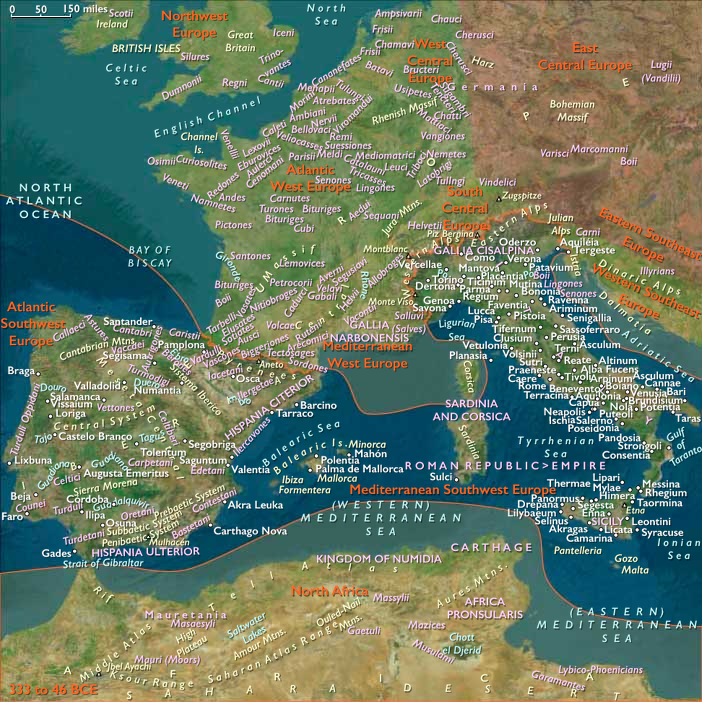
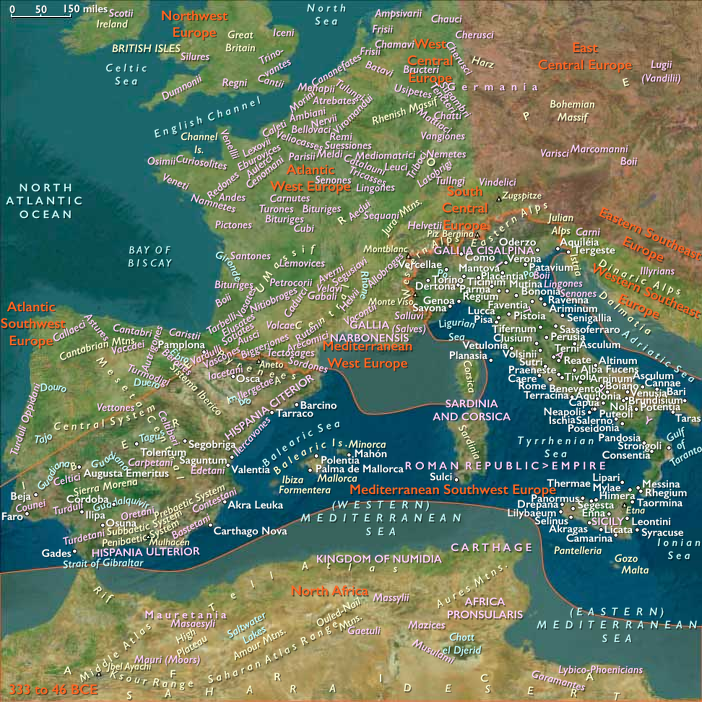
Rome emerges dominating all of the Italian peninsula except for the Greek cities in Italy's extreme south and the Po Valley—the Po Valley still being a land occupied by Gauls.
Rome had established itself as a major power on the Italian Peninsula by the beginning of the third century, but had not yet come into conflict with the dominant military powers in the Mediterranean Basin at the time: Carthage and the Greek kingdoms.
When a diplomatic dispute between Rome and a Greek colony erupts into open warfare in a naval confrontation, the Greek colony appeals for military aid to Pyrrhus, ruler of the northwestern Greek kingdom of Epirus.
Motivated by a personal desire for military accomplishment, Pyrrhus lands a Greek army of some twenty-five thousand men on Italian soil in 280 BCE.
Despite early victories, Pyrrhus finds his position in Italy untenable.
Rome steadfastly refuses to negotiate with Pyrrhus as long as his army remains in Italy.
Facing unacceptably heavy losses with each encounter with the Roman army, Pyrrhus withdraws from the peninsula (thus deriving the term "Pyrrhic victory").
Pyrrhus again meets the Roman army at the Battle of Beneventum in 275 BCE.
While Beneventum is indecisive, Pyrrhus realizes his army has been exhausted and reduced by years of foreign campaigns.
Seeing little hope for further gains, he withdraws completely from Italy.
The conflicts with Pyrrhus will have a great effect on Rome.
Rome has shown it is capable of pitting its armies successfully against the dominant military powers of the Mediterranean, and that the Greek kingdoms are incapable of defending their colonies in Italy and abroad.
Rome quickly moves into southern Italia, subjugating and dividing the Greek colonies.
Rome now effectively dominates the Italian peninsula, and wins an international military reputation.
Pyrrhus' involvement in the regional conflicts of Sicily reduces the Carthaginian influence there drastically.
Rome's proven record in international military conflicts will also aid its resolve in its rivalry with Carthage, which will eventually culminate in the Punic Wars.
People
Groups
Topics
Commodoties
Subjects
Regions
Subregions
Years: 285BCE - 274BCE
People
Groups
Topics
Commodoties
Subjects
Regions
Subregions