
Filters:
Sin, the Tai governor of the Ayuttayan …
Years: 1768 - 1768
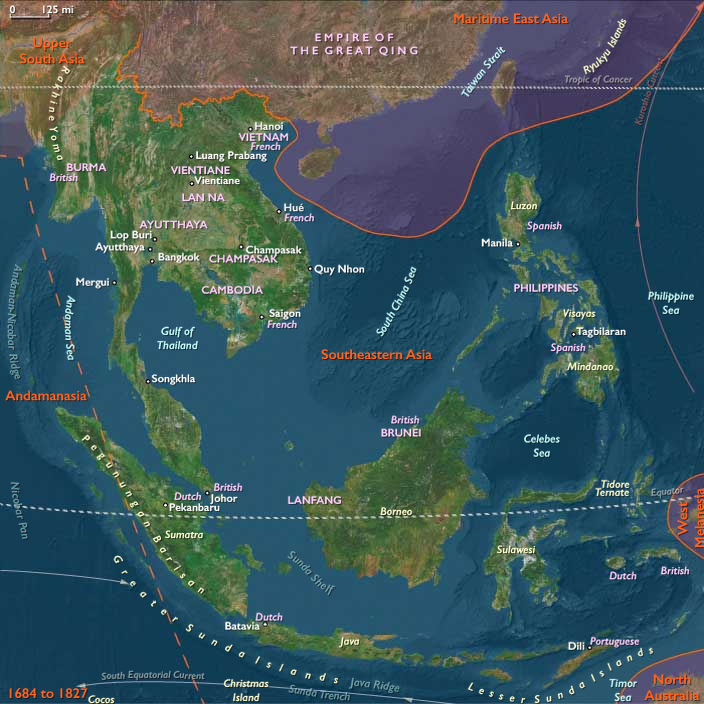
Sin, the Tai governor of the Ayuttayan province of Tak, had been called to the capital to help defend the city from the Burmese besiegers.
On January 3, 1766, at the head of five hundred followers, Sin had cut his way out of the city to Rayong, on the east coast of the Gulf of Thailand, where he had raised a small army and his supporters began to address him as Prince Tak.
This action will never be adequately explained, as the Royal compound and Ayutthaya proper is located on an island; how Taksin and his followers fought their way out of the Burmese encirclement remains a mystery.
On April 7, 1767, Ayutthaya had faced the full force of the Burmese siege.
After the destruction of Ayutthaya and the death of the Thai king, the country had split into six parts, with Sin controlling the east coast.
Together with Tong-Duang, now Chao Phraya Chakri, he eventually manages to drive back the Burmese, defeat his rivals and reunify the country.
Due to his courage and skill in fighting the enemy, he is promoted to be the governor of Kamphaeng Phet with the title of Phraya Vajiraprakarn, but he is popularly referred as Phraya.
With his soldiers he had moved to Chanthaburi, and being rebuffed by the Governor of the town for his friendly overtures, he had made a surprise night attack on it and captured it on June 15, 1767, only two months of after the sack of Ayutthaya.
His army was rapidly increasing in numbers, as men of Chanthaburi and Trat, which had not been plundered and depopulated by the Burmese, naturally constituted a suitable base for him to make preparations for the liberation of his motherland.
The Burmese, having thoroughly looted Ayutthaya, did not seem to show serious interest in holding down the Siamese capital, since they had left only a handful of troops under General Suki to control the shattered city.
They had turned their attention to the north of their own country, which is soon threatened with Chinese invasion.
On November 6, 1767, having marshaled five thousand troops and all in fine spirits, Taksin had sailed up the Chao Phraya River and seized Thonburi opposite present day Bangkok, executing the Thai governor, Thong-in, whom the Burmese had placed over the city.
He had followed up his victory quickly by boldly attacking the main Burmese camp at Phosamton near Ayutthaya.
On December 28, 1767, he was crowned king of Siam at Wang Derm Palace in Thonburi, the new capital of Siam.
He had assumed the official name of Boromraja IV and "Phra Sri Sanphet", but is known in Thai history as King Taksin, being a combination of his popular name, Phya Tak, and his first name, Sin, or the King of Thonburi, being the only ruler of this capital.
At the time of his coronation, he was only thirty-four years of age.
The Burmese were defeated, and Taksin wins back Ayutthaya from the enemy within seven months of its destruction.
On January 3, 1766, at the head of five hundred followers, Sin had cut his way out of the city to Rayong, on the east coast of the Gulf of Thailand, where he had raised a small army and his supporters began to address him as Prince Tak.
This action will never be adequately explained, as the Royal compound and Ayutthaya proper is located on an island; how Taksin and his followers fought their way out of the Burmese encirclement remains a mystery.
On April 7, 1767, Ayutthaya had faced the full force of the Burmese siege.
After the destruction of Ayutthaya and the death of the Thai king, the country had split into six parts, with Sin controlling the east coast.
Together with Tong-Duang, now Chao Phraya Chakri, he eventually manages to drive back the Burmese, defeat his rivals and reunify the country.
Due to his courage and skill in fighting the enemy, he is promoted to be the governor of Kamphaeng Phet with the title of Phraya Vajiraprakarn, but he is popularly referred as Phraya.
With his soldiers he had moved to Chanthaburi, and being rebuffed by the Governor of the town for his friendly overtures, he had made a surprise night attack on it and captured it on June 15, 1767, only two months of after the sack of Ayutthaya.
His army was rapidly increasing in numbers, as men of Chanthaburi and Trat, which had not been plundered and depopulated by the Burmese, naturally constituted a suitable base for him to make preparations for the liberation of his motherland.
The Burmese, having thoroughly looted Ayutthaya, did not seem to show serious interest in holding down the Siamese capital, since they had left only a handful of troops under General Suki to control the shattered city.
They had turned their attention to the north of their own country, which is soon threatened with Chinese invasion.
On November 6, 1767, having marshaled five thousand troops and all in fine spirits, Taksin had sailed up the Chao Phraya River and seized Thonburi opposite present day Bangkok, executing the Thai governor, Thong-in, whom the Burmese had placed over the city.
He had followed up his victory quickly by boldly attacking the main Burmese camp at Phosamton near Ayutthaya.
On December 28, 1767, he was crowned king of Siam at Wang Derm Palace in Thonburi, the new capital of Siam.
He had assumed the official name of Boromraja IV and "Phra Sri Sanphet", but is known in Thai history as King Taksin, being a combination of his popular name, Phya Tak, and his first name, Sin, or the King of Thonburi, being the only ruler of this capital.
At the time of his coronation, he was only thirty-four years of age.
The Burmese were defeated, and Taksin wins back Ayutthaya from the enemy within seven months of its destruction.
Locations
People
Groups
- Tai peoples, or Thais
- Bamar or Burmans
- Ayutthaya (Siam), Thai state of
- Lanna, or Lan Na (Siam), Burmese principality of
- Chinese Empire, Qing (Manchu) Dynasty
- Myanmar (Burma), (Alaungpaya, or Konbaung dynasty) Kingdom of
- Siam, (Thonburi) Kingdom of
- Lanna, or Lan Na (Siam), Thai kingdom of
Topics
Commodoties
Subjects
Regions
Subregions

Years: 1768 - 1768
Locations
People
Groups
- Tai peoples, or Thais
- Bamar or Burmans
- Ayutthaya (Siam), Thai state of
- Lanna, or Lan Na (Siam), Burmese principality of
- Chinese Empire, Qing (Manchu) Dynasty
- Myanmar (Burma), (Alaungpaya, or Konbaung dynasty) Kingdom of
- Siam, (Thonburi) Kingdom of
- Lanna, or Lan Na (Siam), Thai kingdom of
Topics
Commodoties
Subjects
Regions
Subregions