
The territory of Novo Belgio or New …
Years: 1625 - 1625
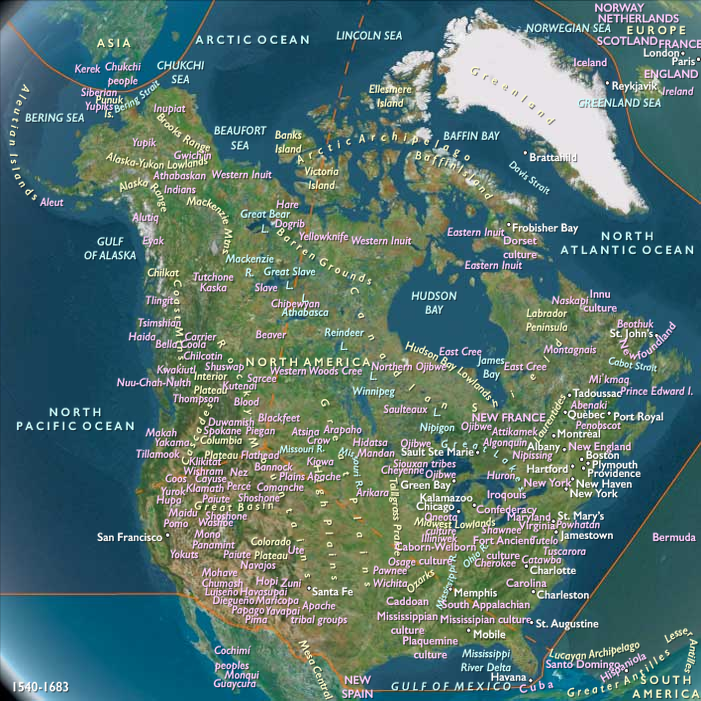
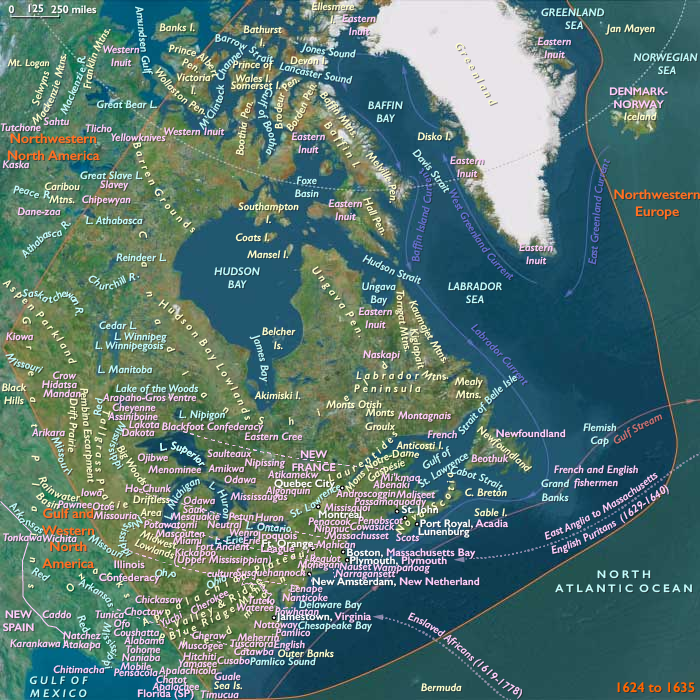
The territory of Novo Belgio or New Netherland, comprising the Northeast's largest rivers with access to the beaver trade, is provisionally a private, profit-making commercial enterprise focusing on cementing alliances and conducting trade with the diverse native tribes.
They had enabled the serendipitous surveying and exploration of the region as a prelude to anticipated official settlement by the Dutch Republic.
The Dutch West India Company had been founded immediately after the armistice period between the Dutch Republic and Spain (1609–1621).
Orders had been given in 1621 as well as in 1622 and 1623, to the private, commercial traders to vacate the territory, thus opening up the territory to the transplantation of Dutch culture onto the North American continent whereon the laws and ordinances of the states of Holland would now apply.
Previously, during the private, commercial period, only the law of the ship had applied.
The mouth of the Hudson River has been selected as the most perfect place for initial settlement as it has easy access to the ocean while securing an ice free lifeline to the beaver-rich, unexploited forests farther north where the company's traders could be in close contact with the native hunters who supply them with pelts in exchange for European-made trade goods for barter and wampum, which is soon being "minted" under Dutch auspices on Long Island.
Thus in 1624 when the first group of families had arrived on Governors Island, followed by the second group of settlers to the island in 1625, in order to take possession of the New Netherland territory and to operate various trading posts, they are spread out to Verhulsten Island (Burlington Island) in the South River (Delaware River), to ...
Locations
Groups
- Netherlands, United Provinces of the (Dutch Republic)
- New Netherland (Dutch Colony)
- Dutch West India Company
Topics
Commodoties
Subjects
Regions
Subregions
Related Events
Showing 10 events out of 32824 total
Years: 1625 - 1625
Locations
Groups
- Netherlands, United Provinces of the (Dutch Republic)
- New Netherland (Dutch Colony)
- Dutch West India Company
Topics
Commodoties
Subjects
Regions
Subregions