
The territory of Missouri had first applied …
Years: 1820 - 1820
January
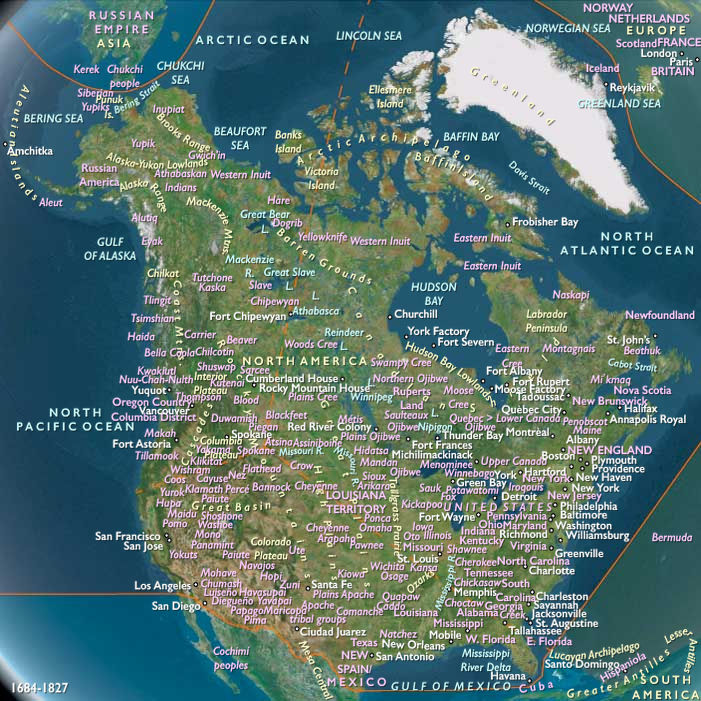
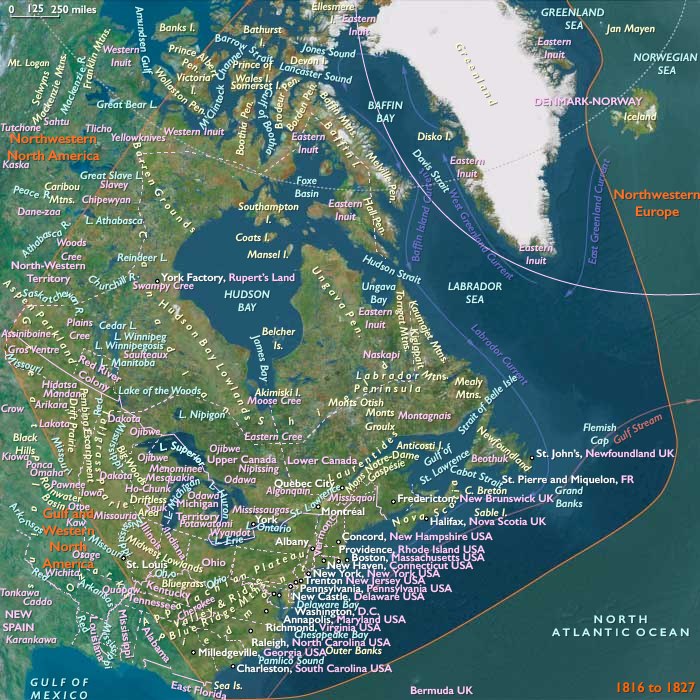
The territory of Missouri had first applied for statehood in 1817, and by early 1819 Congress was considering enabling legislation that would authorize Missouri to frame a state constitution.
When Representative James Tallmadge of New York attempted to add an antislavery amendment to that legislation, however, there ensued an ugly and rancorous debate over slavery and the government's right to restrict slavery.
Thomas Jefferson described the fear evoked by the crisis as “like a firebell in the night.”
The Tallmadge amendment prohibited the further introduction of slaves into Missouri and provided for emancipation of those already there when they reach age twenty-five.
The amendment had passed the House of Representatives, controlled by the more populous North, but failed in the Senate, which is equally divided between free and slave states.
Congress had adjourns without resolving the Missouri question.
When it reconvened in December 1819, Congress had been faced with a request for statehood from Maine, whose people had just adopted a constitution at town meetings on December 6, 1819.
The Senate passes a bill allowing Maine, currently a part of Massachusetts, to enter the Union as a free state and Missouri to be admitted without restrictions on slavery.
Senator Jesse B. Thomas of Illinois proposes the Missouri Compromise to limit slavery above the southern border of Missouri.
His amendment would allow Missouri to become a slave state but bans slavery in the rest of the Louisiana Purchase north of latitude 36°30'.
Henry Clay then skillfully leads the forces of compromise.
Locations
People
Groups
- Massachusetts, Commonwealth of (U.S.A.)
- United States of America (US, USA) (Washington DC)
- Missouri, Territory of (U.S.A.)
- Missouri, State of (U.S.A.)
- Maine, State of (U.S.A.)
Topics
- Party System, First (United States)
- Good Feelings, Era of
- “Era of Good Feelings” in the U.S., The: 1816-1827
- Panic of 1819
Commodoties
Subjects
Regions
Subregions
Related Events
Showing 10 events out of 20417 total
Years: 1820 - 1820
January
Locations
People
Groups
- Massachusetts, Commonwealth of (U.S.A.)
- United States of America (US, USA) (Washington DC)
- Missouri, Territory of (U.S.A.)
- Missouri, State of (U.S.A.)
- Maine, State of (U.S.A.)
Topics
- Party System, First (United States)
- Good Feelings, Era of
- “Era of Good Feelings” in the U.S., The: 1816-1827
- Panic of 1819
Commodoties
Subjects
Regions
Subregions