
Filters:
The Castellieri civilization develops in Istria during …
Years: 2637BCE - 910BCE
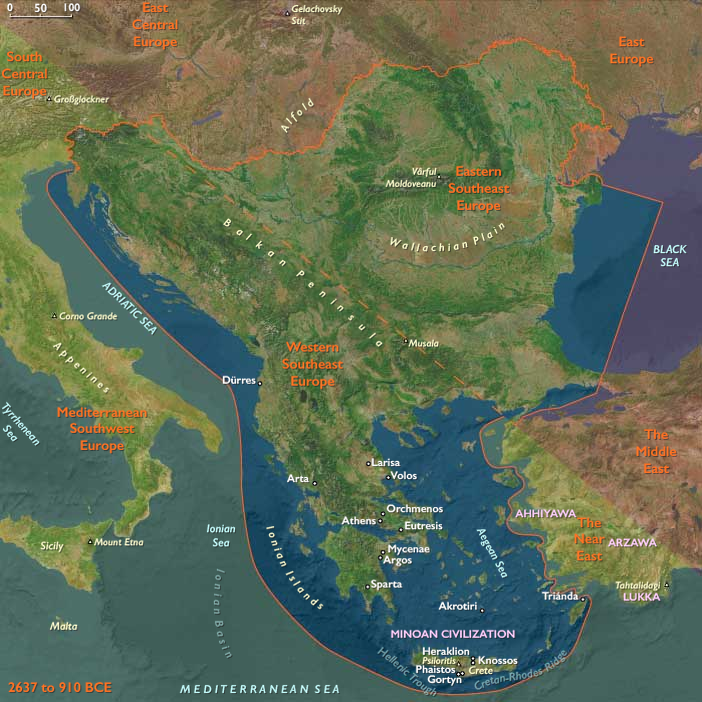
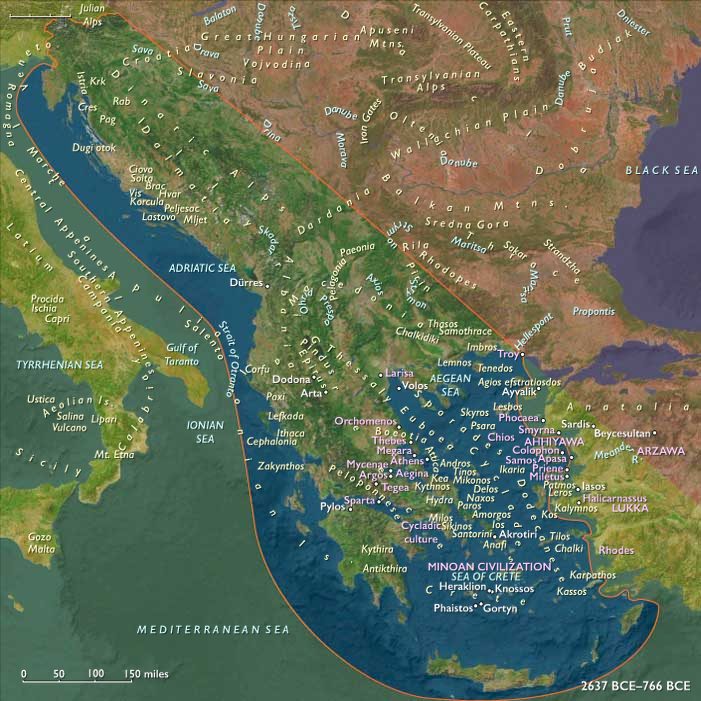
The Castellieri civilization develops in Istria during the Middle Bronze Age, and later expands into Friuli, the modern Venezia Giulia, Dalmatia and the neighboring areas.
It will last for more than a millennium, from the fifteenth century BCE until the Roman conquest in the third century BCE.
It takes its name from the fortified boroughs (castellieri, Friulian cjastelir) that characterize the culture.
The ethnicity of the Castellieri civilization is uncertain, although it is most likely of Pre-Indoeuropean stock, coming from the sea.
The first castellieri are indeed built along the Istrian coasts and present the same Megalithic appearance characterizing in the Mycenaean civilization at the time.
Hypotheses about an Illyrian origin of the people are not confirmed.
The Castellieri are fortified boroughs, usually located on hills or mountains or, more rarely (such as in Friuli), in plains.
They are constituted by one or more concentric series of walls, of rounded or elliptical shape in Istria and Venezia Giulia, or quadrangular in Friuli, within which is the inhabited area.
Some hundreds of castellieri have been discovered in Istria, Friuli and Venezia Giulia, such as that of Leme, in central-western Istria, of the Jelarji, near Muggia, of Monte Giove near Prosecco (Trieste) and San Polo, not far from Monfalcone.
However, the largest castelliere is perhaps that of Nesactium, in southern Istria, not far from Pula.
It will last for more than a millennium, from the fifteenth century BCE until the Roman conquest in the third century BCE.
It takes its name from the fortified boroughs (castellieri, Friulian cjastelir) that characterize the culture.
The ethnicity of the Castellieri civilization is uncertain, although it is most likely of Pre-Indoeuropean stock, coming from the sea.
The first castellieri are indeed built along the Istrian coasts and present the same Megalithic appearance characterizing in the Mycenaean civilization at the time.
Hypotheses about an Illyrian origin of the people are not confirmed.
The Castellieri are fortified boroughs, usually located on hills or mountains or, more rarely (such as in Friuli), in plains.
They are constituted by one or more concentric series of walls, of rounded or elliptical shape in Istria and Venezia Giulia, or quadrangular in Friuli, within which is the inhabited area.
Some hundreds of castellieri have been discovered in Istria, Friuli and Venezia Giulia, such as that of Leme, in central-western Istria, of the Jelarji, near Muggia, of Monte Giove near Prosecco (Trieste) and San Polo, not far from Monfalcone.
However, the largest castelliere is perhaps that of Nesactium, in southern Istria, not far from Pula.
Groups
Topics
- Middle Bronze Age II C (Near and Middle East)
- Late Bronze Age I and II A (Near and Middle East)
- Late Bronze Age III (Near and Middle East
- Iron Age Europe
Subjects
Regions
Subregions
Years: 2637BCE - 910BCE
Groups
Topics
- Middle Bronze Age II C (Near and Middle East)
- Late Bronze Age I and II A (Near and Middle East)
- Late Bronze Age III (Near and Middle East
- Iron Age Europe
Subjects
Regions
Subregions