
Julian's Daunting Task in Gaul: The Collapse …
Years: 356 - 356
Julian's Daunting Task in Gaul: The Collapse of the Rhine Frontier and His First Campaign (355–356 CE)
When Julian was sent to Gaul in 355 CE as Caesar, he inherited an incredibly dire situation. The civil war between Constantius II and Magnentius (350–353 CE) had devastated northern Gaul, and the Rhine frontier had largely collapsed, leaving the province at the mercy of Germanic invasions.
1. The Dire State of Roman Gaul
-
The defensive line of the Rhine had disintegrated, with many key Roman strongholds now in German hands.
-
According to Ammianus Marcellinus, the following cities had fallen to the Alamanni or the Franks:
- Moguntiacum (Mainz)
- Borbetomagus (Worms)
- Nemetae Vangionum (Speyer)
- Tabernae (Saverne)
- Saliso (Brumath)
- Argentorate (Strasbourg)
-
Only Colonia Agrippina (Cologne) remained as a major Roman stronghold, along with three minor positions:
- A single tower near Cologne.
- Forts at Rigodunum (Remagen) and Confluentes (Koblenz).
-
Large barbarian war bands were roaming northeastern Gaul, pillaging as far as the Seine River, with no organized Roman resistance.
-
The Roman limitanei (border defense forces) had been decimated, and those that survived had abandoned the frontier to garrison Gaul’s interior cities.
2. Political Intrigue: A Mission Designed to Fail?
- At Constantius II’s court in Milan, many cynically whispered that Julian had been given an impossible task, meant to remove him as a potential rival.
- Julian was a scholar, not a career soldier, and had no previous military experience, making him an unlikely savior of Gaul.
- Yet, against all expectations, he would soon prove himself to be a brilliant military leader.
3. Julian’s Arrival and the Fall of Cologne (355–356 CE)
-
Julian was provided with only a small escort, consisting of:
- 200 scholares (imperial bodyguard cavalry).
- A regiment of cataphractarii (heavily armored cavalry).
- Some mounted archers.
- In total: just 360 men, a pitiful force given the scale of the crisis.
-
While en route from Milan, he received the catastrophic news that Cologne, Rome’s largest military stronghold on the Rhine, had fallen to the Franks.
-
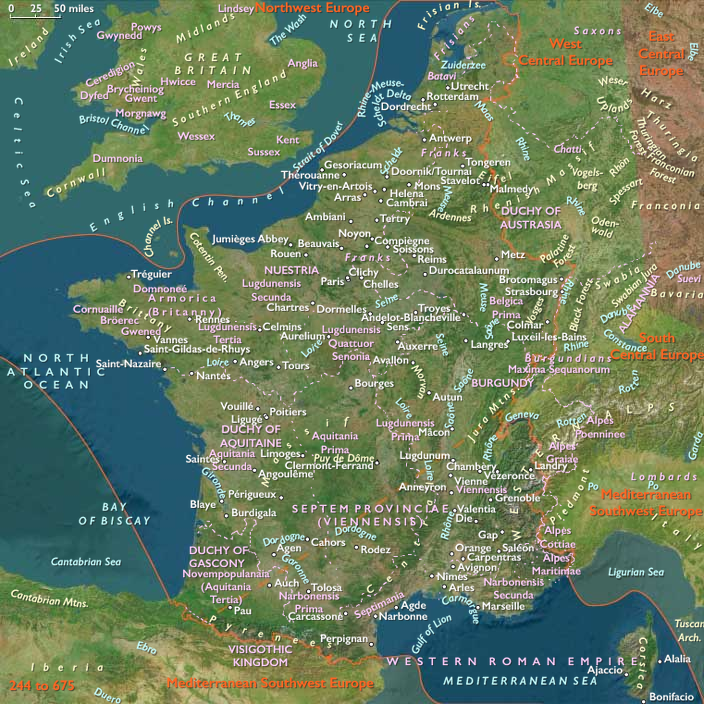
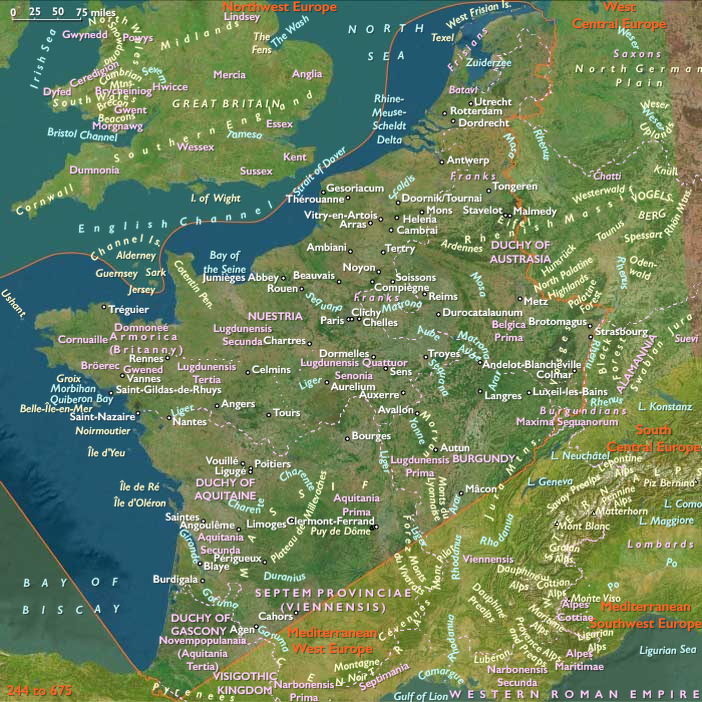
He spent the winter of 355/356 at Vienna (modern Vienne, France), not far from Lugdunum (Lyon), preparing for his first campaign in 356 CE.
4. The 356 CE Campaign: Julian’s First Steps in Warfare
- Julian’s first objective was to link up with the main Roman field army (comitatus) in Gaul, which had wintered in Remi (Reims) under Marcellus, the magister equitum (Master of Horse).
- This involved a dangerous march through enemy-infested territory, with Alamanni raiding bands larger than Julian’s escort, skilled in ambush tactics.
First Successes: Early Engagements in 356 CE
- Augustodunum (Autun):
- Julian surprised and drove off a large barbarian force besieging the city.
- The Morvan Wilderness:
- He defeated a Germanic raiding band, demonstrating his tactical ability in the field.
Despite his lack of military experience, Julian quickly proved himself capable and decisive, setting the stage for his later victories in Gaul.
5. Conclusion: Julian’s Unexpected Rise as a Military Leader
- Tasked with an almost impossible mission, Julian inherited a broken province, abandoned by the Roman military.
- While his initial army was small, his first successes in 356 CE demonstrated his brilliance as a general.
- His leadership in Gaul would continue to grow, culminating in a major victory at Argentorate (Strasbourg) in 357 CE, where he would break the Alamanni threat and begin restoring Roman control in Gaul.
Despite skepticism from Constantius’ court, Julian’s early victories proved that he was far more than a mere scholar—he was a capable and resourceful commander who would later challenge Constantius himself for control of the empire.
Locations
People
Groups
- Franks
- Germania Inferior (Roman province)
- Germania Superior (Roman province)
- Gallia Lugdunensis (Roman province)
- Gallia Belgica (Roman province)
- Germans
- Alamanni (Germanic tribal alliance)
- Gaul, Diocese of
- Roman Empire: Constantinian dynasty (Constantinople)
- Gaul, Praetorian prefecture of
Topics
- Roman Age Optimum
- Late Antiquity
- Migration Period
- Durocortorum, Battle of
- Brumath, Battle of
- Senonae, Siege of
- Autun, Siege of
Commodoties
Subjects
Regions
Subregions
Related Events
Showing 1 events out of 1 total
Years: 356 - 356
Locations
People
Groups
- Franks
- Germania Inferior (Roman province)
- Germania Superior (Roman province)
- Gallia Lugdunensis (Roman province)
- Gallia Belgica (Roman province)
- Germans
- Alamanni (Germanic tribal alliance)
- Gaul, Diocese of
- Roman Empire: Constantinian dynasty (Constantinople)
- Gaul, Praetorian prefecture of
Topics
- Roman Age Optimum
- Late Antiquity
- Migration Period
- Durocortorum, Battle of
- Brumath, Battle of
- Senonae, Siege of
- Autun, Siege of
Commodoties
Subjects
Regions
Subregions