
Central Asia (909–766 BCE): The Rise of …
Years: 909BCE - 766BCE
Central Asia (909–766 BCE): The Rise of Nomadic Cultures and Early Iranian Expansion
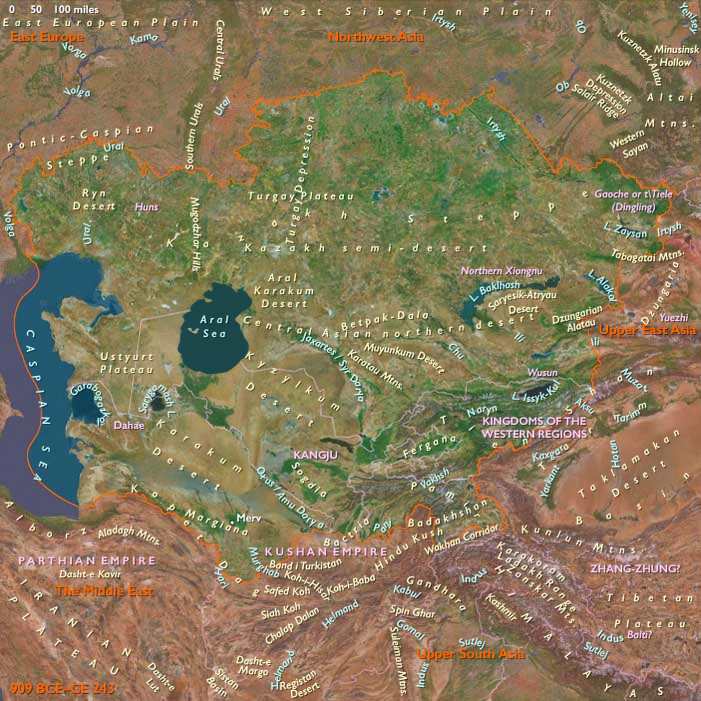
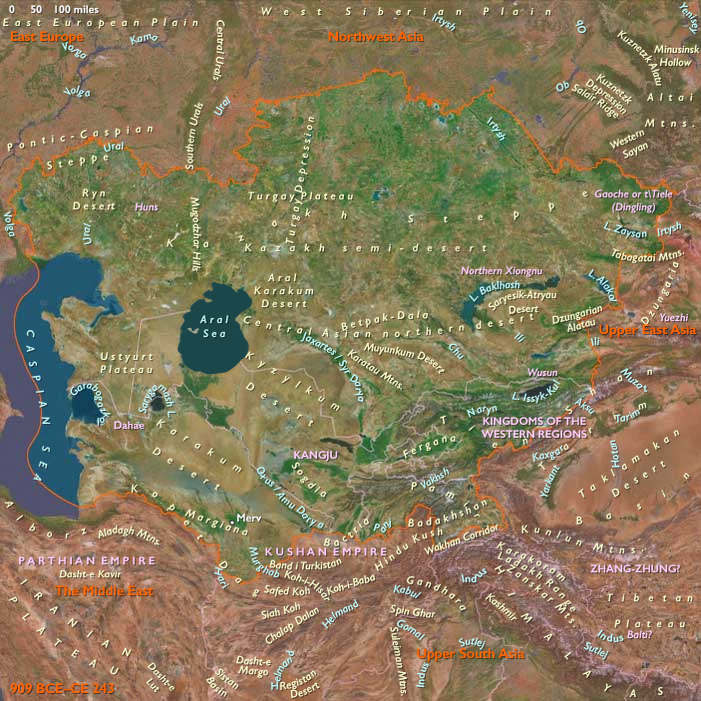
Between 909 and 766 BCE, Central Asia—including modern Uzbekistan, Turkmenistan, Kazakhstan, Tajikistan, and Kyrgyzstan—experienced significant shifts, marking the beginning of a long epoch characterized by nomadic migrations, cultural consolidation, and the spread of early Iranian-speaking societies across the region.
Nomadic Emergence and Steppe Societies
This era witnessed the gradual emergence and expansion of powerful nomadic pastoralist cultures on the vast Eurasian steppes, profoundly influencing the settled agrarian communities of Bactria, Sogdiana, and Margiana. Nomadic groups, increasingly adept at horseback riding and metalworking, laid foundations for the distinctive steppe societies that would dominate Central Asia for centuries.
-
The vast grasslands of modern Kazakhstan and Kyrgyzstan served as ideal habitats for horse-based nomadic cultures, initiating a pastoral economy centered around horses, cattle, sheep, and goats.
-
Increased mobility facilitated extensive interregional contacts, trade, and occasional conflicts between nomadic tribes and sedentary populations in the fertile oasis cities of Margiana (modern Turkmenistan) and Bactria (modern Uzbekistan and Tajikistan).
Consolidation of Early Iranian Peoples
During this period, Iranian-speaking groups—descended from earlier Proto-Iranian communities of the late BMAC and Andronovo cultural interaction—continued to consolidate their presence throughout Central Asia, gradually spreading westward and southward from their homeland around the Amu Darya (Oxus River).
-
Early Iranian groups further differentiated into distinct tribes and subgroups. While some settled around oasis towns, others maintained nomadic or semi-nomadic pastoralist lifestyles.
-
Early migrations and cultural exchanges with neighboring societies, such as the Scythians in the west and the ancestors of Sogdians and Bactrians closer to the Oxus region, set the stage for the flourishing Iranian civilizations in subsequent periods.
Emergence of Scythian-Related Cultures
By the later part of this era (circa 800 BCE onward), the earliest Scythian and related Iranian nomadic cultures began to emerge distinctly on the northern and western fringes of Central Asia, particularly across modern Kazakhstan’s steppe and along the Aral Sea shores.
-
Early Scythians displayed sophisticated metalworking and artistic skills, crafting decorative bronze items and distinct weaponry. Their increasing use of iron marked a technological shift and further facilitated dominance over less mobile agricultural societies.
-
Initial interactions between Scythians and neighboring settled cultures led to cultural exchanges, influencing material culture, burial practices, and regional trade networks.
Technological and Economic Developments
The period saw significant advances in metallurgy, pottery, and agriculture across Central Asia, indicating growing economic sophistication:
-
Ironworking, gradually introduced and adopted during this period, profoundly impacted both nomadic and settled societies, improving tools, weapons, and farming implements.
-
Oasis settlements in Margiana and Bactria maintained agricultural prosperity, irrigating fields and cultivating cereals, legumes, and fruit trees. Trade routes linking these oasis cities to surrounding nomadic groups expanded, facilitating regional commerce.
Early Cultural and Religious Practices
Religious and cultural expressions grew more complex, combining elements inherited from earlier Bronze Age civilizations (BMAC) with new beliefs emerging among nomadic societies:
-
Iranian-speaking communities began to exhibit early religious and ritualistic traditions that would later evolve into Zoroastrian practices, characterized by fire altars and rituals reflecting the dualistic cosmology of early Iranian spirituality.
-
Burial customs, especially kurgan-style mound burials among nomadic tribes, became prominent, containing elaborate grave goods—metal ornaments, pottery, weaponry—demonstrating increasing social stratification and emerging tribal hierarchies.
Long-Term Significance and Historical Legacy
Between 909 and 766 BCE, Central Asia laid critical foundations for future developments:
-
The growing dominance of nomadic pastoralists fundamentally reshaped regional demographics, economies, and interactions, profoundly influencing historical trajectories in subsequent centuries.
-
Iranian peoples expanded geographically and culturally, establishing roots for later renowned civilizations, including the Scythians, Sogdians, and Bactrians.
-
Technological innovations, particularly iron metallurgy and horsemanship, significantly enhanced economic productivity, military capability, and regional connectivity.
By 766 BCE, Central Asia had firmly entered an era of increasing nomadic influence, cultural synthesis, and technological advancement, poised for the dynamic historical transformations of the centuries ahead.
Groups
Topics
Commodoties
Subjects
Regions
Subregions
Related Events
Showing 10 events out of 66848 total
Years: 909BCE - 766BCE
Groups
Topics
Commodoties
Subjects
Regions
Subregions