
The Ta Yüeh-chih had earlier moved into …
Years: 45BCE - 99
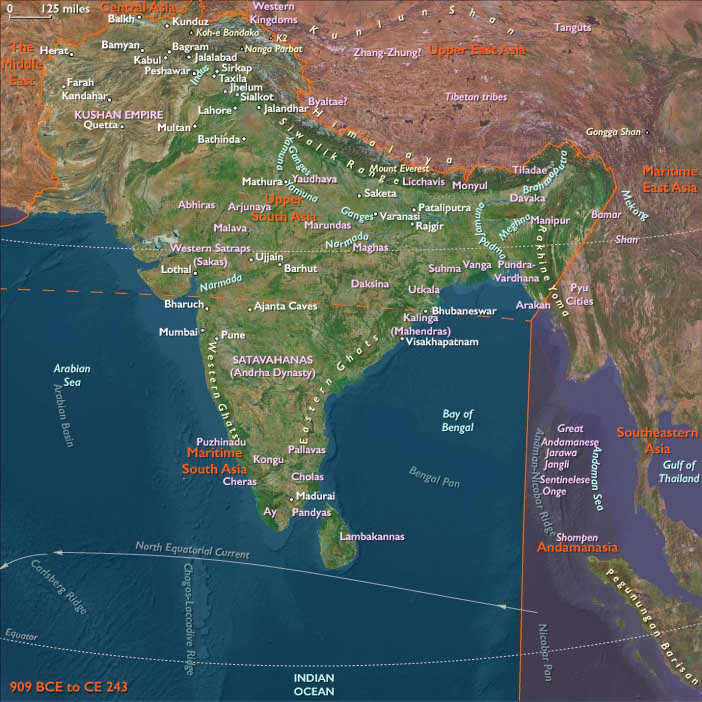
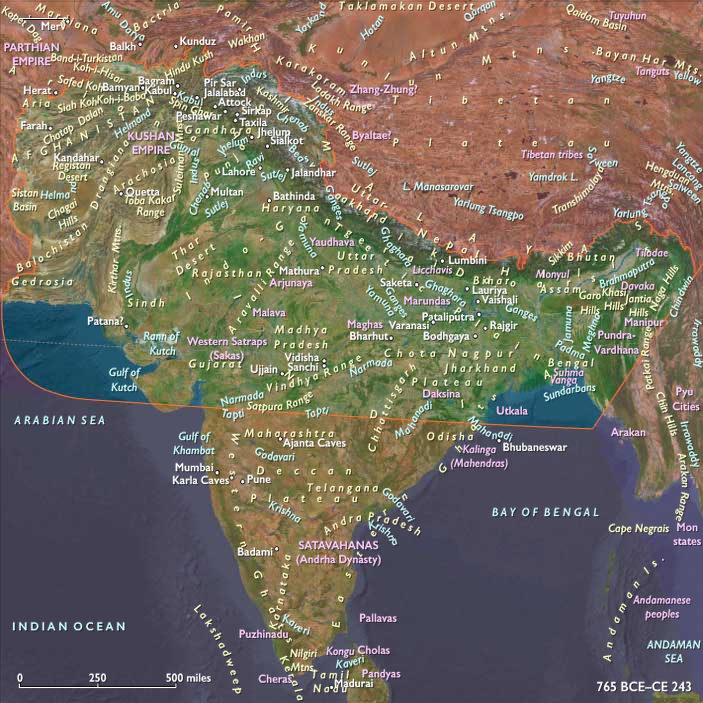
The Ta Yüeh-chih had earlier moved into territory in the northern part of present-day Afghanistan and had taken control of Bactria.
Kujula Kadphises, the Yüeh-chih chief, conquers northern India in the first century CE.
He is succeeded by his son Vima, after whom comes Kaniska, the most powerful among the Kusana, or Kushan, kings, as the dynasty comes to be called.
A title of Central Asian derivation is the daivaputra of the Kusanas, which is believed to have come originally from the Chinese “son of heaven”, emphasizing the divinity of kingship.
The date of Kaniska's accession is controversial, ranging from 78 to 248.
The generally accepted date of 78 is also the basis for an era presumably started by the Sakas and used in addition to the Gregorian calendar by the present Indian government; the era, possibly commemorating Kaniska's accession, is widely used in Malava, Ujjain, Nepal, and Central Asia.
Kaniska's ambitions include control of Central Asia, which, if not directly under the Kusanas, did come under their influence.
The Kusana kingdom is essentially oriented to the north, controlling territory up to the Pamirs in the north and Bukhara in the west, although it extends southward as far as Saci and into the Ganges Valley as far as Varanasi.
The Kusanas, who were at the center of the silk trade between China and the west, establish their capital at Purusapura (near modern Peshawar).
Under Kaniska, the Kusanas, who are Buddhist, built thousands of monasteries and stupas.
Gandhara soon becomes both a place of trade and of religious study and pilgrimage.
Locations
People
Groups
Topics
Commodoties
Subjects
Regions
Subregions
Years: 45BCE - 99
Locations
People
Groups
Topics
Commodoties
Subjects
Regions
Subregions