
The Syrian junds are allocated a third …
Years: 744 - 744
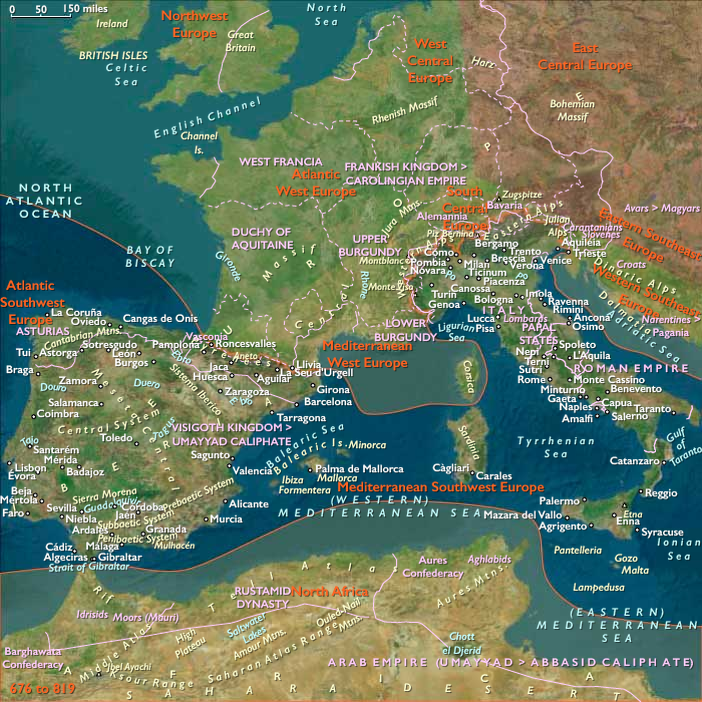
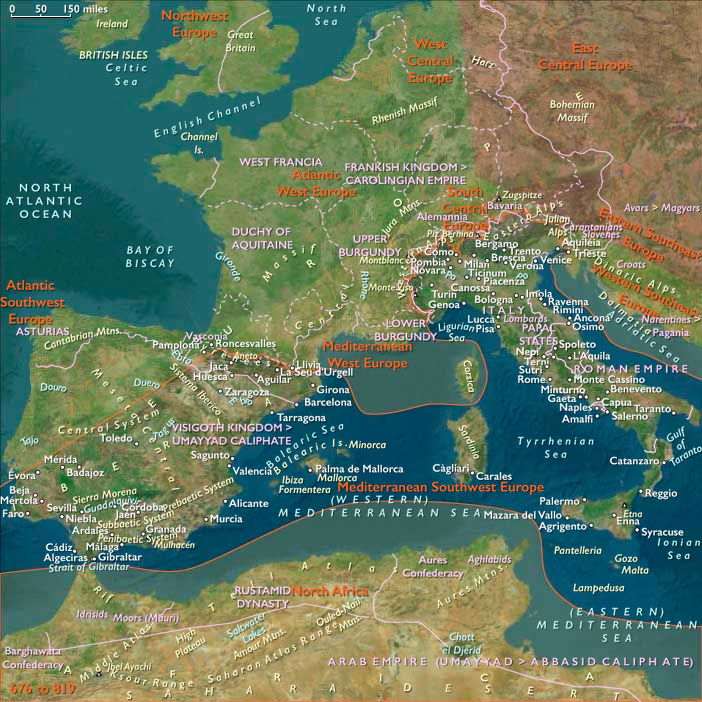
The Syrian junds are allocated a third of the tax revenues collected in their regions, and given responsibilities of tax-collection and military service to the Andalusian governor.
The arrival of the Syrian junds is to have tremendous implications for subsequent Spanish history.
They increase substantially the Arab element on the Iberian peninsula, and, as such, are instrumental in deepening the Muslim hold on the south, what will become the heart of al-Andalus, but they also bring trouble.
Unwilling to be governed, the Syrian junds will carry on an existence of autonomous feudal anarchy, severely destabilizing the power of the governor of al-Andalus.
Locations
People
- Abd al-Rahman ibn Habib al-Fihri
- Abu l-Hattar al Husam ibn Darar al-Kalbi
- Handhala ibn Safwan al-Kalbi
- Obeid Allah ibn al-Habhab al-Mawsili
- Tha'laba ibn Salama al-Amili
- Yusuf ibn 'Abd al-Rahman al-Fihri
Groups
- Arab people
- Berber people (also called Amazigh people or Imazighen, "free men", singular Amazigh)
- Moors
- Islam
- Muslims, Sunni
- Muslims, Kharijite
- Umayyad Caliphate (Damascus)
- Syrian people
- Ifriqiya, Ummayad
- Al-Garb Al-Andalus
- al-Andalus (Andalusia), Muslim-ruled
Topics
Commodoties
Subjects
Regions
Subregions
Related Events
Showing 10 events out of 55369 total
Years: 744 - 744
Locations
People
- Abd al-Rahman ibn Habib al-Fihri
- Abu l-Hattar al Husam ibn Darar al-Kalbi
- Handhala ibn Safwan al-Kalbi
- Obeid Allah ibn al-Habhab al-Mawsili
- Tha'laba ibn Salama al-Amili
- Yusuf ibn 'Abd al-Rahman al-Fihri
Groups
- Arab people
- Berber people (also called Amazigh people or Imazighen, "free men", singular Amazigh)
- Moors
- Islam
- Muslims, Sunni
- Muslims, Kharijite
- Umayyad Caliphate (Damascus)
- Syrian people
- Ifriqiya, Ummayad
- Al-Garb Al-Andalus
- al-Andalus (Andalusia), Muslim-ruled
Topics
Commodoties
Subjects
Regions
Subregions