
The sweet potato first enters China in …
Years: 1567 - 1567
The sweet potato first enters China in the 1560s from the New World of the Spanish Americas; it will come to replace rice as the major staple crop of the poor in China, and will carry a culturally negative association with poverty up until the Communist era.
The long reign of Chia-ching, eleventh emperor of the Ming dynasty, has added a degree of stability to the government but whose neglect of official duties ushered in an era of misrule.
Notoriously cruel, Jiajing has caused hundreds of officials who had had the temerity to disagree with him to be tortured, demoted, or killed.
He has spent much of his time and money, especially in his later years, patronizing Taoist alchemists in the hopes of finding an elixir to prolong his life, leaving the government in the hands of a few favorites who have allowed the situation on China's borders to deteriorate.
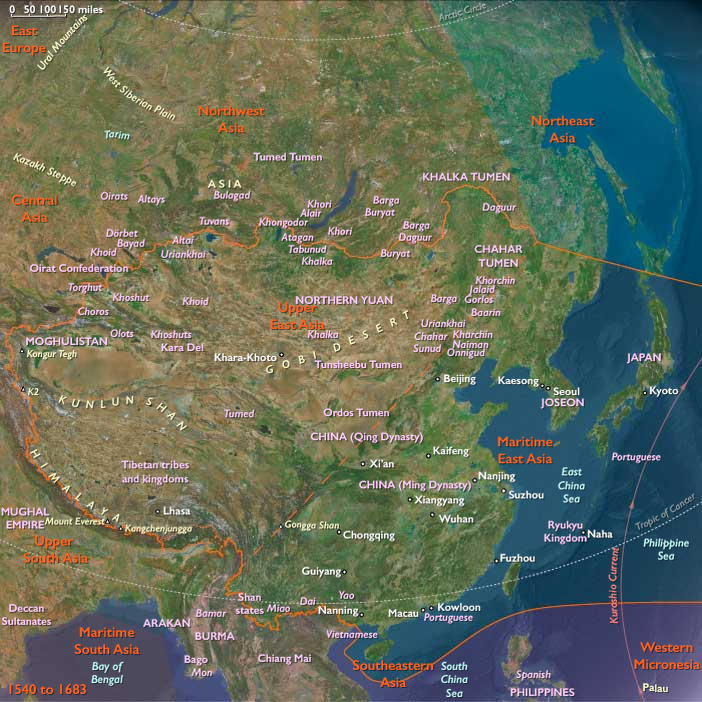
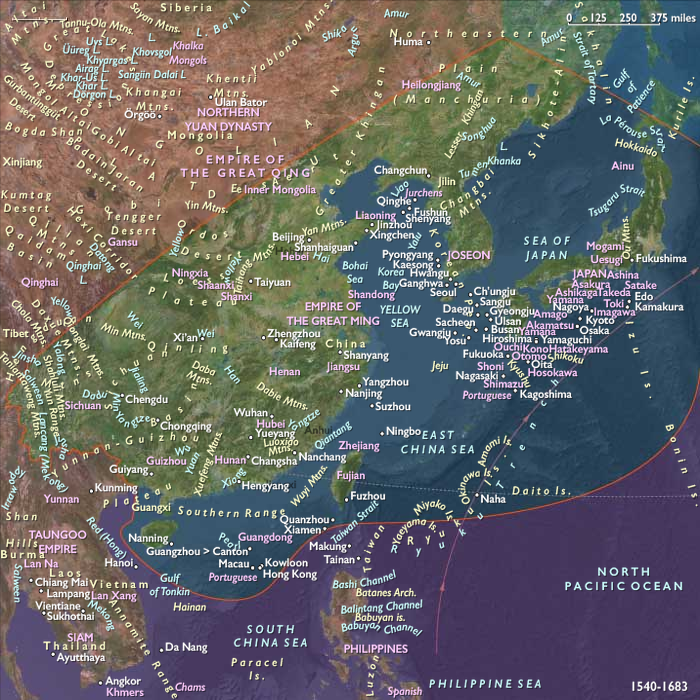
Mongol tribesmen under the leadership of Altan Khan (dies 1583) raid the northwest frontier and several times even besiege the Chinese capital at Peking.
Japanese pirates harass trade along the coast, and rebellions in the southern provinces have been frequent.
Emperor Jiajing dies in 1567—possibly due to mercury overdose—after forty-five years on the throne (the second longest reign in the Ming dynasty) and is succeeded by his son, the Longqing Emperor.
Though his long rule has given the dynasty an era of stability, Jiajing's neglect of his official duties results in the decline of the dynasty at the end of the sixteenth century.
His style of governing or for that matter the lack thereof will be emulated by his grandson, the Wanli emperor, later in the century.
Locations
People
Groups
Topics
Commodoties
Subjects
Regions
Subregions
Related Events
Showing 10 events out of 35579 total
Years: 1567 - 1567
Locations
People
Groups
Topics
Commodoties
Subjects
Regions
Subregions