
Filters:
The Swazi nation is further unified during …
Years: 1852 - 1863
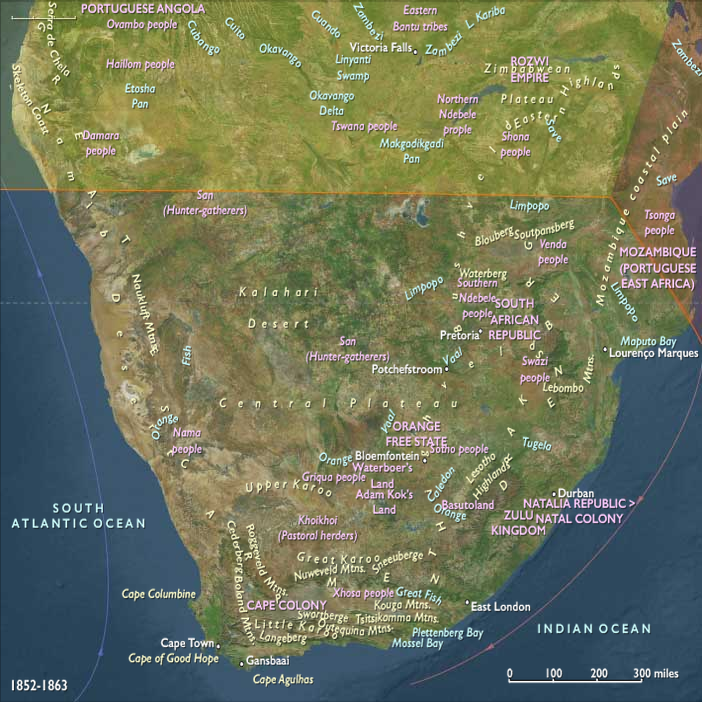
The Swazi nation is further unified during the rule of Mswati II and the people and their country became known as they are today.
Hereafter, the label "Swazi" eventually will be applied to all the peoples who give allegiance to the Ingwenyama.
Mswati II is the greatest of the fighting kings of Eswatini, and he greatly extends the area of the country to twice its current size.
The Emakhandzambili clans are initially incorporated into the kingdom with wide autonomy, often including grants of special ritual and political status.
The extent of their autonomy, however, is drastically curtailed by Mswati, who attacks and subdues some of them in the 1850s.
While reducing the influence of the Emakhandzambili, Mswati incorporates additional people into his kingdom either through conquest or by giving them refuge.
These later arrivals will become known to the Swazis as Emafikamuva.
Hereafter, the label "Swazi" eventually will be applied to all the peoples who give allegiance to the Ingwenyama.
Mswati II is the greatest of the fighting kings of Eswatini, and he greatly extends the area of the country to twice its current size.
The Emakhandzambili clans are initially incorporated into the kingdom with wide autonomy, often including grants of special ritual and political status.
The extent of their autonomy, however, is drastically curtailed by Mswati, who attacks and subdues some of them in the 1850s.
While reducing the influence of the Emakhandzambili, Mswati incorporates additional people into his kingdom either through conquest or by giving them refuge.
These later arrivals will become known to the Swazis as Emafikamuva.
Locations
People
Groups
- Swazi
- Boers
- Britain (United Kingdom of Great Britain and Ireland)
- Cape Colony, British
- South African Republic (the Transvaal)
- Swaziland, Kingdom of
- Swaziland, Kingdom of
Topics
Subjects
Regions

Subregions
Years: 1852 - 1863
Locations
People
Groups
- Swazi
- Boers
- Britain (United Kingdom of Great Britain and Ireland)
- Cape Colony, British
- South African Republic (the Transvaal)
- Swaziland, Kingdom of
- Swaziland, Kingdom of
Topics
Subjects
Regions
Subregions