
Atlantic Southwest Europe: Maritime Expansion and Internal …
Years: 1432 - 1443
Atlantic Southwest Europe: Maritime Expansion and Internal Tensions (1432–1443)
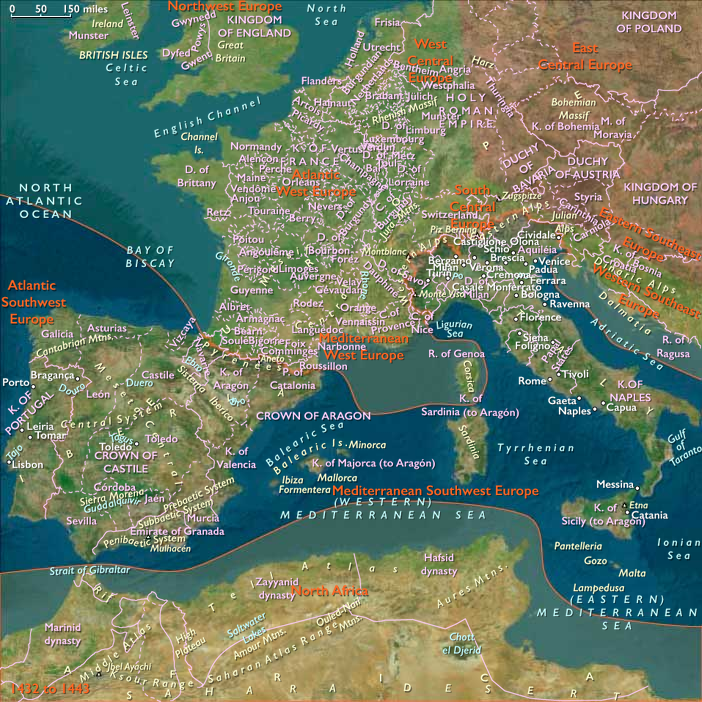
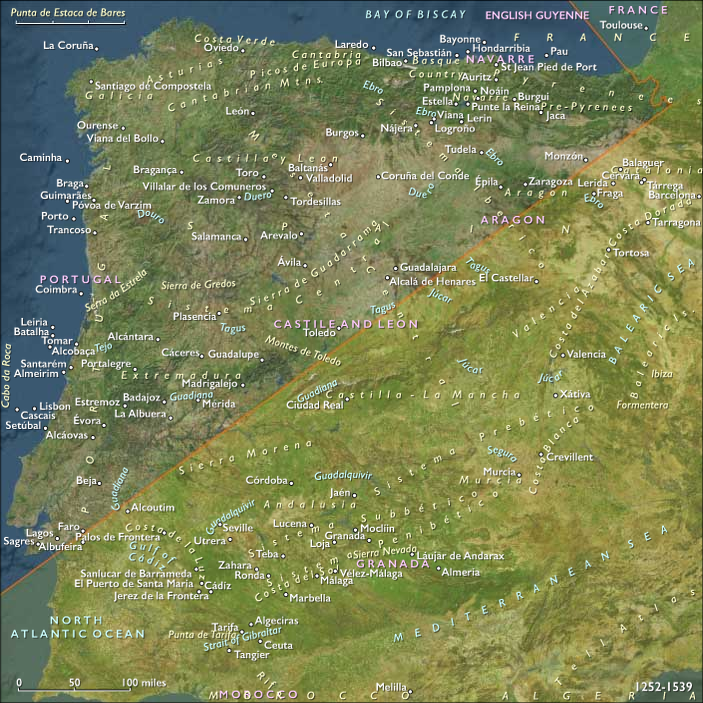
Between 1432 and 1443, Atlantic Southwest Europe entered a transformative period, marked by intensified Portuguese maritime exploration, internal political struggles in Castile, and efforts by regional entities such as Navarre and the Basque territories to assert autonomy. Economic growth accelerated due to overseas discoveries, yet internal tensions and localized conflicts tested regional stability and influenced the cultural landscape.
Political and Military Developments
-
Portugal:
- Under King Duarte I (r. 1433–1438), Portugal continued maritime exploration initiated by João I and Prince Henry the Navigator, despite Duarte’s short reign and internal divisions following his death.
- Duarte’s premature death triggered a regency crisis, with his brother, Infante Pedro, Duke of Coimbra, serving as regent (1439–1448), reinforcing Portugal’s commitment to exploration and internal reform.
-
Northern Castile and León:
- King Juan II of Castile (r. 1406–1454) faced growing conflict between powerful nobles, notably between the factions led by Álvaro de Luna and the Infantes of Aragón, significantly impacting political stability in the northern provinces.
- The Basque territories and northern Rioja capitalized on Castilian internal strife to preserve local autonomy, solidifying their distinctive fueros and customs.
-
Navarre:
- Queen Blanche I of Navarre (r. 1425–1441) continued her father’s diplomatic neutrality but faced rising pressure from Castile and Aragón. Her death in 1441 led to a succession crisis, ultimately resolved by the ascension of her son, Charles, Prince of Viana, whose contested rule invited further regional instability.
Economic and Maritime Expansion
-
Portuguese Maritime Leadership:
- Continued expeditions along the African coast resulted in increased trade, particularly in gold and slaves, enriching coastal cities like Lisbon and Porto and fostering an emerging Atlantic economic system.
- Settlement and cultivation in Madeira expanded significantly, becoming a prosperous source of sugar and Madeira wine, thereby enhancing Portugal’s Atlantic trade dominance.
-
Trade and Urban Prosperity:
- Northern coastal cities, including Bilbao and Santander, maintained flourishing trade with England, France, and the Low Countries, ensuring regional economic prosperity despite Castilian internal tensions.
- The Basque fishing and shipbuilding industries expanded, driven by robust international demand and increased maritime activity.
Cultural and Social Developments
-
Humanism and Renaissance Influence:
- Portuguese scholars, sponsored by Infante Pedro and Prince Henry, continued developing maritime science, navigation techniques, and cartography, significantly contributing to Europe's growing intellectual and scientific heritage.
- Literary and humanistic influences from Italy and France permeated the courts of Portugal and Navarre, stimulating cultural refinement.
-
Local Autonomy and Identity:
- Northern Navarre, the Basque Country, and northern Rioja reinforced regional identities and fueros in response to broader political uncertainties, enhancing cultural resilience.
- Galicia and Asturias sustained vibrant pilgrimage traditions and cultural exchanges around Santiago de Compostela, preserving their importance as cultural hubs.
Significance and Legacy
The era of 1432–1443 proved critical in consolidating Portugal's maritime supremacy, significantly altering Europe's global position through its burgeoning Atlantic empire. Simultaneously, internal conflicts in Castile contrasted sharply with growing regional stability and cultural confidence in Basque, Navarrese, and Galician territories. These years set the foundation for further maritime expansion and shaped enduring patterns of autonomy, identity, and economic prosperity that would influence Atlantic Southwest Europe profoundly in subsequent decades.
People
- Blanche I
- Charles, Prince of Viana
- Edward, King of Portugal
- Henry the Navigator
- John II of Castile
- Peter, Duke of Coimbra
- Álvaro de Luna
Groups
- Galicia, Kingdom of
- Navarre, Kingdom of
- Basque people
- Castile, Crown of
- Portugal, Avizan (Joannine) Kingdom of
- Asturias, Principality of
- Portuguese Empire
Topics
Commodoties
Subjects
- Commerce
- Watercraft
- Labor and Service
- Conflict
- Exploration
- Faith
- Government
- Custom and Law
- Cartography
Regions
Subregions
Years: 1432 - 1443
People
- Blanche I
- Charles, Prince of Viana
- Edward, King of Portugal
- Henry the Navigator
- John II of Castile
- Peter, Duke of Coimbra
- Álvaro de Luna
Groups
- Galicia, Kingdom of
- Navarre, Kingdom of
- Basque people
- Castile, Crown of
- Portugal, Avizan (Joannine) Kingdom of
- Asturias, Principality of
- Portuguese Empire
Topics
Commodoties
Subjects
- Commerce
- Watercraft
- Labor and Service
- Conflict
- Exploration
- Faith
- Government
- Custom and Law
- Cartography
Regions
Subregions