
The construction of the Suez Canal is …
Years: 1873 - 1873
The construction of the Suez Canal is one of the reasons for the Panic of 1873, because the goods from the Far East are carried in sailing vessels around the Cape of Good Hope and are stored in British warehouses, but sailing vessels are not adaptable for use through the Suez Canal, because the prevailing winds of the Mediterranean Sea blow from west to east.
The canal has had an immediate and dramatic effect on world trade.
Combined with the American transcontinental railroad completed six months earlier, it allows the entire world to be circled in record time.
It will play an important role in increasing European colonization of Africa.
Built in partnership between Egypt and France, the Suez Canal, had opened to shipping on November 17, 1869.
The opening had been performed by Khedive Ismail of Egypt and Sudan, and at Ismail's invitation, French Empress Eugenie in the Imperial yacht Aigle.
The first ship to follow the yacht Aigle through the canal had been the British P&O liner Delta.
Muhammad Ali had been succeeded briefly by his son Ibrahim (in September 1848), then by a grandson Abbas I (in November 1848), then by Said (in 1854), and Isma'il (in 1863).
Abbas I had ben cautious; Said and Ismail had been ambitious developers, but they have spent beyond their means.
Although numerous technical, political, and financial problems had been overcome, the final cost is more than double the original estimate.
The cost of this and other projects has had two effects: it has ed to enormous debt to European banks, and has caused popular discontent because of the onerous taxation it required.
After the opening of the canal, the Suez Canal Company had experienced financial difficulties.
The remaining works had been completed only in 1871, and traffic had been below expectations in the first two years.
Its French developer, Ferdinand de Lesseps,had therefore tried to increase revenues by interpreting the kind of net ton referred to in the second concession (tonneau de capacité) as meaning a ship's real freight capacity and not only the theoretical net tonnage of the "Moorsom System" introduced in Britain by the Merchant Shipping Act in 1854.
The ensuing commercial and diplomatic activities had resulted in the International Commission of Constantinople establishing a specific kind of net tonnage and settling the question of tariffs in their protocol of December 18, 1873.
This is the origin of the Suez Canal Net Tonnage and the Suez Canal Special Tonnage Certificate still used today.
Locations
People
Groups
- Ottoman Empire
- Britain (United Kingdom of Great Britain and Ireland)
- Egypt, Khedivate of
- France (French republic); the Third Republic
Topics
Subjects
Regions
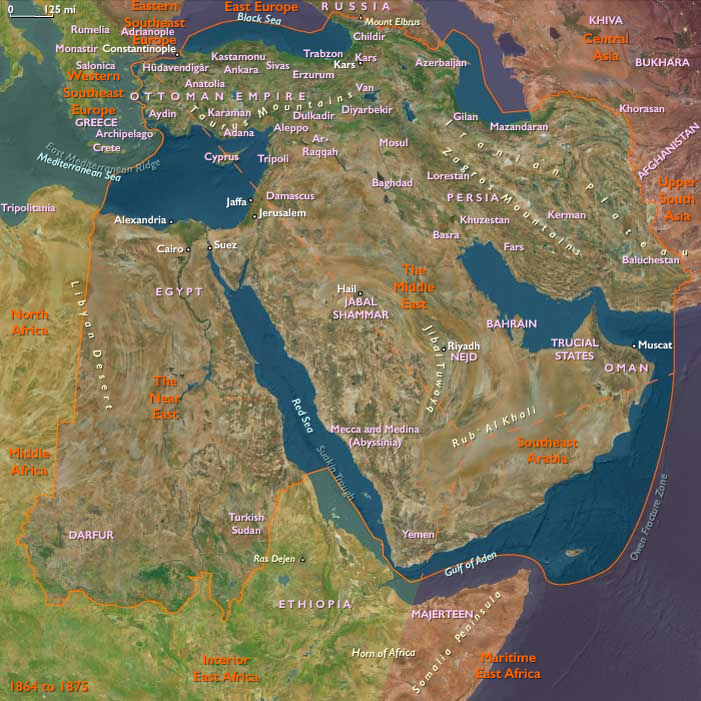
Subregions
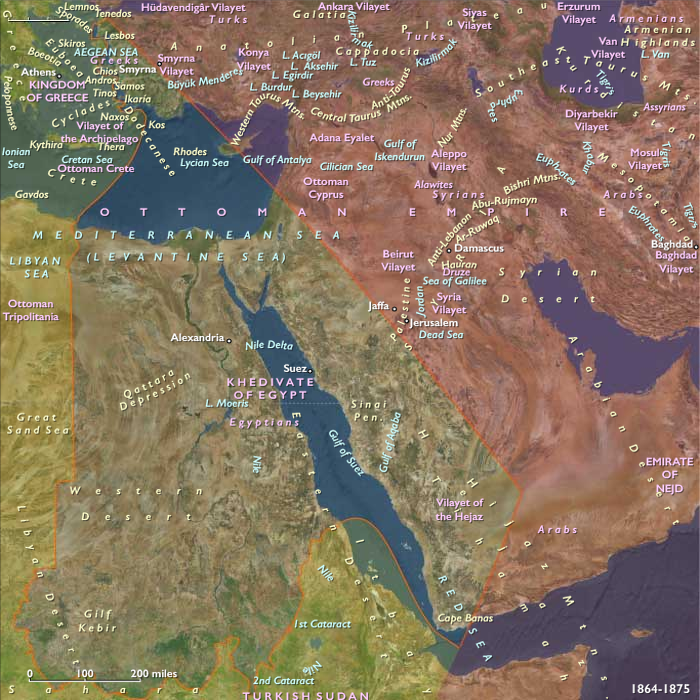
Years: 1873 - 1873
Locations
People
Groups
- Ottoman Empire
- Britain (United Kingdom of Great Britain and Ireland)
- Egypt, Khedivate of
- France (French republic); the Third Republic
Topics
Subjects
Regions
Subregions