Basiliscus, likely of Balkan origin, is the brother of Aelia Verina, wife of Leo I.
It has been argued that Basiliscus was uncle to the chieftain of the Heruli, Odoacer.
This link is based on the interpretation of a fragment by John of Antioch (209.1), which states that Odoacer and Armatus, Basiliscus' nephew, were brothers.
However, not all scholars accept this interpretation, since sources do not say anything about the foreign origin of Basiliscus.
It is known that Basiliscus had a wife, Zenonis, and at least one son, Marcus.
Basiliscus' military career had started under Leo I, when the Emperor conferred upon his brother-in-law the dignities of dux, or commander-in-chief, in Thrace.
In this country, Basiliscus had led a successful military campaign against the Bulgars in 463.
Succeeding Rusticius as magister militum per Thracias in 464, he had had several successes against the Goths and Huns (466 or 467).
Basiliscus's value had risen in Leo's consideration.
Verina's intercession in favor of her brother has helped Basiliscus' military and political career, with the conferral of the consulship in 465 and possibly of the rank of patricius.
However, his rise is soon to meet a serious reversal.
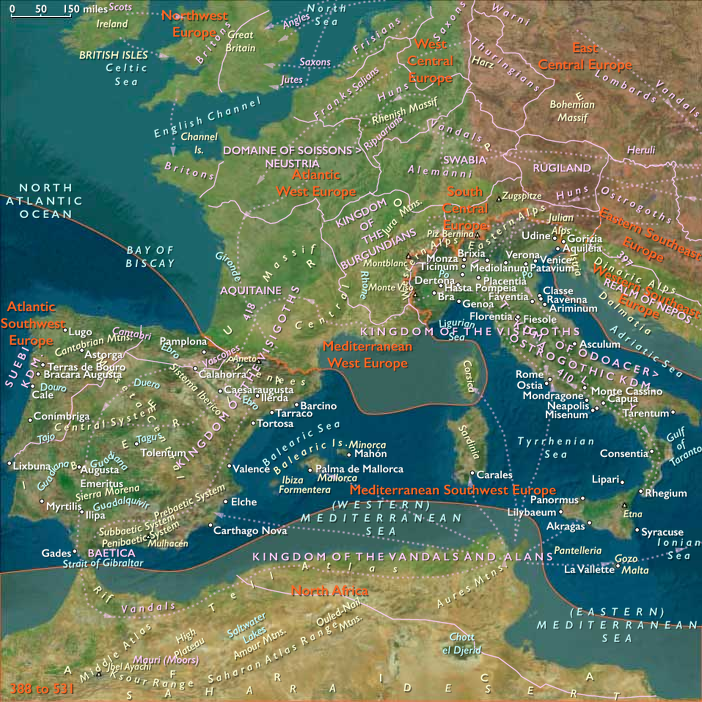
In 468, Leo chooses Basiliscus as leader of the later famous military expedition against Carthage.
The invasion of the kingdom of the Vandals is one of the greatest military undertakings recorded in the annals of history, a combined amphibious operation with over ten thousand ships and one hundred thousand soldiers.
The purpose of the operation is to punish the Vandal king Genseric for the sacking of Rome in 455, in which the former capital of the Western Roman Empire had been overwhelmed, and the Empress Licinia Eudoxia (widow of Emperor Valentinian III) and her daughters had been taken as hostages.
Ancient and modern historians provide different estimations for the number of ships and troops under the command of Basiliscus, as well as for the expenses of the expedition.
Both are enormous; Nicephorus Gregoras speaks of one hundred thousand ships, the more reliable Cedrenus says that the fleet that attacked Carthage consisted of eleven hundred and thirteen ships, having each one hundred men on board.
The most conservative estimation for expedition expenses is of sixty-four thousand pounds of gold, a sum that exceeds a whole year's revenue.
It is the greatest fleet ever sent against the Vandals; the expense brings Leo near to bankruptcy.