
The successful Swedish invasion of Poland enables …
Years: 1704 - 1704
The successful Swedish invasion of Poland enables Charles XII to dethrone Augustus II and coerce the Polish sejm to replace him with Stanisław Leszczyński in 1704.
Leszczyński, born in Lwów in 1677, was the son of Rafał Leszczyński, voivode of Poznań Voivodeship, and Anna Katarzyna Jabłonowska.
He had married Katarzyna Opalińska, by whom he has a daughter, Maria, who had become Queen-Consort of France as wife of Louis XV.
As Cupbearer of Poland in 1697, he had signed the confirmation of the articles of election of August II the Strong.
He had in 1703 joined the Lithuanian Confederation, which the Sapiehas with the aid of Sweden have formed against August.
Selected by Charles XII to supersede Augustus II, who is hostile towards the Swedes, Leszczyński is a young man of blameless antecedents, respectable talents, and comes from an ancient family, but certainly without sufficient force of character or political influence to sustain himself on so unstable a throne.
Nevertheless, with the assistance of a bribing fund and an army corps, the Swedes succeed in procuring his election by a scratch assembly of half a dozen castellans and a few score of gentlemen on July 12, 1704.
Stanisław is a few months later forced by a sudden inroad of Augustus to seek refuge in the Swedish camp, but finally on September 24, 1705, he is crowned king with great splendor.
Charles himself supplies his nominee with a new crown and scepter in lieu of the ancient Polish regalia, which had been carried off to Saxony by August.
The King of Sweden sends Peter Estenberg to King Stanislaw to act as an ambassador and correspondence secretary.
The Polish king's first act is to cement an alliance with Charles XII whereby the Polish-Lithuanian Commonwealth will engage to assist Sweden against the Russian tsar.
Locations
People
- Augustus II the Strong
- Charles XII of Sweden
- Jan Kazimierz Sapieha the Younger
- Stanisław Leszczyński
Groups
- Jews
- Saxony, Electorate of
- Sweden, (second) Kingdom of
- Denmark-Norway, Kingdom of
- Russia, Tsardom of
- Polish-Lithuanian Commonwealth (Commonwealth of the Two Nations)
Topics
Subjects
Regions
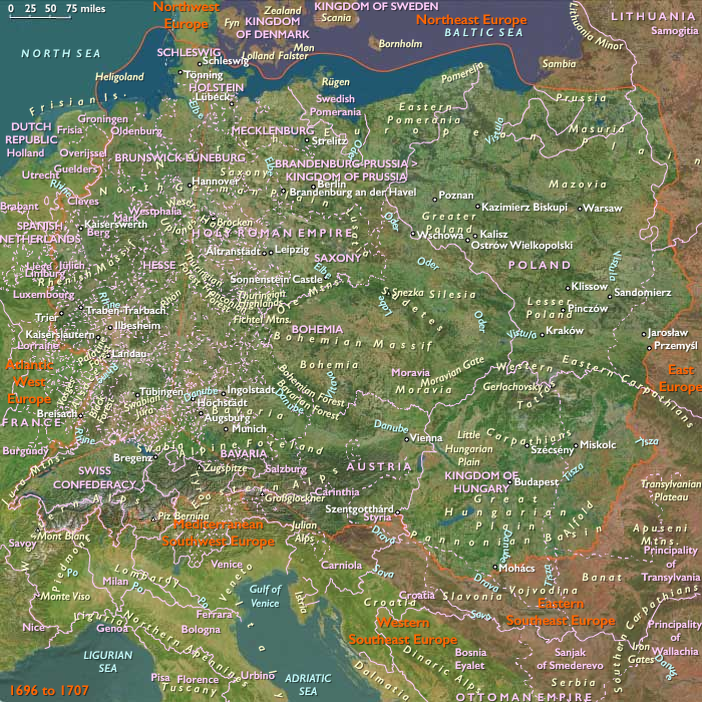
Subregions
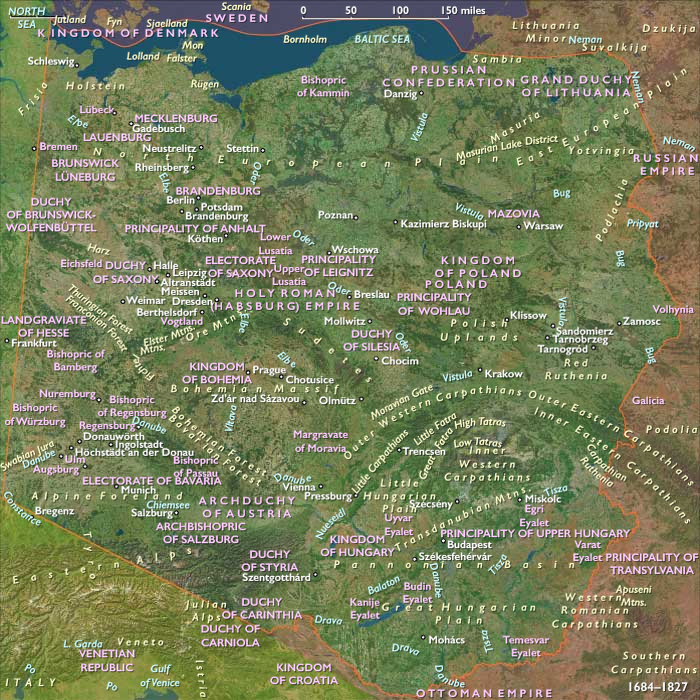
Related Events
Showing 10 events out of 28786 total
Years: 1704 - 1704
Locations
People
- Augustus II the Strong
- Charles XII of Sweden
- Jan Kazimierz Sapieha the Younger
- Stanisław Leszczyński
Groups
- Jews
- Saxony, Electorate of
- Sweden, (second) Kingdom of
- Denmark-Norway, Kingdom of
- Russia, Tsardom of
- Polish-Lithuanian Commonwealth (Commonwealth of the Two Nations)
Topics
Subjects
Regions
Subregions