
The success of the late Governor Frontenac’s …
Years: 1701 - 1701
August
The success of the late Governor Frontenac’s attacks, which again reached deep into Iroquois territory, and the inability of the English to protect them from attacks originating to their north and west, has forced the Iroquois to more seriously pursue peace.
Their demographic decline, aided by conflicts and epidemics, has put their very existence into doubt.
At the same time, commerce has become almost nonexistent because of a fall in the price of furs.
The natives prefer to trade with the merchants of New York because these merchants offer better prices than the French.
Preliminary peace negotiations had taken place in 1698 and 1699, but had been to some degree frustrated by the intervention of the English, who seek to keep the Iroquois from negotiating directly with the French.
After another successful attack into Iroquoia in early 1700, these attempts at intervention had failed.
The first conference between the French and Iroquois had been held on Iroquois territory at Onondaga in March 1700.
In September of the same year, a preliminary peace treaty had been signed in Montreal with the five Iroquois Nations.
Thirteen native symbols are on the treaty.
After this first entente, it was decided that a bigger one would be held in Montreal in the summer of 1701 and all Nations of the Great Lakes invited.
Selected French emissaries, clergy and soldiers, all well-perceived by the natives, have been assigned this diplomatic task.
The negotiations have continued during the wait for the big conference; the neutrality of the Five Nations had been discussed in Montreal in May 1701.
The Great Peace of Montreal, a peace treaty between New France and forty First Nations of North America, is signed on August 4, 1701, ending one hundred years of war between the Iroquois Confederacy and New France and its Huron and Algonquian allies.
The treaty assures that the Iroquois, formerly allied with the English, will be neutral if France and England are to ever resume hostilities.
Commerce and exploratory expeditions quietly resume in peace after the signing of the treaty.
The French explorer Cadillac leaves Montreal to explore the Great Lakes region, eventually founding the city of Detroit, which has a promising future.
Jesuit priests resume their spiritual mission-based work in the north.
The Great Peace of Montreal is a unique diplomatic event in the history of the Americas.
The treaty is still valid and recognized as such by the native tribes involved.
The French, in negotiating, have followed their traditional policy in the Americas, where the relationship with the natives is characterized by mutual respect and admiration and based on dialogue and negotiation.
Locations
People
Groups
- Algonquin, or Algonkin, people (Amerind tribe)
- Iroquois (Haudenosaunee, also known as the League of Peace and Power, Five Nations, or Six Nations)
- Abenaki people (Amerind tribe)
- Mohawk people (Amerind tribe)
- Wyandot, or Wendat, or Huron people (Amerind tribe)
- Miami (Amerind tribe)
- Ojibwa, or Ojibwe, aka or Chippewa (Amerind tribe)
- Seneca (Amerind tribe)
- Cree (Amerind tribe)
- Oneida people (Amerind tribe)
- Tuscarora (Amerind tribe)
- Onondaga people (Amerind tribe)
- Potawatomi (Amerind tribe)
- New France (French Colony)
- Jesuits, or Order of the Society of Jesus
- France, (Bourbon) Kingdom of
- New York, Province of (English Colony)
- England, (Orange and Stewart) Kingdom of
Topics
Commodoties
Subjects
Regions
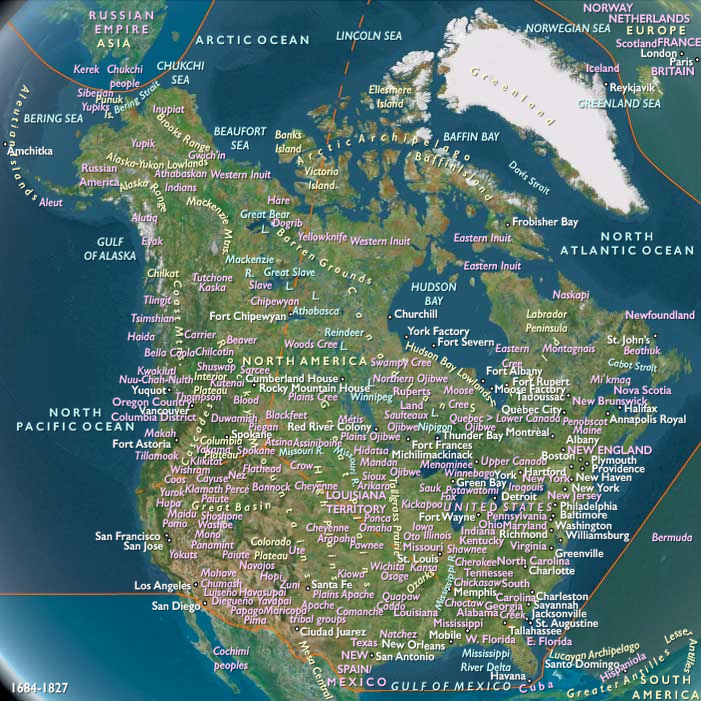
Subregions
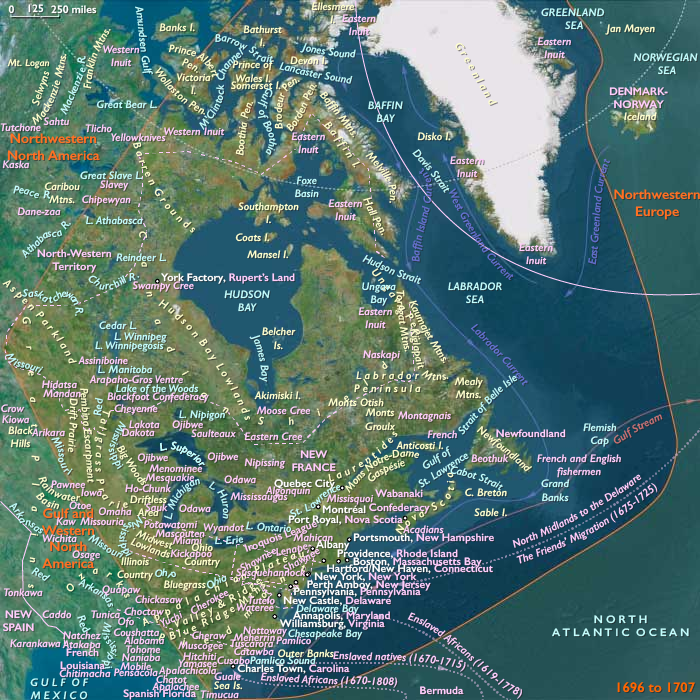
Related Events
Showing 10 events out of 28875 total
Years: 1701 - 1701
August
Locations
People
Groups
- Algonquin, or Algonkin, people (Amerind tribe)
- Iroquois (Haudenosaunee, also known as the League of Peace and Power, Five Nations, or Six Nations)
- Abenaki people (Amerind tribe)
- Mohawk people (Amerind tribe)
- Wyandot, or Wendat, or Huron people (Amerind tribe)
- Miami (Amerind tribe)
- Ojibwa, or Ojibwe, aka or Chippewa (Amerind tribe)
- Seneca (Amerind tribe)
- Cree (Amerind tribe)
- Oneida people (Amerind tribe)
- Tuscarora (Amerind tribe)
- Onondaga people (Amerind tribe)
- Potawatomi (Amerind tribe)
- New France (French Colony)
- Jesuits, or Order of the Society of Jesus
- France, (Bourbon) Kingdom of
- New York, Province of (English Colony)
- England, (Orange and Stewart) Kingdom of
Topics
Commodoties
Subjects
Regions
Subregions