
Filters:
Diponegoro is able, for a time, to …
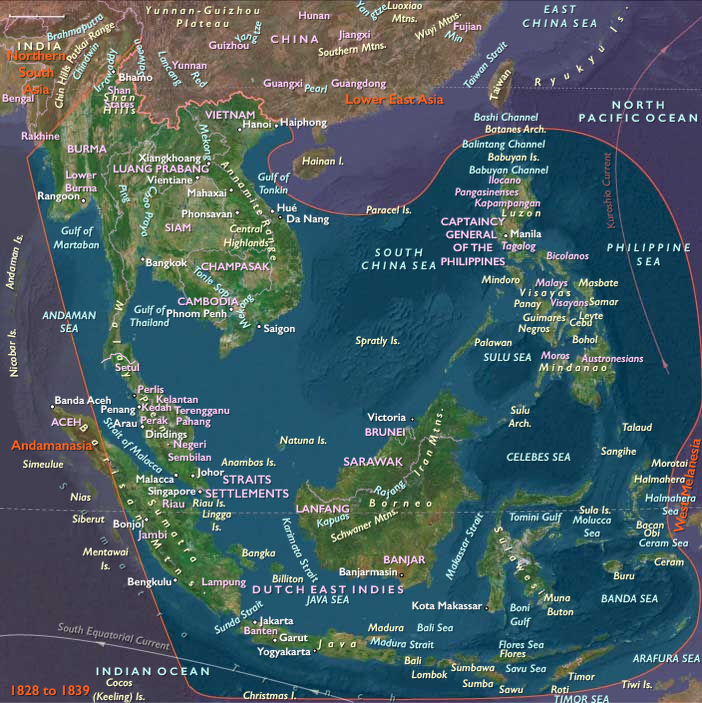
Years: 1828 - 1839
Diponegoro is able, for a time, to attract the loyalty of those who feel the crumbling of the previous order in different ways and have a variety of social and moral expectations.
He is seen variously as a protector of the general populace, as both a Muslim and a traditionalist messianic figure, a Ratu Adil (just king), and as an upholder of social hierarchy under a reformed or purified aristocracy.
These alliances prove fragile, however.
There are obvious internal tensions, for example, disagreements between those who fight for religious reasons (responding to Diponegoro's declaration of a Muslim holy war, or jihad) and those, especially among the court elite, who do so for essentially secular reasons.
The difficulty of the war itself, for which the Dutch devise new military strategies and which spread destruction on a scale unseen in generations, is extreme: about two-thirds of Java is affected, a quarter of its cultivated land is laid waste; and approximately two hundred thousand Javanese and fifteen thousand government troops (eight thousand of whom are Europeans) are killed.
Backed initially by about half of Yogyakarta's ruling elite, by early 1830 Diponegoro has lost most of their support, as well as that of both his chief military commander and his most influential Muslim patron and his followers.
Abandoned by all but a few loyal comrades, he attends a peace discussion with the Dutch commander of government forces, at which he is arrested and sent into exile.
He will die imprisoned in the government fort in Makassar.
He is seen variously as a protector of the general populace, as both a Muslim and a traditionalist messianic figure, a Ratu Adil (just king), and as an upholder of social hierarchy under a reformed or purified aristocracy.
These alliances prove fragile, however.
There are obvious internal tensions, for example, disagreements between those who fight for religious reasons (responding to Diponegoro's declaration of a Muslim holy war, or jihad) and those, especially among the court elite, who do so for essentially secular reasons.
The difficulty of the war itself, for which the Dutch devise new military strategies and which spread destruction on a scale unseen in generations, is extreme: about two-thirds of Java is affected, a quarter of its cultivated land is laid waste; and approximately two hundred thousand Javanese and fifteen thousand government troops (eight thousand of whom are Europeans) are killed.
Backed initially by about half of Yogyakarta's ruling elite, by early 1830 Diponegoro has lost most of their support, as well as that of both his chief military commander and his most influential Muslim patron and his followers.
Abandoned by all but a few loyal comrades, he attends a peace discussion with the Dutch commander of government forces, at which he is arrested and sent into exile.
He will die imprisoned in the government fort in Makassar.
Locations
People
Groups
Topics
Subjects
Regions
Subregions
Years: 1828 - 1839
Locations
People
Groups
Topics
Subjects
Regions
Subregions