
Filters:
Five leading Gurkha families contend for power …
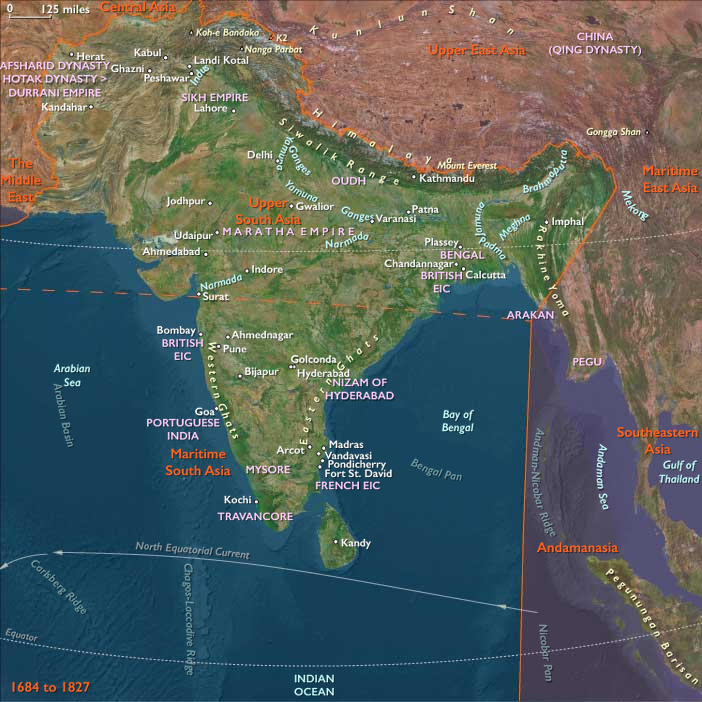
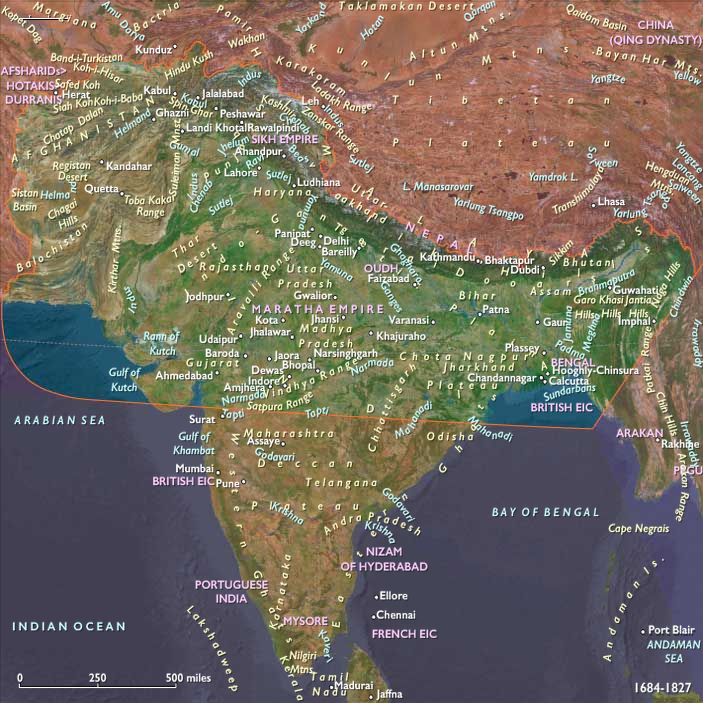
Years: 1684 - 1827
Five leading Gurkha families contend for power in Nepal during this period—the Shahs, Choutariyas, Thapas, Basnyats, and Pandes.
Working for these families and their factions are hill Brahmans, who act as religious preceptors or astrologers, and Newars, who occupy secondary administrative positions.
No one else in the country has any influence on the central government.
When a family or faction achieves power, it kills, exiles, or demotes members of opposing alliances.
Under these circumstances, there is little opportunity for either public political life or coordinated economic development.
Locations
People
Groups
- Kirat people
- Bengalis
- Persian people
- Pashtun people (Pushtuns, Pakhtuns, or Pathans)
- Buddhism
- Khas peoples
- Indian people
- Chinese (Han) people
- Tibetan people
- Rajasthan, Rajput Kingdoms of
- Rajputs
- Islam
- Muslims, Sunni
- Newar people
- Gurkha
- Tibet, Lamacracy of
- Bhutan, Kingdom of
- Sikkim, Kingdom of
- Chinese Empire, Qing (Manchu) Dynasty
- Mughal Empire (Delhi)
- Britain, Kingdom of Great
- East India Company, British (United Company of Merchants of England Trading to the East Indies)
- India, East India Company rule in
- Bengal Presidency
- Nepal, Shah Kingdom of
Topics
Subjects
Regions
Subregions
Years: 1684 - 1827
Locations
People
Groups
- Kirat people
- Bengalis
- Persian people
- Pashtun people (Pushtuns, Pakhtuns, or Pathans)
- Buddhism
- Khas peoples
- Indian people
- Chinese (Han) people
- Tibetan people
- Rajasthan, Rajput Kingdoms of
- Rajputs
- Islam
- Muslims, Sunni
- Newar people
- Gurkha
- Tibet, Lamacracy of
- Bhutan, Kingdom of
- Sikkim, Kingdom of
- Chinese Empire, Qing (Manchu) Dynasty
- Mughal Empire (Delhi)
- Britain, Kingdom of Great
- East India Company, British (United Company of Merchants of England Trading to the East Indies)
- India, East India Company rule in
- Bengal Presidency
- Nepal, Shah Kingdom of
Topics
Subjects
Regions
Subregions