
The strategic and narrow pass of Thermopylae …
Years: 480BCE - 480BCE
September
The strategic and narrow pass of Thermopylae lies between Mount Oeta and the Gulf of Malia's southern shore on the route from Thessaly to Locris.
Its name, meaning “hot gates,” is derived from its hot sulfur springs.
The Spartans have sent their king Leonidas to Thermopylae with a force of four thousand Peloponnesians, including three hundred full Spartan citizens and perhaps a helot contingent as well.
Mycenae, now an independent Dorian city-state, dispatches a contingent to help the Spartans.
Some three thousand central Greeks, including Boeotians from Thespiae and Thebes, join the Peloponnesians.
Leonidas surely knows that the Greeks cannot hold the pass indefinitely, but he also knows that an oracle has said that Sparta will be devastated unless one of its kings is killed.
For three days, Leonidas withstands attacks by the Persians.
However, on the second night, a Greek traitor guides the best Persian troops around the pass behind the Greek army.
Leonidas then orders most of his Peloponnesian and central Greek troops to retreat to the safety of the south, and he and his three hundred Spartans, together with their helots, and eleven hundred Thespian and Theban Boeotians, fight to the last man.
Although the Persians win at Thermopylae, they suffer considerable losses in the battle.
This episode makes a deep impression on the Greek imagination and gives rise to the legend that Spartans never surrender.
Sparta's single-minded dedication to rule by a militarized oligarchy precludes any hope of a political unification of classical Greece, but it performs a great service by its heroic stand at Thermopylae and its subsequent leadership in the Greco-Persian wars.
Locations
People
Groups
- Athens, City-State of
- Greece, classical
- Persian people
- Aegina, city-state of
- Sparta, Kingdom of
- Corinth, City-State of
- Thessalian League
- Peloponnesian League (Spartan Alliance)
- Achaemenid, or First Persian, Empire
Topics
- Younger Subboreal Period
- Iron Age Europe
- Iron Age Cold Epoch
- Classical antiquity
- Greco-Persian Wars, Early
- Artemisium, Battle of
- Persian Invasion of Greece, Second
- Thermopylae, Battle of
Commodoties
Subjects
- Commerce
- Watercraft
- Environment
- Labor and Service
- Conflict
- Mayhem
- Faith
- Government
- Technology
- Prophecy
Regions
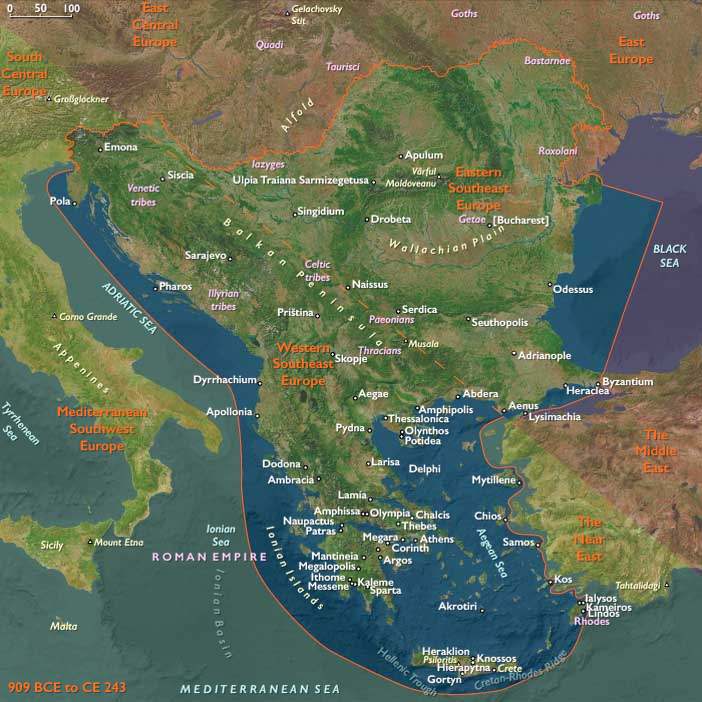
Subregions
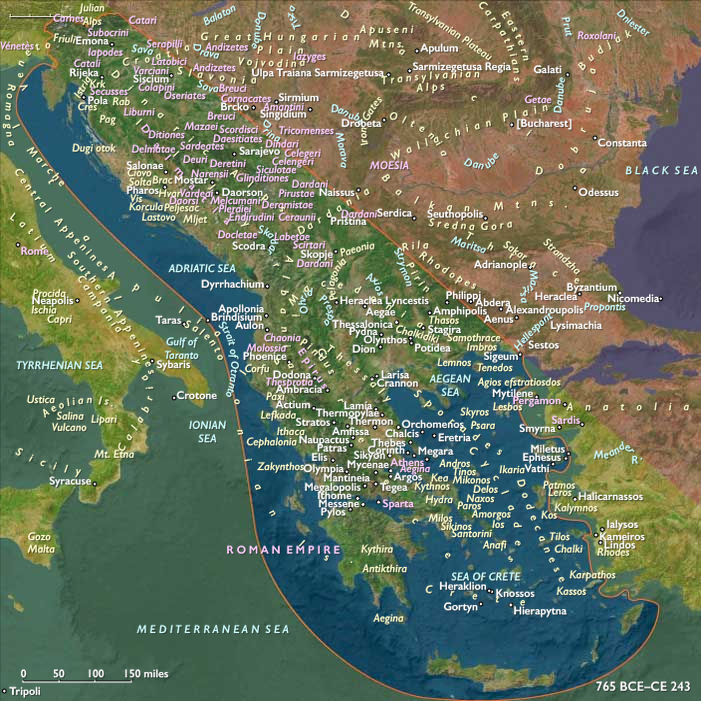
Related Events
Showing 10 events out of 65583 total
Years: 480BCE - 480BCE
September
Locations
People
Groups
- Athens, City-State of
- Greece, classical
- Persian people
- Aegina, city-state of
- Sparta, Kingdom of
- Corinth, City-State of
- Thessalian League
- Peloponnesian League (Spartan Alliance)
- Achaemenid, or First Persian, Empire
Topics
- Younger Subboreal Period
- Iron Age Europe
- Iron Age Cold Epoch
- Classical antiquity
- Greco-Persian Wars, Early
- Artemisium, Battle of
- Persian Invasion of Greece, Second
- Thermopylae, Battle of
Commodoties
Subjects
- Commerce
- Watercraft
- Environment
- Labor and Service
- Conflict
- Mayhem
- Faith
- Government
- Technology
- Prophecy
Regions
Subregions