
The specifics of Paleo-Indian migration remain subject …
Years: 19917BCE - 18190BCE
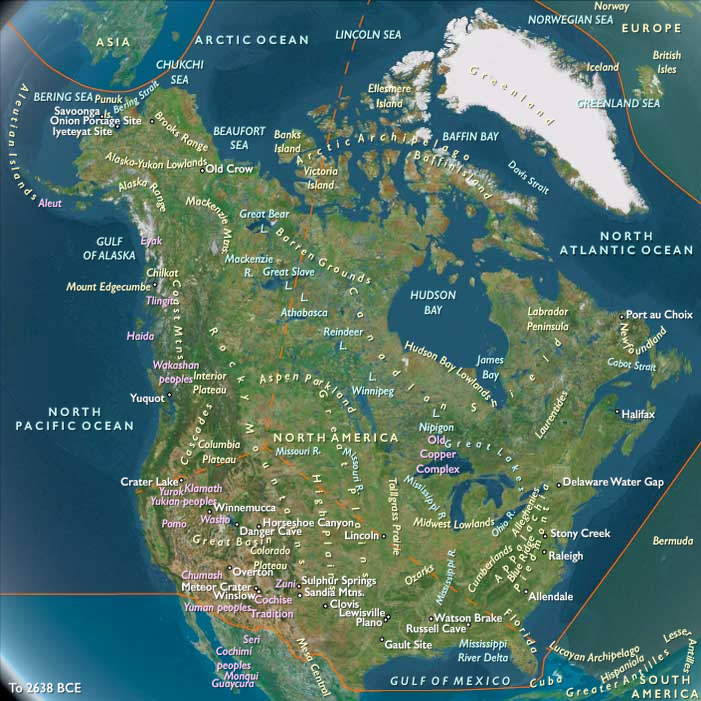
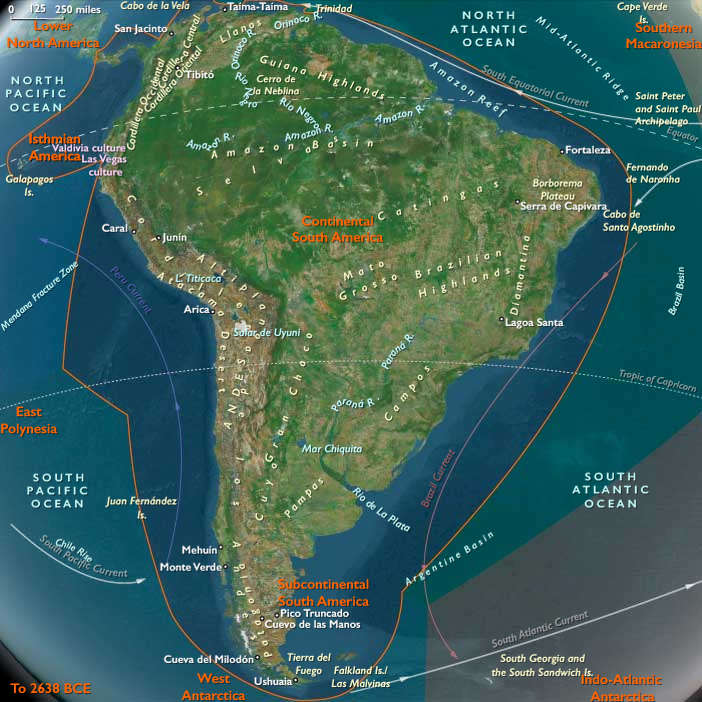
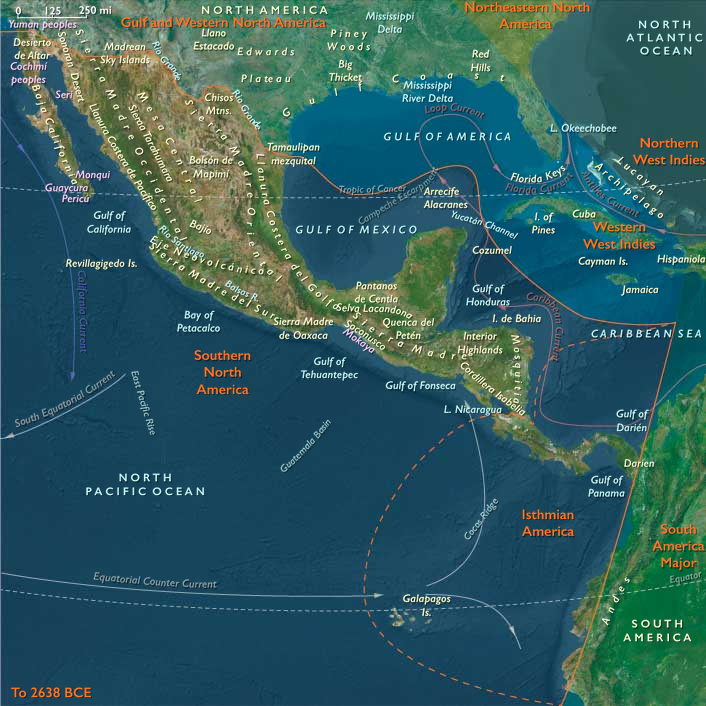
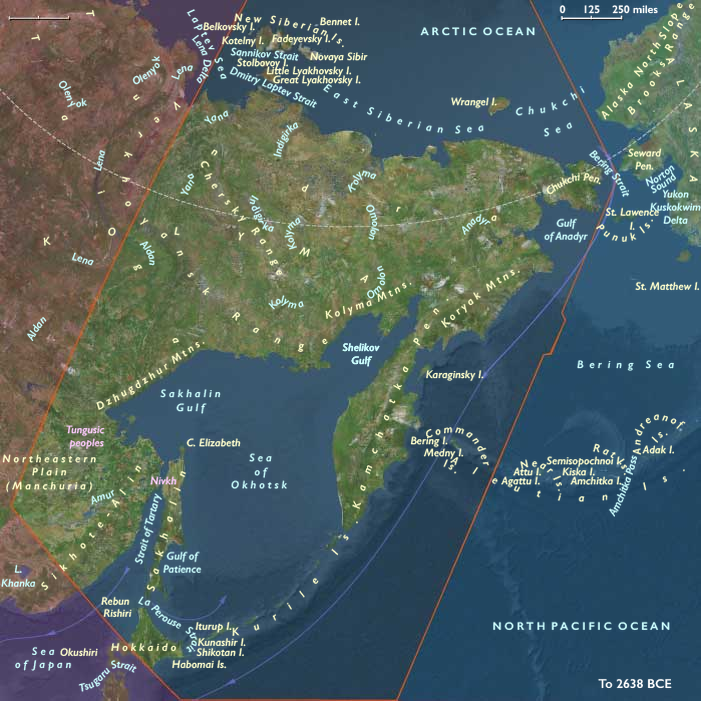
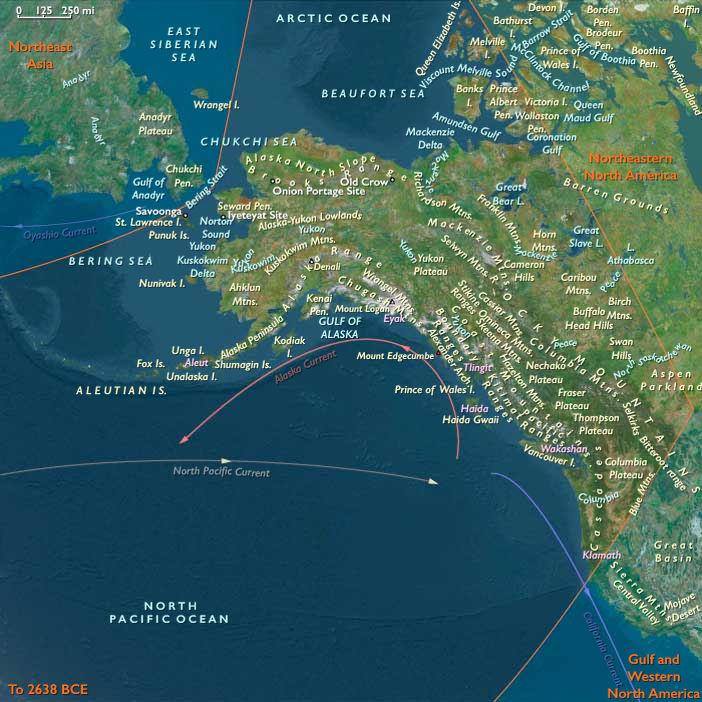
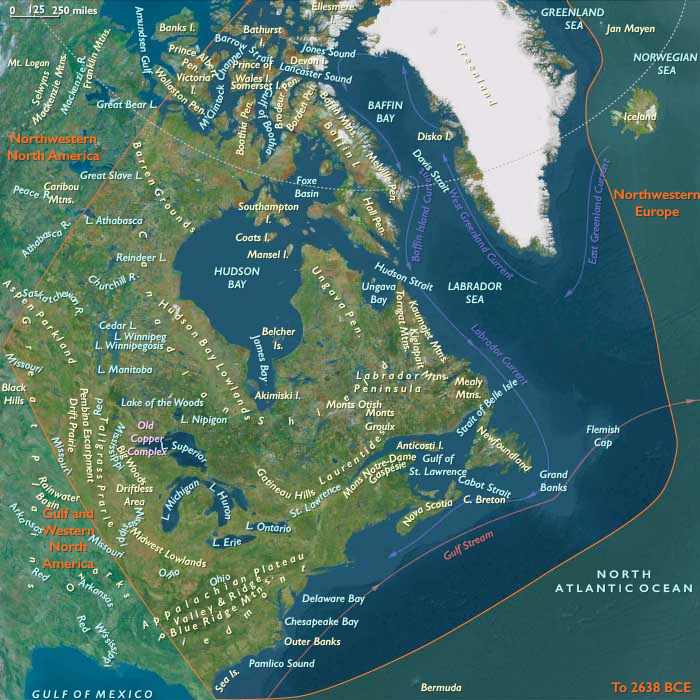
The specifics of Paleo-Indian migration remain subject to ongoing research. The traditional 'Clovis First' theory placed human arrival around 13,000 years ago via the Beringia land bridge. However, recent evidence suggests humans reached North America between 15,000-20,000 years ago, with some sites like White Sands potentially dating to 21,000-23,000 years ago.
Two main migration routes are proposed: an inland ice-free corridor between the Laurentide and Cordilleran ice sheets, and a Pacific coastal route. The coastal route is supported by evidence that ice-free coastlines existed earlier than inland corridors. Any early coastal archaeological evidence would indeed be submerged by post-glacial sea level rise.
Current archaeological evidence indicates widespread human habitation occurred during the late glacial period (roughly 16,000-13,000 years ago), well after the Last Glacial Maximum (26,500-19,000 years ago).
Topics
Commodoties
Subjects
Regions
Subregions
- Northeast Asia
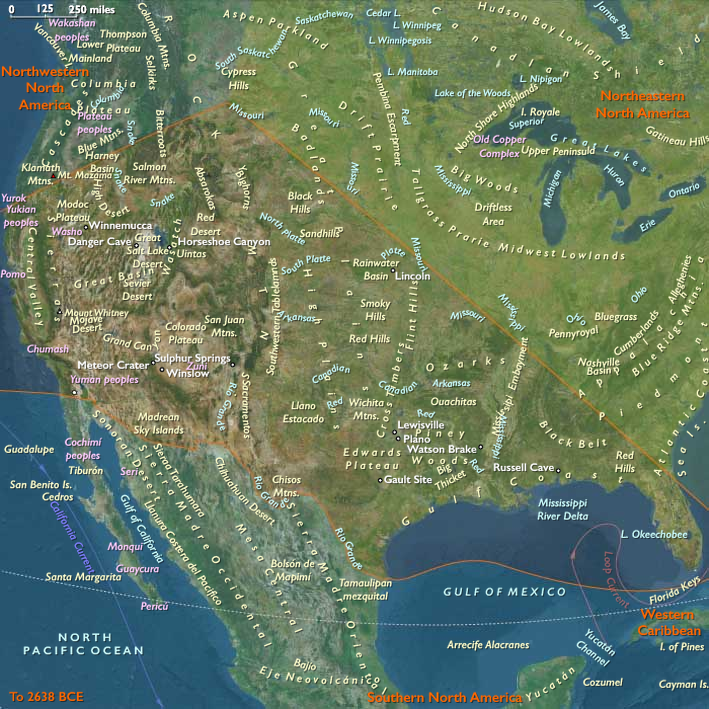
- Northwestern North America
- Northeastern North America
- South America Major
- South America Minor
- Southern North America
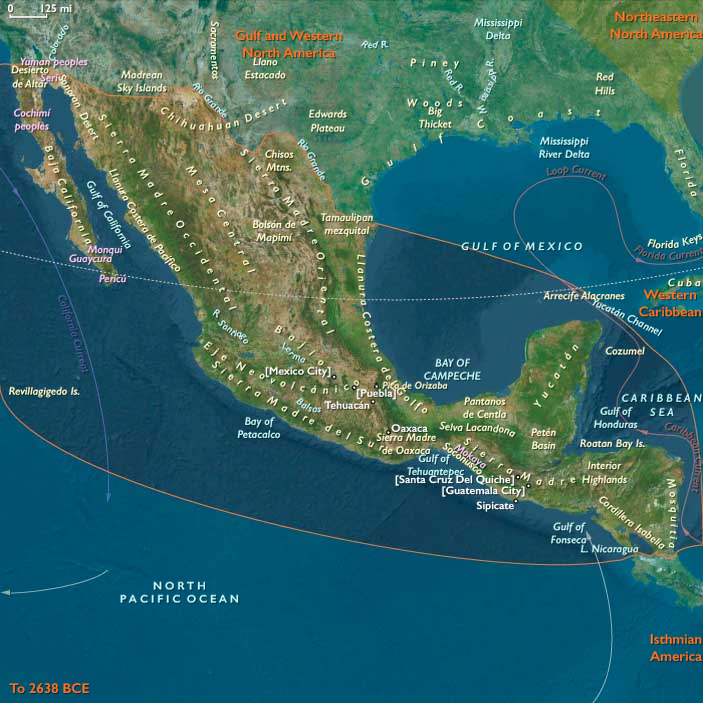
- Gulf and Western North America
Related Events
Showing 10 events out of 69442 total
Years: 19917BCE - 18190BCE
Topics
Commodoties
Subjects
Regions
Subregions
- Northeast Asia
- Northwestern North America
- Northeastern North America
- South America Major
- South America Minor
- Southern North America
- Gulf and Western North America