
The Spanish crown awards the followers of …
Years: 1535 - 1535
November
The Spanish crown awards the followers of Hernán Cortés “encomiendas,” grants of native villages from which they can collect tribute.
These grants give the colonists control over native labor and produce.
Many of the clergy object to the “encomiendas.”
Bartolomé de Las Casas, former encomendero turned missionary, argues vociferously for their suppression.
Bishop Zumárraga, after another year in Spain working for favorable concessions for the Indians, had returned to Mexico in October 1534, accompanied by a number of mechanics and six female teachers for the native girls.
Although finally consecrated, he no longer holds the title of Protector of the Indians, as it is thought that the new auditors will refrain from the abuses of prior regimes.
Pope Adrian VI had on May 9, 1522, issued the bull Exponi nobis fecisti to Charles V, in which he had transferred his own Apostolic authority in all matters to the Franciscans and other mendicant orders when they judged it necessary for the conversion of the natives, except for acts as requiring episcopal consecration.
This provision affected regions where there was no bishop, or where it required two or more days of travel to reach one.
Pope Paul III had confirmed the bull on January 15, 1535.
The bishops had found their authority much limited, and a series of assemblies followed in which Zumárraga with his customary prudence tried to arrive at an understanding with the regulars without openly clashing with them.
Various modifications had been adopted with the consent of the regulars on condition that these "should not impair the privileges of the regulars".
The question therefore remained open.
In 1535, Bishop Zumárraga receives the title and powers of Apostolic Inquisitor of the diocese of Mexico from the Inquisitor General, Álvaro Manrique, Archbishop of Seville, including that of delivering criminals to the secular courts.
He never avails himself of the title and does not establish the tribunal, although he does indict and deliver to the secular courts a lord of Texcoco, known as Don Carlos Ometochtzin Chichimecatecuhtli, accused of having "reverted to idolatry" and of offering human sacrifices.
He also encourages the destruction of native manuscripts and artifacts.
On November 14, 1535, with the arrival of the first viceroy, Antonio de Mendoza, the rule of the new auditors ends.
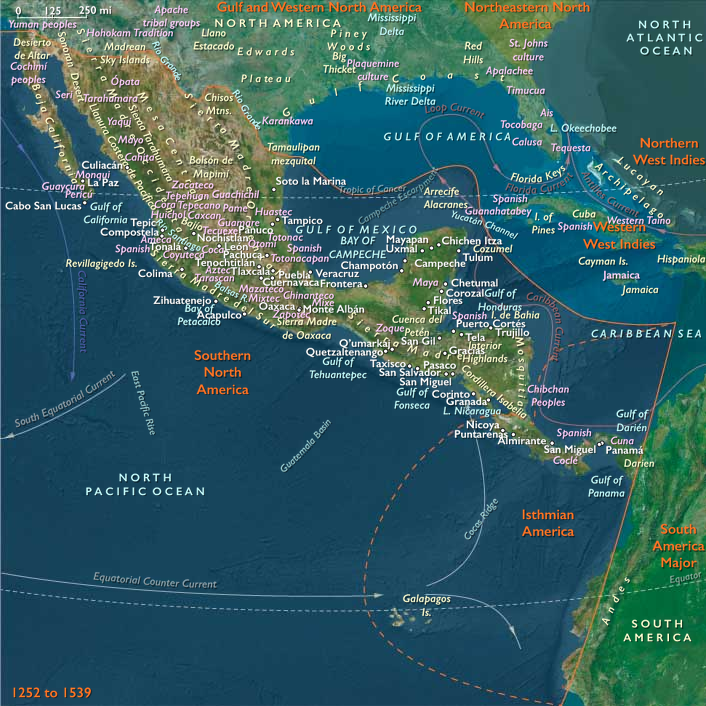
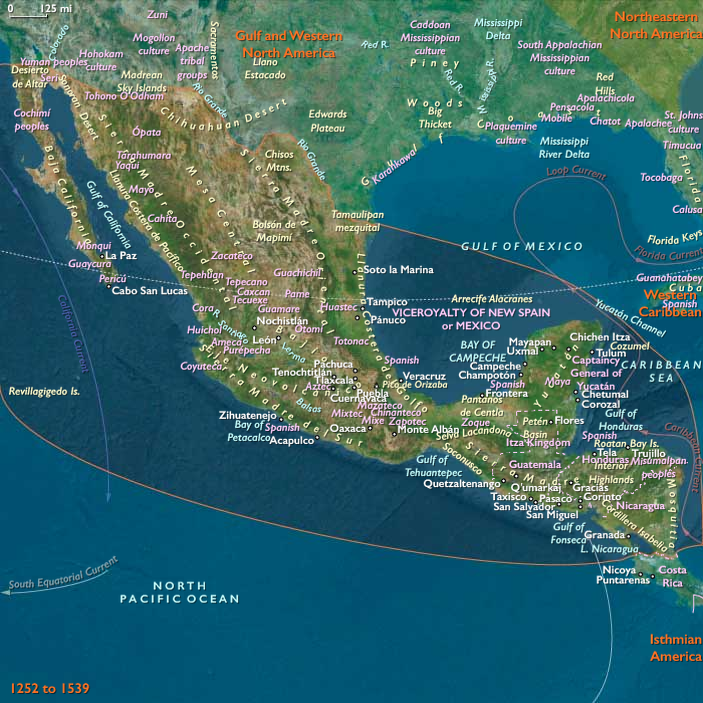
Mendoza wields authority over every corner of Spain’s American empire, which now includes five provinces: The Islands, New Spain (central Mexico), the just-conquered New Galicia, the partially conquered Guatemala, and the not-even-nominally-pacified Yucatan.
Mendoza forbids future expeditions by the still-ambitious Cortés.
Locations
People
- Antonio de Mendoza
- Bartolomé de las Casas
- Charles V, Holy Roman Emperor
- Hernán Cortés
- Juan de Zumárraga
Groups
- Christians, Roman Catholic
- Franciscans, or Order of St. Francis
- Santo Domingo, Captaincy General of
- Puerto Rico (Spanish Colony)
- Santiago, Colony of (Spanish Jamaica)
- Spain, Habsburg Kingdom of
- New Spain (Spanish colony)
- Nueva Galicia or El Nuevo Reino de Galicia (The New Kingdom of Galicia)
- New Spain, Viceroyalty of
Topics
- Age of Discovery
- Colonization of the Americas, Spanish
- Encomienda system
- Yucatán, Spanish Conquest of
- Guatemala, Spanish conquest of
Commodoties
Subjects
- Commerce
- Products
- Labor and Service
- Conflict
- Exploration
- Faith
- Government
- Custom and Law
- Technology
- Finance
Regions
Subregions
Related Events
Showing 10 events out of 37749 total
Years: 1535 - 1535
November
Locations
People
- Antonio de Mendoza
- Bartolomé de las Casas
- Charles V, Holy Roman Emperor
- Hernán Cortés
- Juan de Zumárraga
Groups
- Christians, Roman Catholic
- Franciscans, or Order of St. Francis
- Santo Domingo, Captaincy General of
- Puerto Rico (Spanish Colony)
- Santiago, Colony of (Spanish Jamaica)
- Spain, Habsburg Kingdom of
- New Spain (Spanish colony)
- Nueva Galicia or El Nuevo Reino de Galicia (The New Kingdom of Galicia)
- New Spain, Viceroyalty of
Topics
- Age of Discovery
- Colonization of the Americas, Spanish
- Encomienda system
- Yucatán, Spanish Conquest of
- Guatemala, Spanish conquest of
Commodoties
Subjects
- Commerce
- Products
- Labor and Service
- Conflict
- Exploration
- Faith
- Government
- Custom and Law
- Technology
- Finance
Regions
Subregions