
A number of indigenous groups inhabit the …
Years: 1524 - 1524
A number of indigenous groups inhabit the South American continent.
Our understanding of the peoples of this region is limited due to a combination of tropical weather, significant rainfall, and the destruction and misrepresentation of many records by Spanish conquistadors.
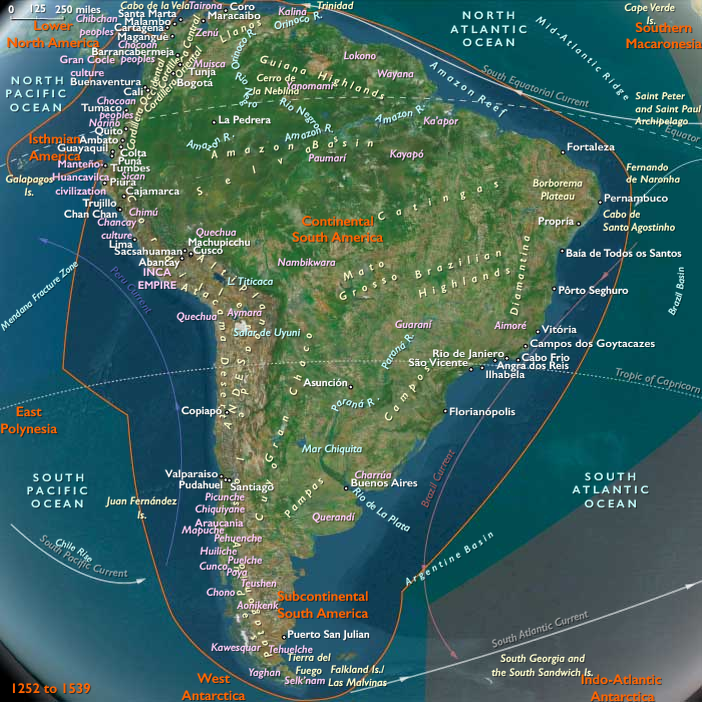
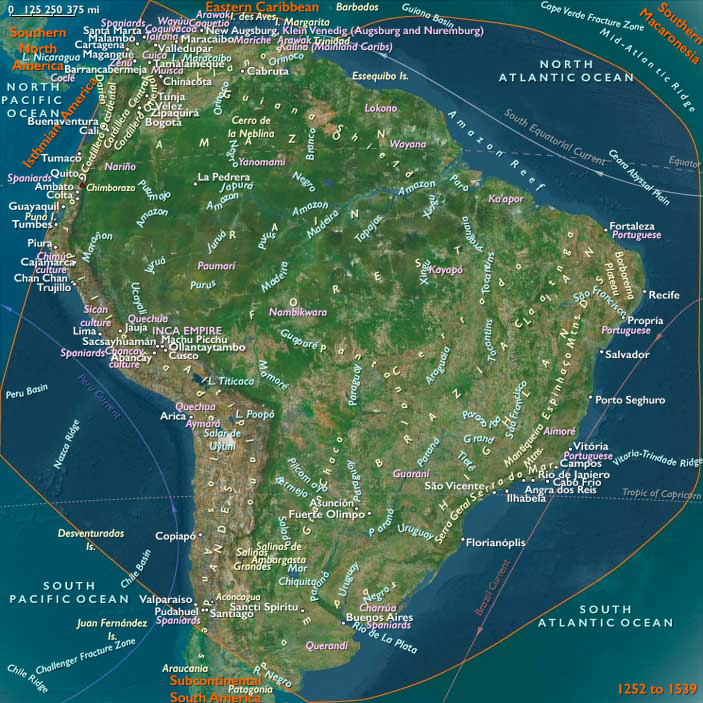
The Tairona of present Colombia form mid- to large-size population centers, consisting of stone pathways, terraces, protected waterways, and spaces dedicated to agricultural produce.
Their economy is primarily agricultural, cultivating corn, pineapple, yucca, and other local foodstuffs.
The Tairona are considered quite advanced for their time period.
Surviving archaeological sites consist of formed terraces and small scale underground stone channels.
They also are known to actively collect and process salt, which is a significant trading commodity.
We know that they traded with other indigenous groups along the coast and interior.
Archaeological excavations have recovered significant works in pottery, stonework and gold.
In 1520 the governorship of Trinidad had been granted to Spanish explorer Rodrigo de Bastidas, but this had been opposed by Diego Columbus, and Bastidas had waived the grant.
He received instead permission to exploit a region from Cabo de la Vela westward to the Magdalena River; however this expedition had been delayed for several years.
In 1524 he returns to the New World and on July 29 founds the City of Santa Marta on the Caribbean coast of Colombia, naming it so because it is on Saint Martha's feast day that the city is founded. A first permanent Spanish settlement on the Colombian coast is founded in 1525 at Santa Marta; it is close to the territory of the Taironas and will later serve as a base for conquest of the Muiscas.
Locations
People
Groups
Topics
Commodoties
Subjects
Regions
Subregions
Related Events
Showing 10 events out of 38519 total
Years: 1524 - 1524
Locations
People
Groups
Topics
Commodoties
Subjects
Regions
Subregions