
The Social War, also known as the …
Years: 357BCE - 346BCE
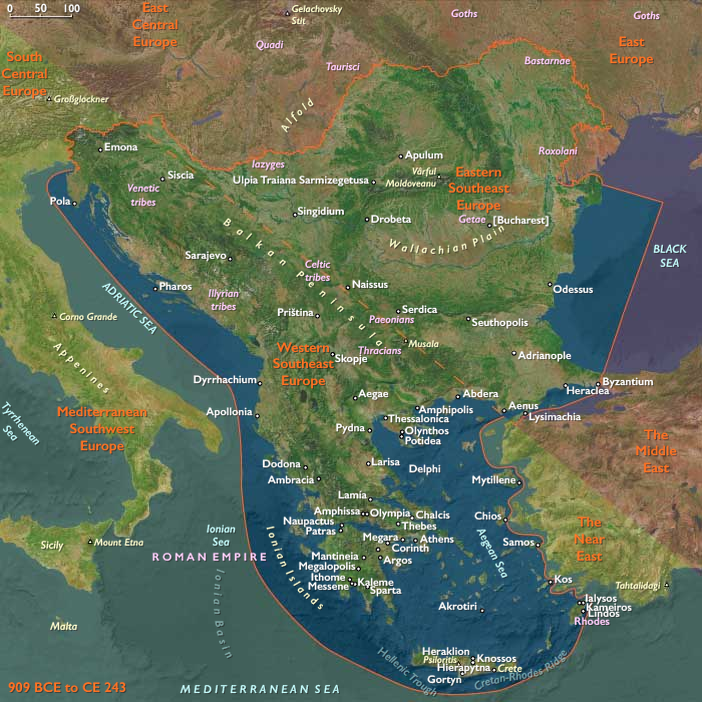
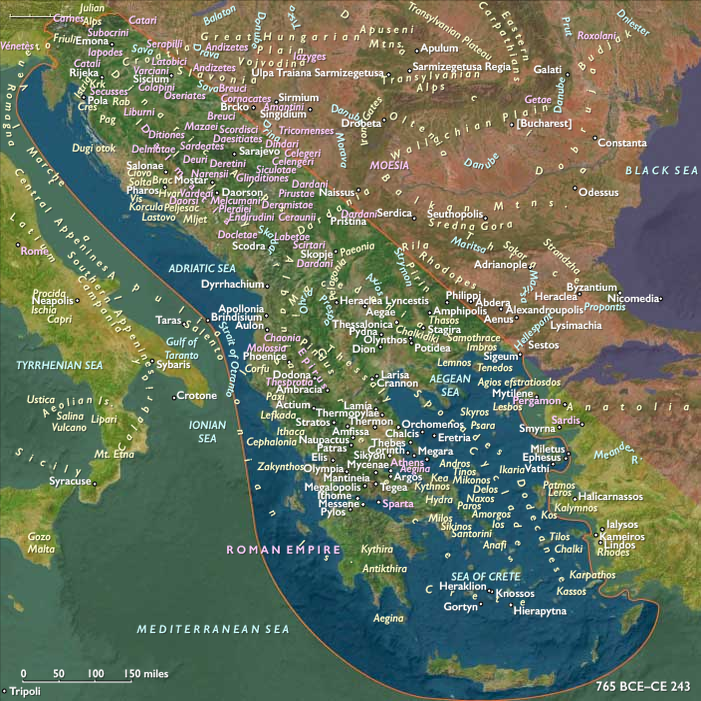
The Social War, also known as the War of the Allies, is fought from 357 BCE to 355 BCE between Athens, with its Second Athenian Empire, and between the allies of Chios, Rhodes, and Cos as well as the independent Byzantion.
As a result of increasing Athenian operations near the Persian empire, Persia asks Athens in 356 BCE to leave Asia Minor, threatening war.
Athens, in no shape for another war, complies and withdraws the following year, recognizing the independence of the confederate allies.
The war party of Chares is replaced by a peace party under Eubulus.
The financial surplus accumulated for the war is put in a fund to be used for public entertainment.
Athens still has a naval empire of sorts, but this is already showing signs of breakup, and the greatest hoplite power in Greece, Sparta, is preoccupied with regaining Messenia, just as Persia is preoccupied with Egypt.
The city-state of Thebes, which had been ascendant in the 360s, has lost its great leader Epaminondas and overextends itself badly in the Third Sacred War, fought between the forces of the Delphic Amphictyonic League, principally represented by Thebes, and latterly by Philip II of Macedon, and the Phocians.
The war is caused by a large fine imposed in 357 BCE on the Phocians by the Amphictyonic League (dominated at this time by Thebes), for the offense of cultivating sacred land.
The Phocians, refusing to pay, instead seize the Temple of Apollo in Delphi, and use the accumulated treasures to fund large mercenary armies.
Thus are the Phocians able to continue the war for many years while suffering several major defeats, until eventually all parties are nearing exhaustion.
Philip II uses the distraction of the other states to increase his power in northern Greece, in the process becoming ruler of Thessaly.
In the end, Philip's growing power, and the exhaustion of the other states, allows him to impose a peaceful settlement of the war, marking a major step in the rise of Macedon to preeminence in Greece.
People
Groups
- Thebes, City-State of
- Rhodes, City-States of
- Greece, classical
- Cyprus, Classical
- Amphictyonic League
- Macedon, Argead Kingdom of
- Boeotian League
- Achaemenid, or First Persian, Empire
- Athens, City-State of
- Athenian Empire or Confederacy, Second
Topics
- Iron Age Europe
- Greek colonization
- Iron Age Cold Epoch
- Classical antiquity
- Iron Age China
- Roman-Etruscan Wars, Early
- Pre-Roman Iron Age of Northern Europe
- Sicilian Wars, or Carthaginian-Syracusan Wars
- Sicilian War, Second, or Second Carthaginian-Syracusan War
- Macedon, Rise of
- Social War, or War of the Allies
- Sacred War, Third
Commodoties
- Weapons
- Grains and produce
- Ceramics
- Strategic metals
- Beer, wine, and spirits
- Land
- Manufactured goods
- Money
Subjects
Regions
Subregions
Years: 357BCE - 346BCE
People
Groups
- Thebes, City-State of
- Rhodes, City-States of
- Greece, classical
- Cyprus, Classical
- Amphictyonic League
- Macedon, Argead Kingdom of
- Boeotian League
- Achaemenid, or First Persian, Empire
- Athens, City-State of
- Athenian Empire or Confederacy, Second
Topics
- Iron Age Europe
- Greek colonization
- Iron Age Cold Epoch
- Classical antiquity
- Iron Age China
- Roman-Etruscan Wars, Early
- Pre-Roman Iron Age of Northern Europe
- Sicilian Wars, or Carthaginian-Syracusan Wars
- Sicilian War, Second, or Second Carthaginian-Syracusan War
- Macedon, Rise of
- Social War, or War of the Allies
- Sacred War, Third
Commodoties
- Weapons
- Grains and produce
- Ceramics
- Strategic metals
- Beer, wine, and spirits
- Land
- Manufactured goods
- Money
Subjects
Regions
Subregions