The Wall of …

Years: 1190 - 1190

The Wall of Philip Augustus: Paris Fortified Against the Plantagenets (Begun 1190)

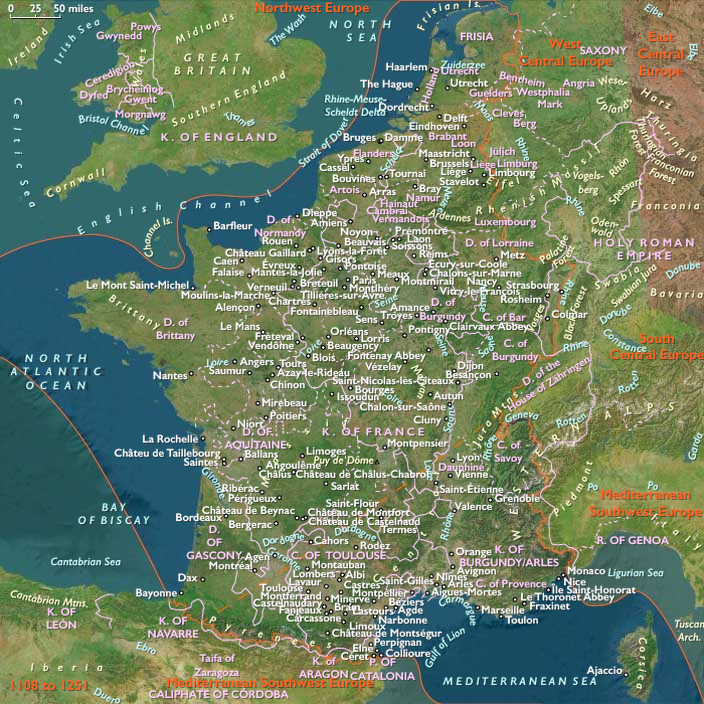
During the ongoing struggles between Philip II of France and the Anglo-Norman House of Plantagenet, Philip ordered the construction of a massive stone wall to fortify Paris, later known as the Wall of Philip Augustus. The decision to fortify the capital was made in 1190, just before Philip departed for the Third Crusade, as he feared an attack from the northwest, where Normandy was controlled by the Plantagenets.


Strategic Reasons for the Wall

  1. Protecting Paris During the Third Crusade

    • Philip anticipated that, in his absence on crusade, the Angevin kings of England—especially Richard I—could seize the opportunity to strike at France.
    • Paris, as the royal capital, needed defenses to prevent invasion from Anglo-Norman forces.
  2. Fortifying Against Plantagenet Normandy

    • At the time, Normandy was still in Plantagenet hands, and any attack on Paris would likely come from the northwest.
    • To prepare for this, Philip prioritized fortifying the Right Bank first, as it was the most vulnerable to an invasion from Normandy.

Construction and Design of the Wall

  • The Right Bank defenses were built first, given its greater risk of attack from the Plantagenet-controlled territories.
  • The wall was made of stone and featured:
    • Large fortified gates at key entry points.
    • Defensive towers spaced along the length of the wall.
    • A moat in some sections to further strengthen the city's defenses.
  • Upon Philip’s return from the Crusade, construction continued on the Left Bank, ensuring the entire city was enclosed.

Impact of the Wall of Philip Augustus

  • First major fortification of Paris – The wall transformed Paris into a true medieval stronghold, providing defensive security for the expanding Capetian capital.
  • A symbol of Philip’s kingship – Strengthening the capital reinforced Philip’s authority, demonstrating his foresight and strategic planning.
  • A legacy of urban defense – The wall remained in use for centuries, with portions still visible today, marking Philip’s lasting influence on the development of Paris.

The Wall of Philip Augustus, begun in 1190, was a direct response to the ongoing Capetian-Plantagenet rivalry and was a key part of Philip’s strategy to secure France while embarking on the Third Crusade.

Related Events

Filter results