
The so-called Book of Ruth, traditionally …
Years: 753BCE - 742BCE
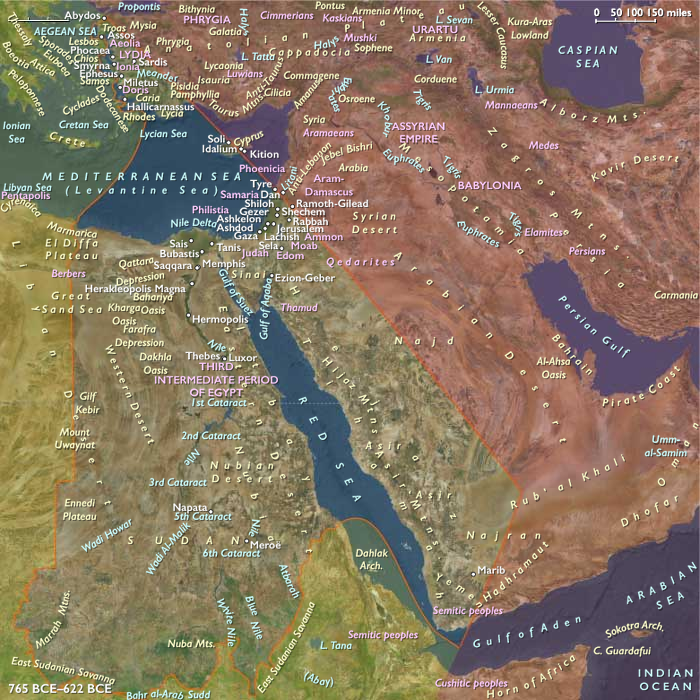
The so-called Book of Ruth, traditionally ascribed to the prophet Samuel but regarded by skeptics as a novella of probable Hellenistic-era date, describes how Ruth, the Moabite widow of a Bethlehemite weds an older kinsman Boaz with her mother-in-law Naomi's assistance, thereby preserving her deceased husband's posterity and becoming an ancestor of King David.
The artfully crafted plot displays a pronounced belief in the comprehensive but hidden providence of God that works quietly in ordinary events.
The story also describes legal customs concerning levirate marriage, redemption of property, and gleaning in the fields.
The prophet Amos, who apparently lives around this time as a shepherd at Tekoa in the southern kingdom of Judah, addresses a prophetic message to the northern kingdom of Israel.
Writing during a time of prosperity, when a sharp contrast exists between the luxurious life of the nation's leaders and the oppression of the poor, Amos preaches the urgency of social justice and the imminence of divine judgment.
Each of the nine parts of the so-called “Book of Amos” is dominated by a negative message containing threats of darkness, famine, and destruction.
Beginning in 747, the prophet Isaiah speaks about internal political and economic policy.
Isaiah, perhaps of aristocratic origin, lives in Jerusalem from around 742. (Scholars now generally agree that the “Book of Isaiah” contains the work of more than one man, but that chapters 1 to 35, known as First Isaiah, which falls roughly into four periods from 747 to 701, can be ascribed either to Isaiah himself or to his disciples.)
Locations
Groups
Topics
Subjects
Regions
Subregions
Years: 753BCE - 742BCE
Locations
Groups
Topics
Subjects
Regions
Subregions