
Roman Britain The sixth-century British …
Years: 542 - 542
Roman Britain
The sixth-century British cleric Gildas is one of the only known near-contemporary writers to document the events of post-Roman Britain, a time of turmoil, Saxon invasions, and internal strife. His work, De Excidio et Conquestu Britanniae (On the Ruin and Conquest of Britain), is a sermon in three parts, filled with moral condemnation rather than objective historical narration. However, it remains one of the most important sources for the fifth and sixth centuries.
1. The Structure of De Excidio and Its Contents
Gildas' text is divided into three distinct sections:
Part I: A History of Britain
- This section traces British history from the Roman conquest to Gildas' own time.
- It mentions Ambrosius Aurelianus, a leader of Romano-British resistance against the Saxons.
- The text also refers to the Battle of Mons Badonicus, a major British victory over the Anglo-Saxons, which had reportedly led to a period of relative peace.
Part II: The Condemnation of Five British Kings
Gildas harshly criticizes five contemporary kings for their moral corruption and failures in leadership:
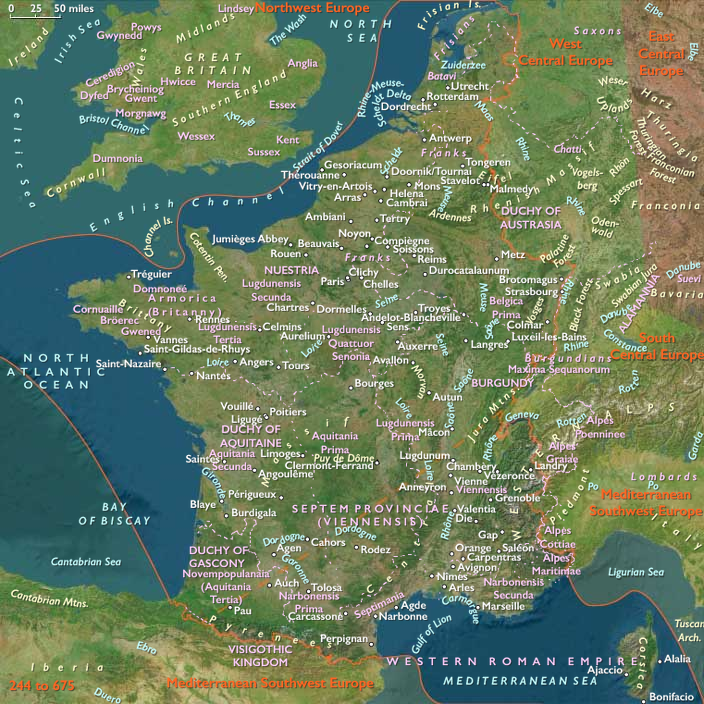
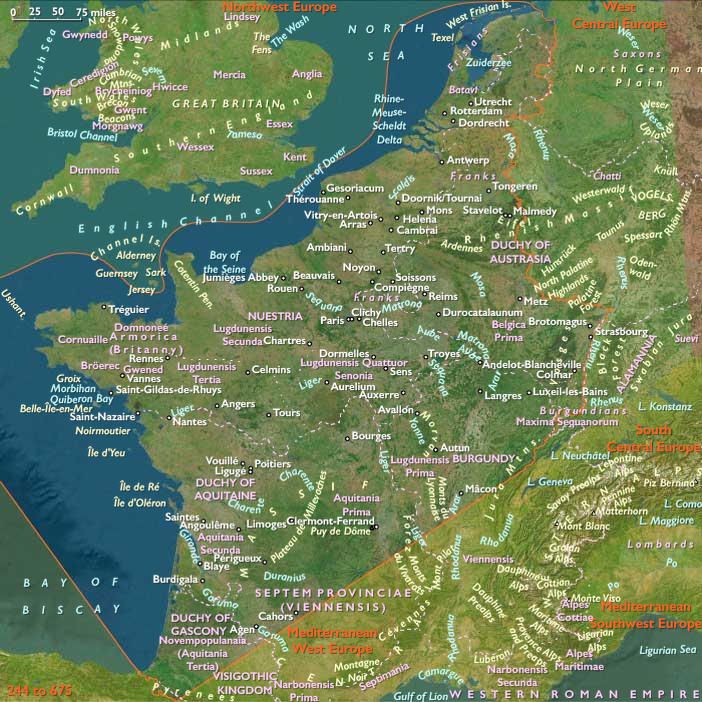
- Constantine of Dumnonia
- Aurelius Caninus
- Vortiporius of the Demetae (Dyfed)
- Cuneglasus
- Maelgwn Gwynedd – the most historically significant, ruling Gwynedd in Wales.
Gildas accuses these rulers of murder, adultery, and impiety, portraying them as divinely punished for their sins.
Part III: The Condemnation of the British Clergy
- Gildas turns his attack on the British clergy, whom he views as corrupt, morally lax, and failing in their spiritual duties.
- He criticizes their greed, arrogance, and failure to provide moral leadership, blaming them for Britain’s downfall.
2. Historical Significance of De Excidio
Although not a history book, Gildas' work is one of the only surviving near-contemporary accounts of the Anglo-Saxon migration and sub-Roman Britain.
- His mention of Ambrosius Aurelianus and the Battle of Mons Badonicus provides rare historical detailsabout British resistance to Saxon expansion.
- He paints a grim picture of post-Roman Britain, highlighting civil war, political fragmentation, and moral decay.
- His moralistic approach and lack of precise dates make it difficult to extract exact chronology, but his perspective is invaluable for historians.
3. Dating De Excidio: Earlier Than Previously Thought?
- Traditionally, De Excidio has been dated to the 540s, based on its pessimistic tone and historical context.
- However, some scholars now argue for an earlier date, possibly the first quarter of the sixth century, or even earlier.
- If written before the mid-sixth century, it predates major plagues and climate disruptions that might have influenced Gildas’ apocalyptic tone.
4. Gildas' Enduring Legacy
- His moralistic and judgmental approach shaped later medieval historical writing, influencing Bede and Geoffrey of Monmouth.
- He remains one of the earliest known British authors, providing a unique insight into post-Roman Britain.
- His warnings against moral decay and corruption have been used throughout history as cautionary lessons for rulers and clergy.
Despite its bias and omissions, De Excidio et Conquestu Britanniae remains a crucial document for understanding the transitional period between Roman Britain and the early medieval Anglo-Saxon kingdoms.
Locations
People
Groups
Topics
Commodoties
Subjects
- Commerce
- Writing
- Environment
- Labor and Service
- Conflict
- Faith
- Government
- Technology
- Movements
- History
Regions
Subregions
Years: 542 - 542
Locations
People
Groups
Topics
Commodoties
Subjects
- Commerce
- Writing
- Environment
- Labor and Service
- Conflict
- Faith
- Government
- Technology
- Movements
- History
Regions
Subregions