
The Sixteen Kingdoms, or less commonly the …
Years: 388 - 531
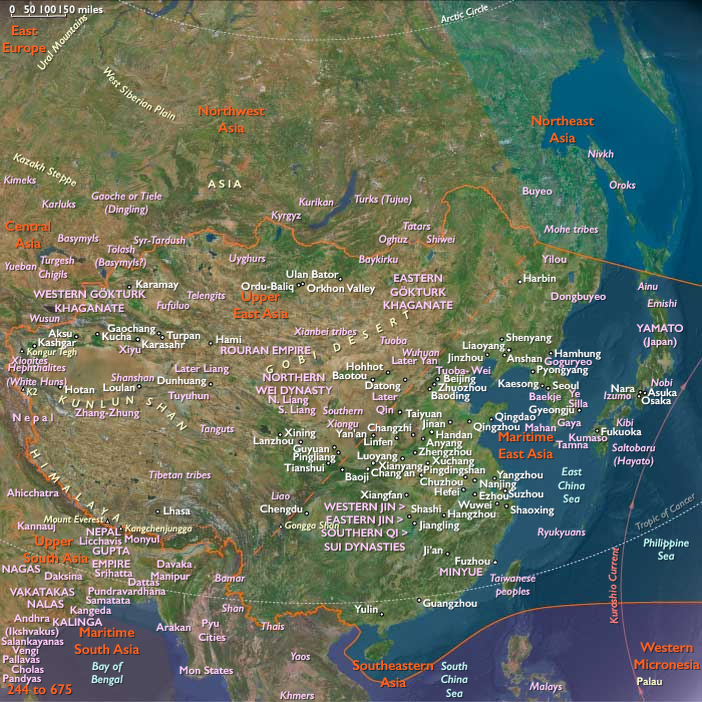
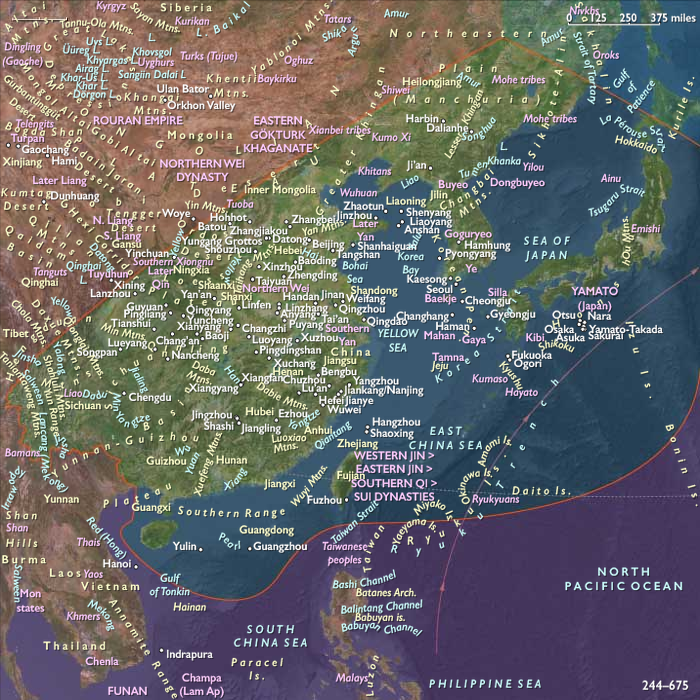
The Sixteen Kingdoms, or less commonly the Sixteen States, are a collection of numerous short-lived sovereign states in China proper and its neighboring areas from 304 to 439 after the retreat of the Jin Dynasty (265-420) to South China and before the establishment of the Northern Dynasties.
The Southern and Northern Dynasties period, which follows the Jin Dynasty and precedes the Sui Dynasty in China, is an age of civil war and political disunity.
It is, however, also a time of flourishing in the arts and culture, advancement in technology, and the spread of foreign Mahayana Buddhism and native Taoism.
Distinctive Chinese Buddhism also matures during this time, shaped by the northern and southern dynasties alike.
China’s northern territory, including the site where Beijing now stands, is largely under the control of invading nomads for nearly three centuries (from the end of the Xi [Western] Jin dynasty in 316/317 to the beginning of the Sui dynasty in 581).
The process of sinicization accelerates during this period among the non-Chinese arrivals in the North and among the aboriginal tribesmen in the South.
Many northern Chinese immigrate to the South.
This process is accompanied by the increasing popularity of Buddhism (introduced into China in the first century CE) in both north and south China, along with Taoism gaining influence from the outline of Buddhist scriptures (with two essential Taoist canons written during this period).
Multiple story towers such as guard towers and residential apartments had existed in previous periods of China.
The distinct Chinese pagoda tower (for storing Buddhist scriptures) evolves during this period from the stupa, the latter originating from Buddhist traditions of protecting sutras in ancient India.
Groups
- Buddhism
- Taoism
- Di (Wu Hu)
- Chinese (Han) people
- Buddhism, Mahayana
- Chinese Empire, Tung (Eastern) Jin Dynasty
Topics
- Silk Road transmission of Buddhism
- Migration Period
- Sixteen Kingdoms Period in China
- Civil Wars in China triggered by the Wu Hu Invasion
- Southern and Northern Dynasties Period in China
- Reign of Yuanjia
- Migration Period Pessimum
Subjects
Regions
Subregions
Years: 388 - 531
Groups
- Buddhism
- Taoism
- Di (Wu Hu)
- Chinese (Han) people
- Buddhism, Mahayana
- Chinese Empire, Tung (Eastern) Jin Dynasty
Topics
- Silk Road transmission of Buddhism
- Migration Period
- Sixteen Kingdoms Period in China
- Civil Wars in China triggered by the Wu Hu Invasion
- Southern and Northern Dynasties Period in China
- Reign of Yuanjia
- Migration Period Pessimum
Subjects
Regions
Subregions