
Filters:
The Breakdown of the 1187 Truce and …
Years: 1188 - 1188
June
The Breakdown of the 1187 Truce and Renewed Conflict Between Philip II and Henry II (1188 CE)
The ongoing struggle between Philip II of France and Henry II of England remained unresolved, despite temporary truces and shifting alliances. By 1187, Philip had originally allied himself with Henry’s rebellious sons, Richard and John, seeking to exploit divisions within the Angevin dynasty to advance his territorial ambitions.
Philip’s 1187 Campaign in Berry and the Temporary Truce
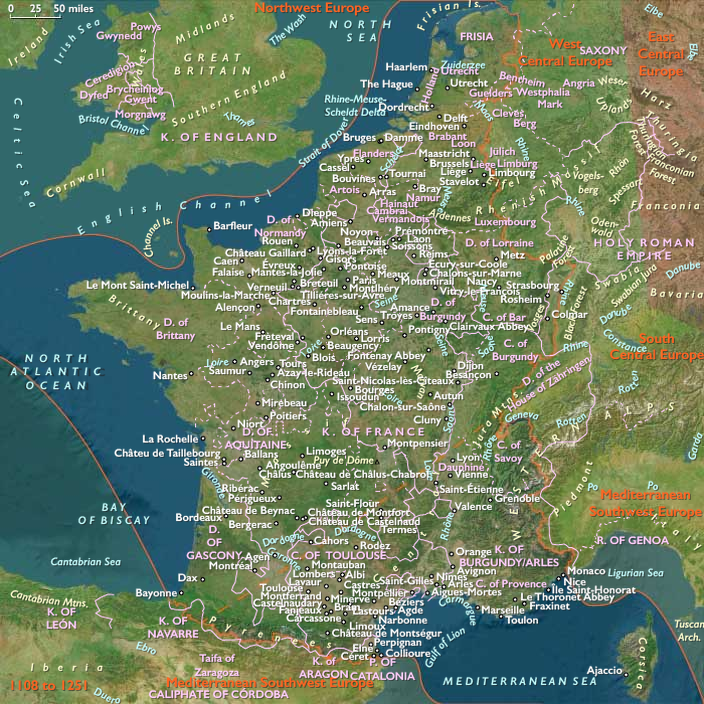
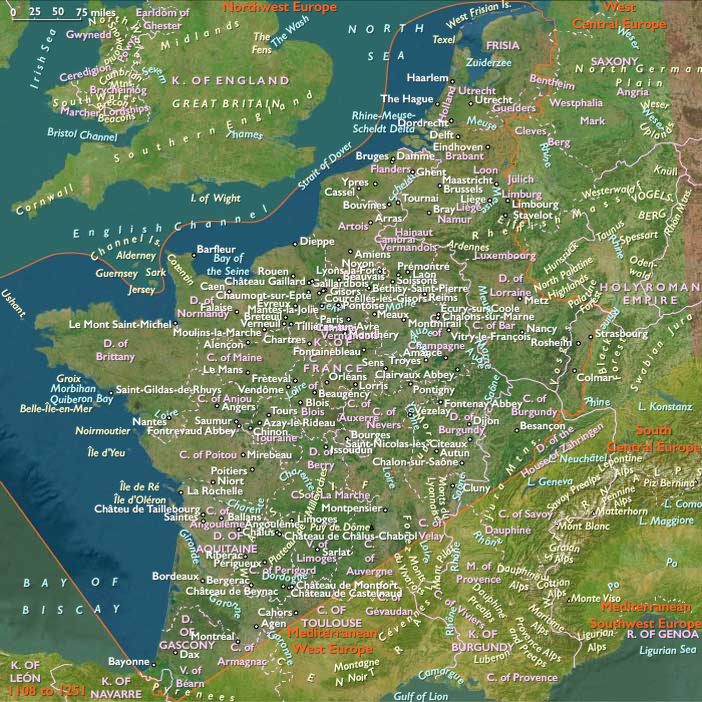
- In the summer of 1187, Philip launched an attack on Berry, a strategically valuable province contested between the Capetians and Angevins.
- By June 1187, he reached a truce with Henry II, securing:
- Issoudun, a key stronghold in Berry, under his control.
- Fréteval, in Vendômois, also ceded to Philip.
- This truce was meant to last two years, but tensions quickly resurfaced.
Philip’s Skillful Manipulation of the Henry-Richard Conflict (1187–1188)
- The estrangement between Henry II and Richard deepened, giving Philip an opportunity to drive a wedge between them.
- At Bonmoulins in November 1187, Richard voluntarily did homage to Philip, strengthening his position against his father.
- In return for Philip’s military support against Henry, Richard promised to concede his rights to both Normandy and Anjou, a major Capetian diplomatic victory.
The Influence of the Battle of Hattin and Richard’s Crusader Vow
- Meanwhile, news of the Battle of Hattin (July 4, 1187) and the fall of Jerusalem to Saladin reached Europe.
- Richard, already looking to solidify his reputation as a warrior-prince, took the cross at Tours, vowing to join the Third Crusade alongside other French nobles.
- His Crusader vow did not halt hostilities with Henry II, as the conflict over Angevin lands in France continued to escalate.
Renewed War in the Summer of 1188
- Though the 1187 truce was meant to last two years, Philip found a pretext to resume hostilities in the summer of 1188.
- With Richard now firmly aligned with Philip, the war entered a new phase, with Henry II facing his most dangerous political challenge yet.
Philip’s exploitation of Henry’s strained relationship with Richard set the stage for the final confrontation between the Angevins and Capetians, ultimately leading to Henry II’s downfall in 1189 and Richard’s rise as King of England.
Locations
People
- Constance
- Henry II of England
- Margaret of France
- Philip I, Count of Flanders
- Philip II of France
- Richard I of England
Groups
- Flemish people
- Flanders, County of
- Anjou, County of
- Normandy, Duchy of
- Brittanny, Duchy of
- Cologne, Electorate of
- French people (Latins)
- Aquitaine, (Angevin) Duchy of
- France, (Capetian) Kingdom of
- Christians, Roman Catholic
- England, (Plantagenet, Angevin) Kingdom of
- Angevin Empire
- Brabant, Duchy of
Topics
Commodoties
Subjects
Regions
Subregions
Related Events
Showing 6 events out of 6 total
Years: 1188 - 1188
June
Locations
People
- Constance
- Henry II of England
- Margaret of France
- Philip I, Count of Flanders
- Philip II of France
- Richard I of England
Groups
- Flemish people
- Flanders, County of
- Anjou, County of
- Normandy, Duchy of
- Brittanny, Duchy of
- Cologne, Electorate of
- French people (Latins)
- Aquitaine, (Angevin) Duchy of
- France, (Capetian) Kingdom of
- Christians, Roman Catholic
- England, (Plantagenet, Angevin) Kingdom of
- Angevin Empire
- Brabant, Duchy of
Topics
Commodoties
Subjects
Regions
Subregions