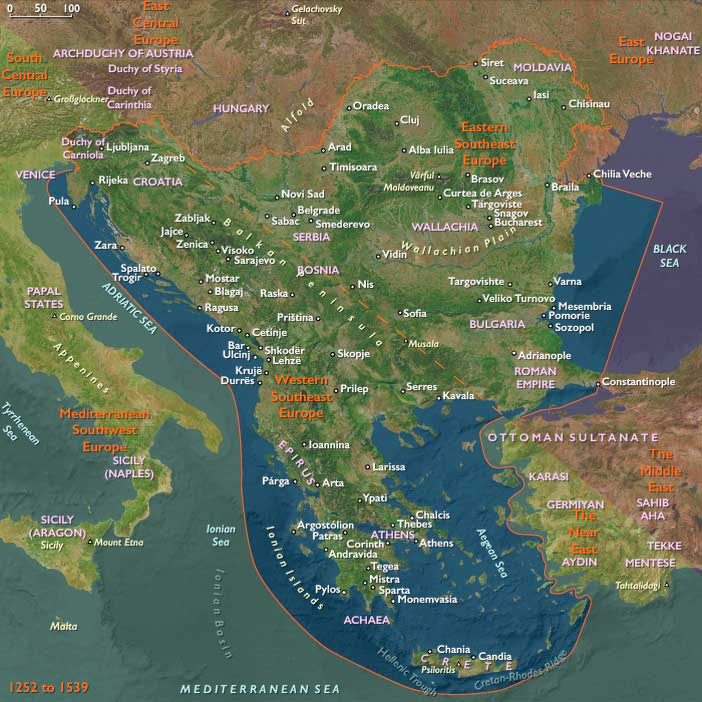
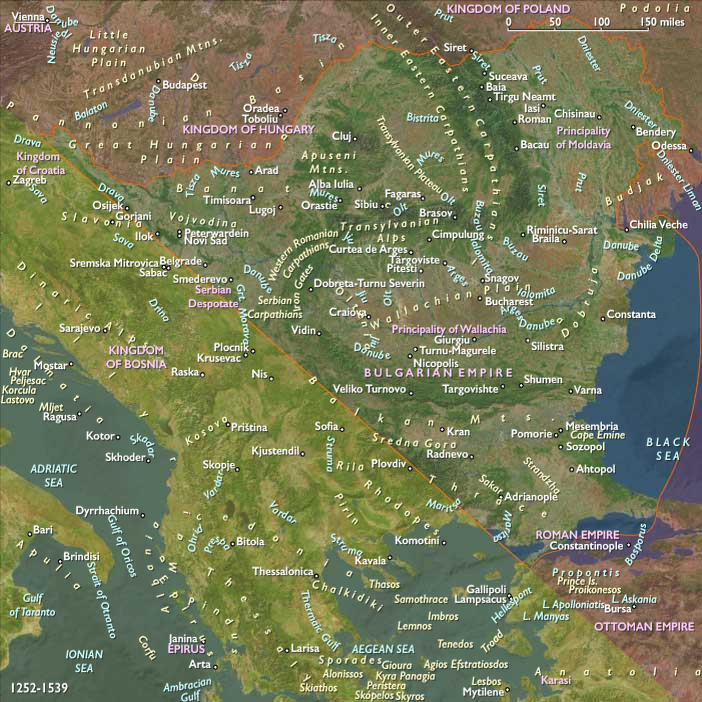
The Republic of Ragusa had signed a treaty with the Ottoman Empire in 1458 that made it a tributary of the sultan.
Moreover, it was obliged to send an ambassador to Constantinople by November 1 of each year in order to deliver the tribute.
When the city-state passes into Ottoman protection in 1481, it pays an increased tribute of twelve thousand five hundred ducats.
For all other purposes, however, Ragusa is virtually independent.
It can enter into relations with foreign powers and make treaties with them (so long as they are not in conflict with the Porte's interests), and its ships sail under its own flag.
Ottoman vassalage also confers special rights in trade that extend within the Empire.
Ragusa handles the Adriatic trade on behalf of the Ottomans, and its merchants receive special tax exemptions and trading benefits from the Porte.
It also operates colonies that enjoy extraterritorial rights in major Ottoman cities.
Merchants from Ragusa can enter the Black Sea, which is otherwise closed to non-Ottoman shipping.
They pay less in customs duties than other foreign merchants, and the city-state enjoys diplomatic support from the Ottoman administration in trade disputes with the Venetians.
For their part, Ottomans regard Ragusa as a port of major importance, since most of the traffic between Florence and Bursa (an Ottoman port in northwestern Anatolia) is carried out via Ragusa.
Florentine cargoes leave the Italian ports of Pesaro, Fano or Ancona to reach Ragusa.
From this point on they take the land route Bosnasaray (Sarajevo)–Novibazar–Skopje–Plovdiv–Edirne.
Along with England, Spain and Genoa, Ragusa is one of the Venice's most damaging competitors in the fifteenth century on all seas, even in the Adriatic.
Thanks to its proximity to the plentiful oak forests of Gargano, it is able to bid cargoes away from the Venetians.