The Middle East (3501–3358 BCE): Origins of Urban Civilization and Writing
Rise of Sumerian Cities
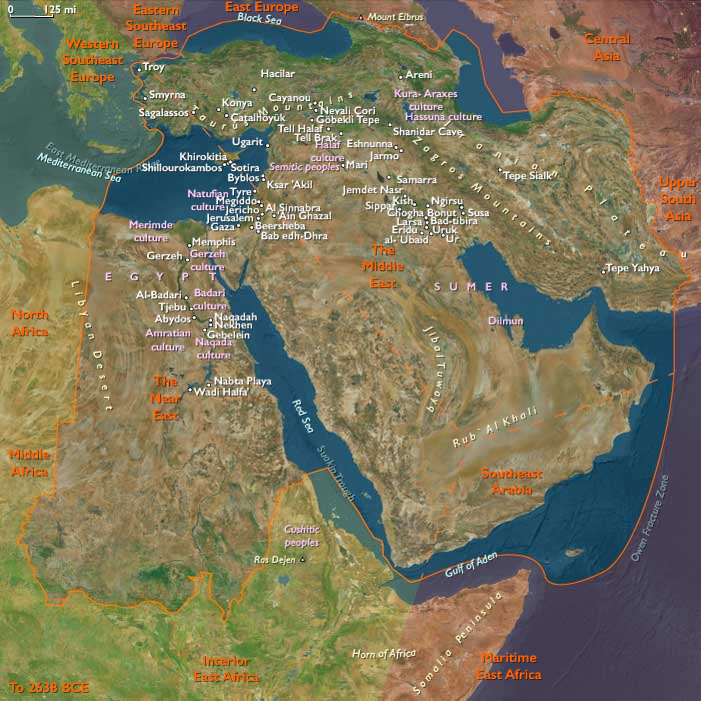
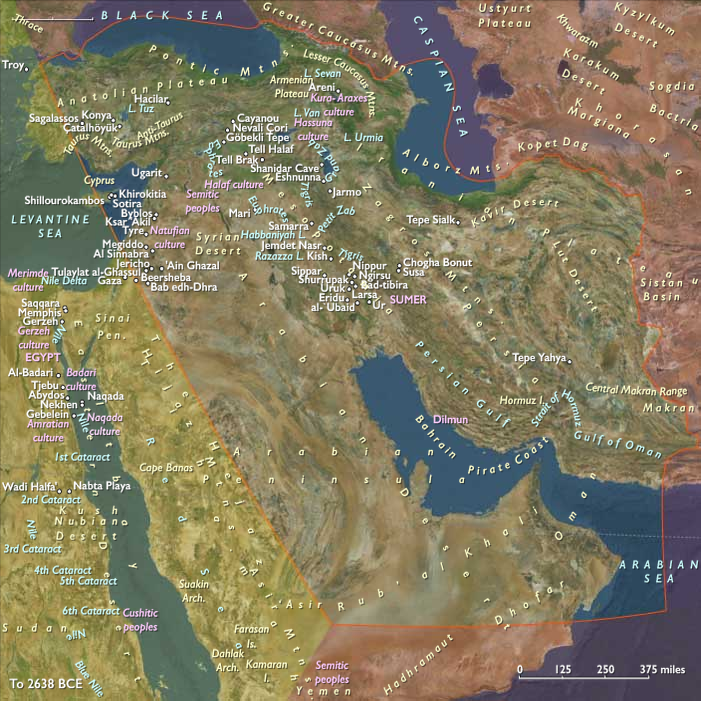
Between 3501 and 3358 BCE, the first cities began to emerge prominently in southern Mesopotamia, settled by populations migrating from northern regions. These early urban settlements laid the foundations for civilization in the region, introducing new organizational structures, specialized labor, and advanced infrastructure.
The Sumerian Enigma
The Sumerians, identified as the foundational builders of civilization, spoke a unique language unrelated to any other known language, ancient or modern. The origins of the Sumerian people and the precise conditions that led to their societal emergence remain one of history’s enduring mysteries.
The Kish Tablet and Early Writing
A significant archaeological artifact from this era, the Kish tablet, discovered at Tell al-Uhaymir in the ancient Sumerian city of Kish (modern Babil Governorate, Iraq), dates back to around 3500 BCE (middle Uruk period). Currently represented by a plaster cast in the Ashmolean Museum, Oxford, the Kish tablet contains proto-cuneiform signs, marking it as potentially the earliest known written document. Its pictographic writing represents a critical transitional stage from proto-writing to the more developed, partly syllabic cuneiform script.
The Kish tablet is widely regarded as the earliest document from the "protoliterate period," an era spanning approximately 3500 to 2900 BCE in both Egypt and Mesopotamia. This makes it an essential artifact in understanding the origins and development of writing.
Monumental Architecture at Tell Brak
At Tell Brak, public buildings from this period include the renowned "Eye Temple" and a significant administrative building with associated workshops. The Eye Temple, constructed around 3500–3300 BCE and excavated in 1937–1938, was named for the hundreds of small alabaster "eye idol" figurines embedded into its mudbrick construction. Richly adorned with clay cones, copper panels, and gold work, the temple's elaborate decoration was comparable to contemporary Sumerian temples, reflecting the cultural and religious complexities of early urban society.
Technological and Cultural Advances
The earliest known production of bronze artifacts continued, reinforcing technological and economic growth in the region. These advancements contributed significantly to the increasing complexity of urban society, enabling new forms of artistic expression, craft specialization, and trade.
This age represents a critical juncture in human history, marked by the rise of urban civilization, the initial development of writing, and significant advancements in architecture and metallurgy, fundamentally shaping the trajectory of ancient Middle Eastern societies.