
Filters:
The Siege of Jerusalem had been a …
Years: 1102 - 1102
The Siege of Jerusalem had been a success and led to the foundation of the Kingdom of Jerusalem.
Most crusaders had returned home afterwards; when a second movement set out from Europe, encouraged by the success of the First Crusade, it had been mostly annihilated by the Seljuq Turks in Anatolia.
Raymond had participated in this crusade as well, and had returned to Syria after escaping from his defeat at the hands of Kilij Arslan I in Anatolia.
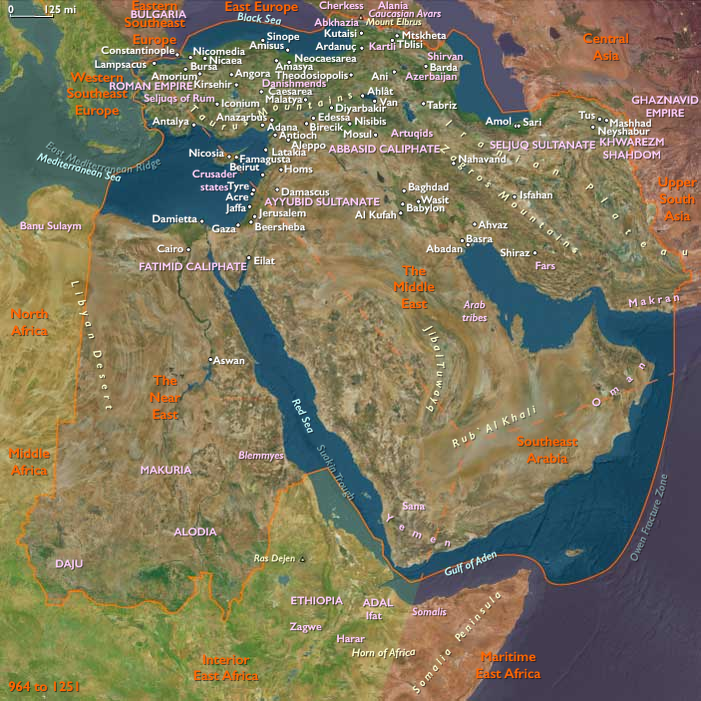
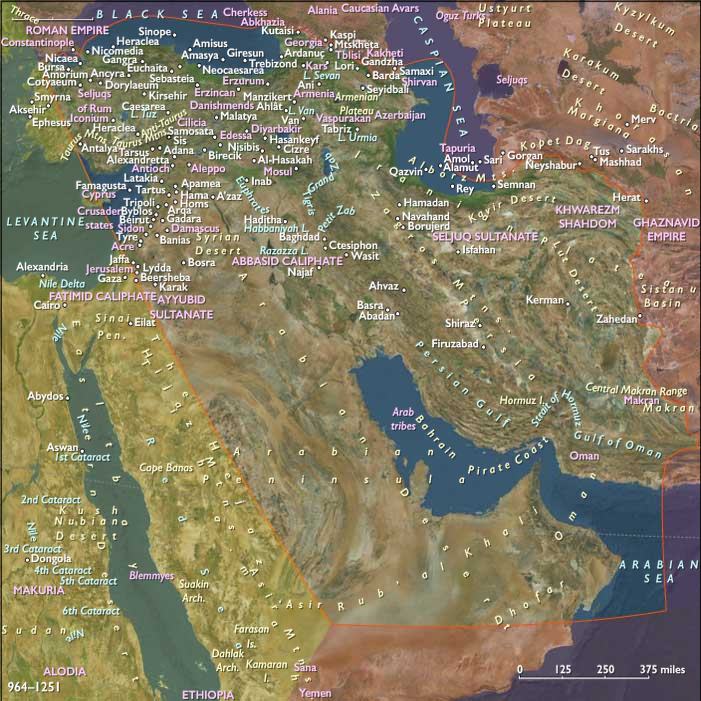
In 1102, Raymond travels by sea from Constantinople to Antioch, where he is imprisoned by Tancred, and is only dismissed after promising not to attempt any conquests in the country between Antioch and Acre.
Locations
People
- Alexios I Komnenos
- Danishmend Gazi
- Fakhr al-Mulk Radwan
- Kilij Arslan I
- Odo I, Duke of Burgundy
- Pope Paschal II
- Raymond IV
- Stephen
- William II, Count of Nevers
- William IX, Duke of Aquitaine
Groups
- Arab people
- Lombards (West Germanic tribe)
- Germans
- Greeks, Medieval (Byzantines)
- Islam
- Muslims, Sunni
- Syrian people
- Papal States (Republic of St. Peter)
- Toulouse, County of
- Pechenegs, or Patzinaks
- Flemish people
- German, or Ottonian (Roman) Empire
- Turkmen people
- French people (Latins)
- Austria, Margravate of
- Burgundy, County of
- Aquitaine, (Angevin) Duchy of
- France, (Capetian) Kingdom of
- Genoa, (Most Serene) Republic of
- Bulgaria, Theme of
- Burgundy, Duchy of
- Seljuq Empire (Isfahan)
- Christians, Roman Catholic
- Christians, Eastern Orthodox
- Bavaria, Welf Duchy of
- Danishmends
- Aleppo, Seljuq Emirate of
- Roman Empire, Eastern: Komnenos dynasty, restored
Topics
Commodoties
Subjects
Regions
Subregions
Related Events
Showing 10 events out of 17 total
Years: 1102 - 1102
Locations
People
- Alexios I Komnenos
- Danishmend Gazi
- Fakhr al-Mulk Radwan
- Kilij Arslan I
- Odo I, Duke of Burgundy
- Pope Paschal II
- Raymond IV
- Stephen
- William II, Count of Nevers
- William IX, Duke of Aquitaine
Groups
- Arab people
- Lombards (West Germanic tribe)
- Germans
- Greeks, Medieval (Byzantines)
- Islam
- Muslims, Sunni
- Syrian people
- Papal States (Republic of St. Peter)
- Toulouse, County of
- Pechenegs, or Patzinaks
- Flemish people
- German, or Ottonian (Roman) Empire
- Turkmen people
- French people (Latins)
- Austria, Margravate of
- Burgundy, County of
- Aquitaine, (Angevin) Duchy of
- France, (Capetian) Kingdom of
- Genoa, (Most Serene) Republic of
- Bulgaria, Theme of
- Burgundy, Duchy of
- Seljuq Empire (Isfahan)
- Christians, Roman Catholic
- Christians, Eastern Orthodox
- Bavaria, Welf Duchy of
- Danishmends
- Aleppo, Seljuq Emirate of
- Roman Empire, Eastern: Komnenos dynasty, restored
Topics
Commodoties
Subjects
Regions
Subregions