
The French Annexation of Brittany and the …
Years: 1378 - 1378
The French Annexation of Brittany and the Struggle Between John IV and Olivier de Clisson (1378)
On December 18, 1378, King Charles V of France formally annexed Brittany to the French Crown, reversing the autonomy of the Breton nobility and violating the Treaty of Guérande (1365). This act triggered a power struggle, as Duke John IV, returning from exile, sought to reclaim his duchy, while Olivier de Clisson maneuvered for greater power.
Charles V’s Petition to the Breton Nobility
To justify the annexation, Charles V consulted four leading Breton lords, seeking their stance on the matter:
- Guy XII de Laval – Refused to fight against Duke John IV, showing loyalty to the Montfortist cause.
- Viscount John I of Rohan – Hesitantly promised support but was noncommittal.
- Olivier de Clisson and Bertrand du Guesclin – Fully backed the Valois king, reaffirming their loyalty to France.
The Return of John IV and the Breton Provisional Government
- Duke John IV, returning from exile, found significant support in Brittany, as the nobility rejected French annexation.
- A Breton provisional government was formed to negotiate with the French king, attempting to restore John IV’s rule while maintaining autonomy.
- Despite this, Olivier de Clisson saw an opportunity to claim the title of Duke of Brittany, positioning himself as a loyal Valois vassal.
The Failure of Clisson’s Bid for the Duchy
- Once again, Clisson failed to convince Charles V to grant him the title of Duke, despite his unwavering loyalty to the French Crown.
- This was largely due to John IV’s secret negotiations with King Richard II of England, securing English support to reclaim Brittany.
- With backing from English allies and Breton nobility, John IV successfully reestablished his rule.
- However, he was unable to reclaim all of Brittany, as Olivier de Clisson retained control over key territories, including Nantes.
Olivier de Clisson’s Second Marriage (1378) and Noble Alliances
- In 1378, Olivier, now widowed, married Marguerite de Rohan (1330–1406), daughter of Alain VII, Viscount of Rohan.
- Marguerite was the widow of Jean de Beaumanoir, a hero of the Breton nobility who had fought the English at the Battle of the Thirty (1351).
- Through this marriage, Clisson strengthened his alliances with Brittany’s most powerful noble families.
- Additionally, his sister Isabeau de Clisson was married to Jean de Rieux in 1338, further linking him to key aristocratic factions in the duchy.
Impact and Consequences
- John IV reclaimed the Duchy of Brittany, but the duchy remained divided, with Olivier de Clisson retaining significant power.
- The French annexation attempt ultimately failed, but it deepened tensions between pro-French and pro-English factions in Brittany.
- Clisson’s noble alliances solidified his influence, setting the stage for his future role as Constable of France (1380).
The annexation crisis of 1378 and the power struggle between John IV and Olivier de Clisson shaped the political future of Brittany, keeping the region entangled in the ongoing conflict between France and England during the Hundred Years’ War.
Locations
People
- Bertrand du Guesclin
- Charles V of France
- Joan, Duchess of Brittany
- John IV, Duke of Brittany
- John of Gaunt
- Olivier de Clisson
- Richard II of England
- Robert Knolles
Groups
Topics
Subjects
Regions
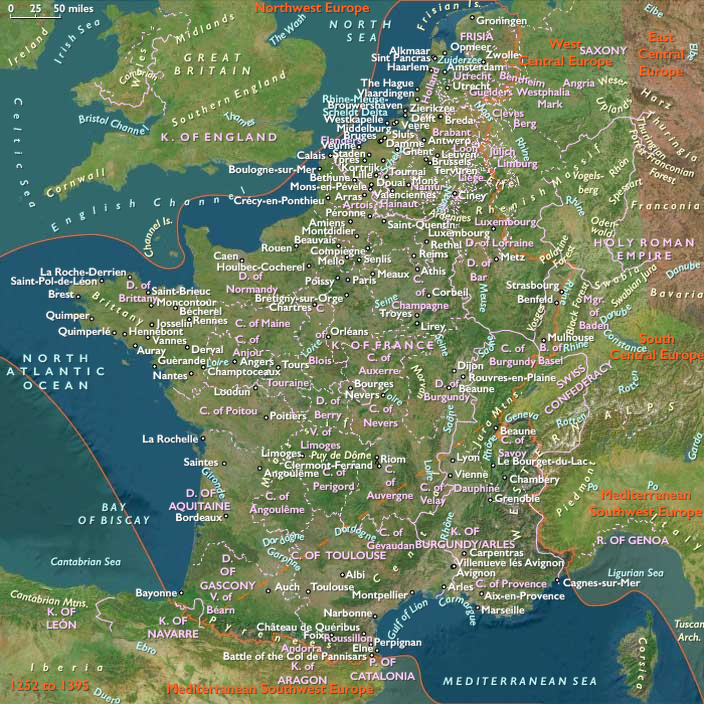
Subregions
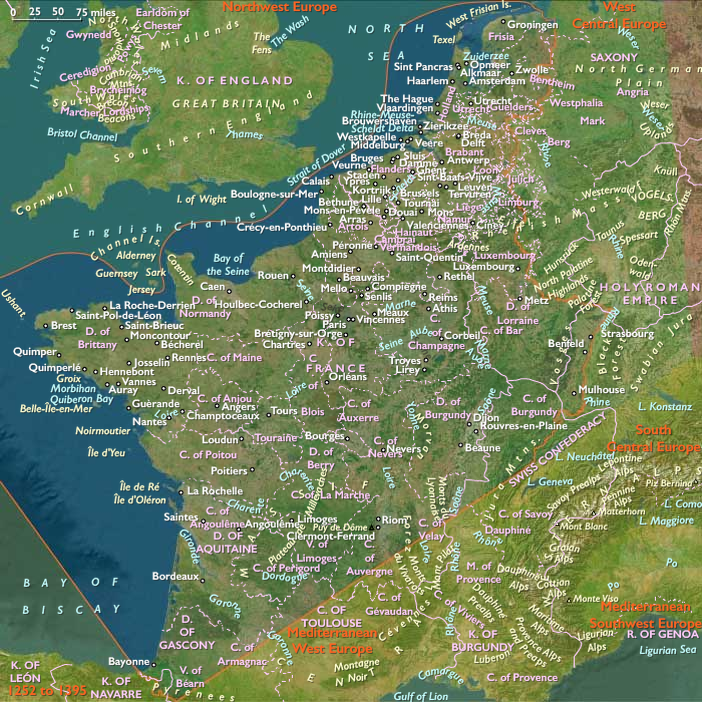
Related Events
Showing 10 events out of 43728 total
Years: 1378 - 1378
Locations
People
- Bertrand du Guesclin
- Charles V of France
- Joan, Duchess of Brittany
- John IV, Duke of Brittany
- John of Gaunt
- Olivier de Clisson
- Richard II of England
- Robert Knolles
Groups
Topics
Subjects
Regions
Subregions