
The Siege of Acre, which results in …
Years: 1288 - 1299
The Siege of Acre, which results in the loss of the Crusader-controlled city to the Muslims in 1291, is considered one of the most important battles of the time period.
Although the crusading movement will continue for several more centuries, the capture of the city marks the end of further crusades to the Levant.
When Acre falls, the Crusaders lose their last major stronghold of the Crusader Kingdom of Jerusalem.
Locations
Groups
- Muslims, Sunni
- Papal States (Republic of St. Peter)
- Christians, Roman Catholic
- Christians, Eastern Orthodox
- Jerusalem, Latin Kingdom of
- Teutonic Knights of Acre (House of the Hospitalers of Saint Mary of the Teutons in Jerusalem)
- Cyprus, Kingdom of
- Egypt and Syria, Mamluk Bahri Sultanate of
- Teutonic Knights of Venice (House of the Hospitalers of Saint Mary of the Teutons in Jerusalem)
Topics
Commodoties
Subjects
- Origins
- Commerce
- Language
- Watercraft
- Labor and Service
- Conflict
- Mayhem
- Faith
- Government
- Technology
- Movements
- Chemistry
Regions
Subregions
Related Events
Filter results
Showing 10 events out of 45370 total
The earliest period of Māori settlement is known as the "Archaic", "Moahunter" or "Colonisation" period.
The eastern Polynesian ancestors of the Māori arrived in a forested land with abundant birdlife, including several now extinct moa species weighing from twenty to two hundred and fifty kilograms (forty to five hundred and fifty pounds).
Other species, also now extinct, included a swan, a goose and the giant Haast's Eagle, which preyed upon the moa.
Marine mammals, in particular seals, thronged the coasts, with coastal colonies much further north than today.
At the Waitaki river mouth, huge numbers of Moa bones estimated at twenty-nine thousand to ninety thousand birds have been located.
Further South, at the Shag River mouth at least six thousand moa were slaughtered over a relatively short period.
Archaeology has shown that the Otago Region was the node of Māori cultural development during this time, and the majority of archaic settlements were on or within ten kilometers (six miles) of the coast, though it was common to establish small temporary camps far inland.
Settlements ranged in size from forty people (e.g., Palliser Bay in Wellington) to three hundred to four hundred people, with forty buildings (e.g., Shag River (Waihemo)).
The best known and most extensively studied Archaic site is at Wairau Bar in the South Island.
The site is similar to eastern Polynesian nucleated villages.
Radio carbon dating shows it was occupied from about 1288 to 1300.
Due to tectonic forces, some of the Wairau Bar site is now underwater.
Work on the Wairau Bar skeletons in 2010 showed that life expectancy was very short.
The oldest skeleton being thirty-nine and most people dying in their twenties.
Most of the adults showed signs of dietary or infection stress.
Anaemia and arthritis were common.
Infections such as tuberculosis may have been present as the symptoms were present in several skeletons.
On average the adults were taller than other South Pacific people at 175 centimeters for males and 161 centimeters for females.
The Mongol troops of China’s Yuan dynasty, invading Dai Viet for the third and final tine, are defeated and are forced to withdraw their troops from Dai Viet and Champa.
Kublai Khan, the Great Khan of the Mongol Empire and the founder of the Yuan Dynasty, sends a large invasion fleet to Java in 1293 with twenty thousand to thirty thousand soldiers.
This is a punitive expedition against King Kertanegara of Singhasari, who had refused to pay tribute to the Yuan and maimed one of its ministers.
The invasion results in the establishment of Majahapit, a vast archipelagic empire based on the island of Java (modern-day Indonesia) to around 1500.
The kingdom of Pagan, finally destroyed by the Mongol and Chinese forces of the Yuan Dynasty in 1287, is to have a lasting impact on Burmese history and the history of mainland Southeast Asia.
The success and longevity of Pagan's dominance over the Irrawaddy valley had enabled the ascent of Burmese language and culture, and the spread of Burman ethnicity in Upper Burma and laid the foundation for their continued spread elsewhere in later centuries.
The two hundred and fifty-year rule has left a proven system of administrative and cultural norms that will be adopted and extended by successor kingdoms—not only by the Burmese-speaking Ava Kingdom but also by the Mon-speaking Hanthawaddy Kingdom and Shan-speaking Shan states.
The Shan leadership, as well as lowland Shan immigrants of the Myinsaing, Pinya, Sagaing and Ava Kingdoms, will come to adopt Burmese cultural norms, the Burmese language, and the Burman ethnicity.
The convergence of cultural norms around existing Pagan-centered norms, at least in the Irrawaddy valley core, will in turn facilitate he latter-day political reunification drives of the Toungoo and Konbaung dynasties.
Guan Hanqing, a member of the Chinese scholar-official class residing in north China under Mongol rule, is also actor-manager of his own troupe.
A popular dramatist, his friendships with actors probably contribute to his ability to portray common people—particularly women—with understanding and sympathy.
“The Injustice Done to Tou-Ohe,” about the sufferings of a widow who is executed for a crime she has not committed, is the most famous of his sixty-odd plays (fourteen of which survive).
East Europe (1288–1299 CE): Consolidation of Mongol Rule and Muscovite Influence
Political and Military Developments
Sustained Golden Horde Authority
From 1288 to 1299 CE, the Golden Horde continued to assert effective control over East Europe, managing regional governance through tributary systems and local princes. This stable, albeit oppressive, structure allowed the Horde to maintain its influence while relying heavily on compliant local leadership.
Expansion and Strengthening of Moscow
Moscow further strengthened its position during this era, effectively leveraging its cooperative relationship with the Mongol rulers to expand territorial control and consolidate internal authority. Moscow's princes gained prominence, positioning the principality as an increasingly influential political entity.
Economic and Technological Developments
Prosperity through Eurasian Trade
Trade across Eurasia continued flourishing, supported by the Pax Mongolica. East European cities saw increased prosperity through exchanges of luxury commodities and practical goods, significantly contributing to urban economic stability and growth.
Military and Technological Integration
Muscovite and other regional principalities further incorporated Mongol military strategies and technological innovations, particularly in cavalry warfare, siege engineering, and defensive fortifications, enhancing their regional military effectiveness.
Cultural and Artistic Developments
Heightened Cultural Synthesis
The intermingling of Mongol and local cultural traditions deepened, resulting in distinctive East European artistic and architectural expressions. Iconography, religious structures, and material culture increasingly reflected this cultural blend.
Continued Intellectual and Literary Activity
Literary and intellectual endeavors persisted robustly, with chroniclers diligently preserving historical, religious, and genealogical records. These activities served as vital efforts in maintaining Rus' cultural identity amidst foreign dominance.
Settlement Patterns and Urban Development
Urban Growth and Economic Vitality
Moscow and other significant urban centers experienced continued demographic and economic growth. Urban stability was reinforced through improved infrastructure and commerce, facilitating steady expansion and development.
Enhanced Defensive Infrastructure
Cities consistently upgraded their defensive fortifications, adapting to the strategic demands of the region. These enhancements helped safeguard economic stability and provided essential protection from regional conflicts and external threats.
Social and Religious Developments
Aristocratic Authority and Influence
Local aristocrats solidified their positions, navigating the complexities of Mongol governance to strengthen their own power bases. These elites increasingly dominated social, political, and economic spheres.
Centrality of the Orthodox Church
The Orthodox Church retained its influential role as a stabilizing and cohesive force within society. It continued to lead educational efforts, guide cultural practices, and preserve societal traditions under the prevailing political conditions.
Long-Term Consequences and Historical Significance
The period from 1288 to 1299 CE was crucial for reinforcing Mongol control mechanisms and advancing Moscow's emerging dominance in East Europe. The developments of this era laid key foundations for future regional autonomy and identity formation.
Northeast Europe (1288–1299 CE): The End of the Prussian Crusades, Germanization, and Baltic Realignments
Introduction
Between 1288 and 1299 CE, Northeast Europe experienced the definitive conclusion of the Prussian Crusade, significant consolidation of crusader territories, and the final large-scale resistance by Baltic peoples. This era saw the last of the Prussian uprisings, intensified settlement and cultural integration by crusader states, and increasing regional tensions.
The End of the Prussian Crusades
This period marked the conclusion of the series of Prussian uprisings against the Teutonic Knights. The last significant rebellion, occurring in 1295, was relatively brief and quickly suppressed, as were two other lesser uprisings in this era, each failing within one or two years due to limited support and overwhelming crusader military response. With the defeat of this final rebellion, the Prussian Crusade effectively ended, cementing Teutonic control over Prussia.
Consequently, Prussia rapidly transformed into a German-speaking region, welcoming significant numbers of settlers from various German states and refugees from across Europe. This demographic shift accelerated cultural assimilation, permanently altering Prussia's ethnic and linguistic landscape.
Continued Stability in Crusader Territories
Danish Estonia, centered at Reval (Tallinn), and the Livonian Confederation under German rule, maintained political and economic stability. Danish control around the fortress of Castrum Danorum at Toompea Hill facilitated continued urban growth and trade prosperity.
German-dominated Livonia, anchored at Riga, solidified its authority through strengthened administrative and ecclesiastical structures. Likewise, the Teutonic Order, firmly entrenched in Königsberg, secured its authority across Prussian territories.
Swedish Consolidation in Finland
Sweden further entrenched its control over southern Finland during this period, strengthening administrative governance, fortifications, and settlement expansion. This reinforced Finland’s alignment with Scandinavia, contrasting increasingly with the Germanized and Danish-influenced regions to the south.
Lithuanian Resistance and Regional Power
While Prussian resistance was effectively crushed by the end of this era, the Lithuanians emerged as the primary remaining opposition force in the region. Lithuanian tribes, now organized and increasingly powerful, mounted significant military campaigns against the crusader states, conducting repeated raids into Livonian and Prussian territories and setting the stage for persistent future conflict.
Economic Expansion and Urban Development
Economic prosperity in Northeast Europe further expanded during this period. Urban centers such as Reval (Tallinn), Riga, and Königsberg experienced sustained growth as major trade hubs, while Visby on Gotland continued its central role in maritime commerce, facilitating deeper integration into wider European trade networks.
Ecclesiastical Integration and Cultural Assimilation
The Teutonic Knights and other ecclesiastical authorities actively promoted cultural assimilation, systematically embedding Latin Christianity and Germanic influences across conquered territories. Ecclesiastical and educational institutions fostered widespread literacy, religious indoctrination, and legal reforms, significantly reshaping the cultural identity of the region.
Emerging Geopolitical Rivalries
This era saw increased geopolitical tensions between the consolidated crusader states and the rising power of Lithuania, as well as with Russian principalities. The stabilization of crusader rule, particularly in Prussia, intensified these rivalries, laying groundwork for ongoing military confrontations and complex alliances.
Legacy of the Era
The period from 1288 to 1299 CE marked a critical turning point in Northeast European history, concluding the Prussian Crusades and ushering in a new era of Germanization and territorial stability. The region’s demographic, linguistic, and cultural landscapes were permanently altered, and ongoing Lithuanian resistance ensured continued geopolitical tensions, profoundly influencing subsequent historical developments.
The later three lesser uprisings of the Prussians depend on foreign help and are suppressed with one or two years.
The last uprising in 1295 effectively ends the Prussian Crusade and Prussia becomes German-language territory, which assimilates a number of settlers from different German states as well as refugees from other European countries.
East Central Europe (1288–1299 CE): Habsburg Ascendancy, Přemyslid Revival, Hungarian Turmoil, Polish Fragmentation, and Urban Prosperity
Between 1288 and 1299 CE, East Central Europe experienced critical geopolitical shifts marked by the rising power of the Habsburgs in Austria, the gradual revival and stabilization of Bohemia under Wenceslaus II Přemysl, continued fragmentation and local strength of Polish duchies, ongoing political turmoil in Hungary, and the vibrant economic growth of Hanseatic urban centers. This era saw a consolidation of new power balances that would profoundly influence regional dynamics into the 14th century.
Political and Military Developments
Strengthening of the Habsburg Position in Austria
-
Following their decisive victory at the Battle on the Marchfeld (1278), the Habsburg dynasty under Rudolf I solidified control over Austria, Styria, and Carniola.
-
Rudolf's death in 1291 ushered in succession by his son, Albert I (r. 1298–1308), who began stabilizing Habsburg rule in Austria, strengthening central governance, and laying foundations for long-term dominance.
Přemyslid Revival and Consolidation in Bohemia
-
Wenceslaus II Přemysl (r. 1278–1305) gradually emerged from minority and regency conflicts, consolidating his authority over Bohemia. His reign saw improved internal stability and economic prosperity, significantly bolstering Bohemia’s position in regional politics.
Continued Political Turmoil in Hungary
-
Hungary remained beset by aristocratic conflicts during the reign of King Andrew III (1290–1301), the last Árpád ruler. Political instability persisted, with powerful magnates undermining royal authority, creating vulnerabilities that neighboring powers, especially Bohemia and Austria, would exploit.
Polish Fragmentation and Piast Duchies' Autonomy
-
Poland continued its fragmentation into various independent Piast duchies, notably Silesia, Greater Poland, Mazovia, and Galicia-Volhynia.
-
Despite political division, these duchies prospered economically through robust trade, urbanization, and internal stability fostered by local rulers.
Brandenburg Expansion and Influence
-
Under the Ascanian Margraves, Brandenburg continued territorial expansion eastward, solidifying its political and economic presence in northern East Central Europe, especially through extensive Germanic settlement (Ostsiedlung).
Economic and Technological Developments
Flourishing Hanseatic Urban Economies
-
Hanseatic League cities, notably Lübeck, Rostock, Gdańsk, Wrocław, and Toruń, experienced significant economic prosperity through extensive Baltic and inland trade.
-
Economic vitality accelerated urban growth, encouraging the expansion of urban infrastructure, fortifications, marketplaces, and trade routes.
Agricultural Productivity and Innovations
-
Enhanced agricultural techniques—such as the three-field system, advanced iron plows, and improved livestock management—raised productivity substantially, fueling population growth and urban expansion.
Cultural and Artistic Developments
Bohemian Cultural Flourishing under Wenceslaus II
-
Prague reemerged as a cultural and intellectual center under Wenceslaus II’s patronage, fostering significant developments in Gothic architecture, literature, manuscript illumination, and scholarly activities.
Continued Polish and Silesian Cultural Vitality
-
Polish duchies, especially in Silesia and Greater Poland, maintained vibrant cultural lives, with monastic scriptoria producing manuscripts, ecclesiastical institutions supporting architecture and education, and local courts fostering literary activities.
Hungarian Ecclesiastical Continuity
-
Despite political instability, Hungary's ecclesiastical institutions, particularly in Esztergom, maintained religious and cultural continuity, preserving educational and artistic patronage.
Settlement and Urban Development
Urban Expansion and Regional Development
-
Significant urban growth characterized this period, especially in major cities such as Prague, Vienna, Wrocław, Kraków, Lübeck, and Gdańsk.
-
Urban centers expanded infrastructure, improving fortifications and municipal organization, supporting the growth of trade and regional prosperity.
Ongoing Germanic Colonization (Ostsiedlung)
-
Germanic settlement expanded eastward into Brandenburg, Mecklenburg, Silesia, and Lusatia, reinforcing demographic and economic transformations. The influx of settlers promoted agricultural innovation, urbanization, and regional stability.
Social and Religious Developments
Ecclesiastical Influence and Patronage
-
The Archbishopric of Salzburg, along with bishoprics such as Passau, Bamberg, and Regensburg, reinforced regional influence through ecclesiastical governance, educational patronage, and cultural activities, significantly shaping social structures.
Aristocratic Power and Social Structures
-
Aristocratic power persisted strongly across Hungary, Poland, and Bohemia, with local magnates exerting significant political and economic control, deeply influencing feudal structures and regional governance patterns.
Long-Term Consequences and Historical Significance
The era 1288–1299 CE proved crucial for East Central Europe, marking the consolidation of Habsburg power in Austria, the stabilization and revival of Bohemia under Wenceslaus II, and continued economic vibrancy of Polish duchies and Hanseatic cities. Persistent Hungarian political turmoil underscored vulnerabilities that would shape future regional interactions. Economic prosperity, driven by trade and agricultural innovation, laid enduring foundations for future medieval development. Collectively, these developments set the political, economic, and cultural groundwork for East Central Europe's subsequent trajectory into the 14th century.
Eastern Southeast Europe (1288–1299 CE): Byzantine Struggles and Bulgarian Decline
Settlement and Migration Patterns
Byzantine Territorial Pressures
During the era of 1288–1299 CE, the Byzantine Empire, under Andronikos II Palaiologos (1282–1328), continued to experience territorial erosion, particularly in Asia Minor, due to intensified Turkish incursions. This loss forced demographic shifts, with Greek populations migrating increasingly toward fortified urban centers in Thrace and Macedonia.
Continued Bulgarian Instability
The Second Bulgarian Empire, under Tsar George Terter I (1280–1292) and his successor Smilets (1292–1298), grappled with internal fragmentation and external pressures, including persistent Mongol influence from the Golden Horde. Instability prompted regional population movements and weakened centralized authority.
Political Dynamics and Regional Rivalries
Byzantine Diplomatic and Military Efforts
Andronikos II, recognizing growing vulnerabilities, sought diplomatic alliances and engaged Genoese assistance to bolster naval defenses against Venetian and Turkish pressures. His focus on defending European territories underscored Byzantium's diminishing capacity to manage external threats effectively.
Fragmented Bulgarian Rule
Bulgaria endured continuous internal divisions, with powerful regional nobles (boyars) frequently challenging central authority. Mongol demands for tribute exacerbated these tensions, severely weakening the Bulgarian monarchy and limiting its ability to counter external threats.
Economic and Technological Developments
Byzantine Economic Challenges and Adjustments
Economic difficulties arose from territorial losses and increased military expenditures. Byzantium increasingly relied on Genoese commercial networks to sustain economic activities, particularly around Constantinople and major Thracian cities like Adrianople.
Declining Bulgarian Economy
Economic activity within Bulgaria suffered under political instability. While commerce persisted along key Danubian and Black Sea ports, internal divisions and external pressures hampered substantial economic growth and regional development.
Cultural and Artistic Developments
Byzantine Cultural Persistence
Despite ongoing challenges, Byzantine culture maintained resilience and vibrancy. Religious institutions and urban centers continued producing religious art, illuminated manuscripts, and architecture reflecting enduring traditions and spiritual vitality.
Bulgarian Cultural Struggles and Continuity
Cultural production in Bulgaria remained active, notably in religious and literary circles around Turnovo. Despite political turmoil, monasteries and ecclesiastical institutions sustained Bulgarian literary and artistic traditions, reinforcing cultural identity.
Social and Religious Developments
Orthodox Church’s Stabilizing Influence
Throughout Byzantium and Bulgaria, Orthodox Christianity remained central to societal coherence. Ecclesiastical institutions provided stability and continuity, especially crucial amid declining political and military conditions.
Byzantine Ecclesiastical Diplomacy
The Byzantine Church actively managed relations with Western Christianity and responded strategically to doctrinal controversies. Efforts to maintain Orthodox unity were significant during a period of external threats and internal strain.
Long-Term Consequences and Historical Significance
The period 1288–1299 CE represented a crucial stage of Byzantine territorial contraction, internal Bulgarian fragmentation, and persistent cultural resilience. The developments of this era profoundly shaped the region’s political and cultural trajectory, establishing conditions for future challenges and transformations in Eastern Southeast Europe.
The Middle East: 1288–1299 CE
Emergence of Ottoman Power
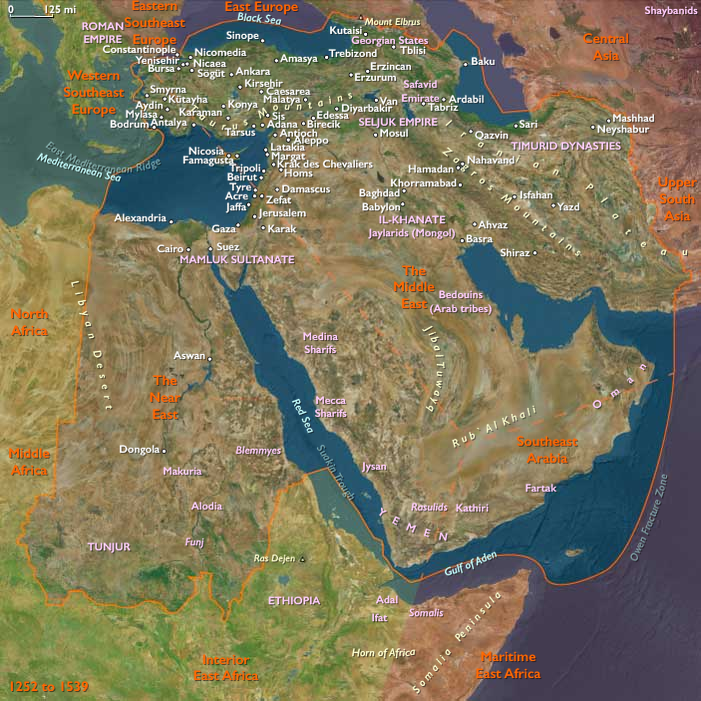
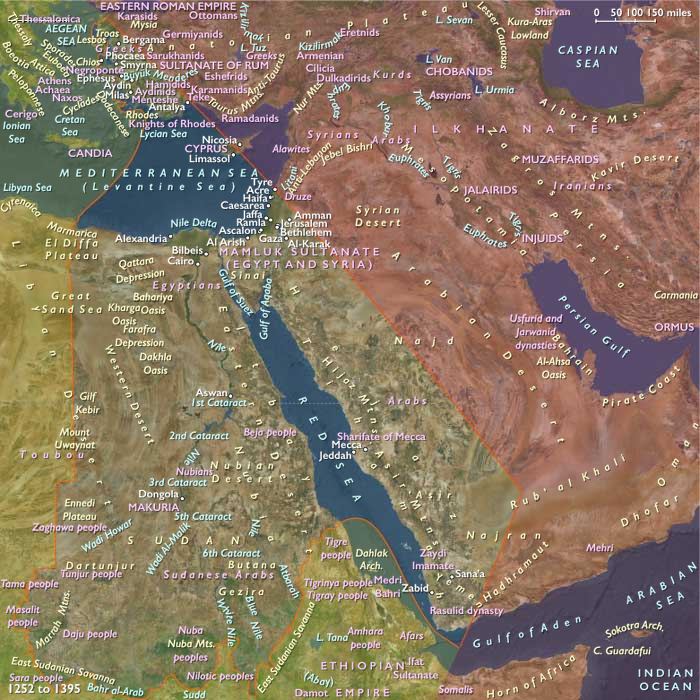
The period 1288–1299 CE witnesses significant shifts in power dynamics across Anatolia, particularly marked by the emergence of Osman I, leader of the Ottoman Turks. Following the Mongol defeat of the Seljuq army in 1293, the once-powerful Seljuq Sultanate of Rûm collapses, leaving a fragmented landscape in Anatolia. Independent Turkmen principalities, known as beyliks, arise to fill the vacuum left by Seljuq and Mongol dominance.
Osman, whose father, Ertuğrul, had established a border principality centered at Söğüt, gradually consolidates his position. He captures strategic former imperial fortresses, most notably Yenisehir, strengthening his base for further territorial expansion. This period marks the formative stages of the Ottoman Empire, which will soon dominate Anatolia and extend into southeastern Europe.
Ghazi Warriors and Frontier Dynamics
Frontier warriors known as ghazis, Turkic Muslim fighters initially engaged against Byzantine and Mongol forces, increasingly rally around Osman. These warriors are instrumental in Osman's early military successes, notably around key strongholds such as Bursa and Nicaea (modern-day İznik). The frontier culture fostered by these ghazis emphasizes religious zeal, martial prowess, and rapid territorial expansion, setting a foundation for Ottoman military and cultural ethos.
Continuing Mongol Influence and Fragmentation
Despite the rise of Osman and other local rulers, the Mongol Il-Khanate continues to exercise influence, albeit diminishing, over Persia, Iraq, and parts of Anatolia. The Mongols struggle to maintain centralized control, leading to increased autonomy among local governors and exacerbating the fragmentation of political authority throughout the region.
Intellectual and Cultural Exchange
This era continues the vibrant intellectual and cultural exchanges exemplified by earlier figures such as Gregory Bar Hebraeus. Although Bar Hebraeus himself passes away in 1286, his legacy of scholarly interaction between Christian and Muslim communities persists. Libraries and educational institutions across Syria, Armenia, and Anatolia maintain a rich tradition of intercultural dialogue and scholarship.
Crusader Decline and Defensive Strategies
The Knights Hospitaller and other Crusader states increasingly struggle against mounting pressures from local Muslim rulers and the expanding Ottoman influence. Their fortifications, particularly the strategically vital Krak des Chevaliers, remain under constant threat. This defensive posture highlights the declining power of Crusader holdings and the strategic challenges they face amidst the changing Middle Eastern geopolitical landscape.
In summary, the years 1288–1299 CE mark a critical turning point characterized by the decline of Mongol centralized control, the early rise of the Ottoman beylik under Osman I, continued scholarly and cultural exchange, and the persistent yet weakening Crusader presence in the region.
Years: 1288 - 1299
Locations
Groups
- Muslims, Sunni
- Papal States (Republic of St. Peter)
- Christians, Roman Catholic
- Christians, Eastern Orthodox
- Jerusalem, Latin Kingdom of
- Teutonic Knights of Acre (House of the Hospitalers of Saint Mary of the Teutons in Jerusalem)
- Cyprus, Kingdom of
- Egypt and Syria, Mamluk Bahri Sultanate of
- Teutonic Knights of Venice (House of the Hospitalers of Saint Mary of the Teutons in Jerusalem)
Topics
Commodoties
Subjects
- Origins
- Commerce
- Language
- Watercraft
- Labor and Service
- Conflict
- Mayhem
- Faith
- Government
- Technology
- Movements
- Chemistry
Regions
Subregions