
The Social Structure of Early Portugal: The …
Years: 1252 - 1395
The Social Structure of Early Portugal: The Dominance of the Clergy
During Portugal’s formative stages, society was divided into three primary social classes:
- Clergy (Oratores) – The most influential and privileged class.
- Nobility (Bellatores) – Warriors and landowners.
- Commoners (Laboratores) – The peasantry, artisans, and merchants.
The Clergy: The Preeminent Social Class
Due to the religious fervor of the era and the kingdom’s role in the Reconquista, the clergy held paramount influence in both spiritual and secular affairs. The Church was the wealthiest institution in the realm and provided most of Portugal’s educated elite, making it the dominant political, intellectual, and administrative force.
Ecclesiastical Hierarchy and Structure
The clergy was divided into two main categories:
- The Secular Clergy – Bishops and parish priests, forming the traditional Church hierarchy.
- The Regular Clergy – Abbots and monks belonging to monastic and military orders, such as the Cistercians, Benedictines, and Knights Templar.
These groups were further classified into:
- Higher Clergy – Bishops and abbots, who controlled vast landholdings, exercised judicial power, and influenced royal policy.
- Lower Clergy – Parish priests and monks, who served local communities but held less political authority.
Privileges and Rights of the Clergy
The clergy enjoyed various privileges that reinforced its power, including:
- Exemption from taxation, allowing it to accumulate vast wealth.
- Judgment in ecclesiastical courts, where clergy members were tried under canon law rather than civil law.
- Right of asylum, enabling churches to shelter fugitives from royal or noble justice.
- Control of education, as monasteries and cathedral schools were the only institutions of higher learning.
The Chancellorship: The Clergy’s Supreme Office
The highest office in the kingdom, the chancellorship, was traditionally held by a high-ranking cleric, further entrenching ecclesiastical power within the monarchy. This position gave the Church direct influence over royal decrees, lawmaking, and administration.
Decline of Clerical Dominance
Over time, as Portugal’s monarchy centralized power and the merchant class gained prominence, the clergy’s political influence diminished. However, during the early medieval period, the Church remained the most powerful institution, shaping Portugal’s laws, culture, and governance.
People
Groups
- Jews
- Benedictines, or Order of St. Benedict
- Islam
- Portuguese people
- León, Kingdom of
- Burgundy, Duchy of
- Christians, Roman Catholic
- Portugal, (second) County of
- Hospitallers of St. John of Jerusalem
- Templar, Knights (Poor Knights of Christ and of the Temple of Solomon)
- Almohad Caliphate
- Portugal, Burgundian (Alfonsine) Kingdom of
- Santiago, Order of
- Calatrava, Order of
- Franciscans, or Order of St. Francis
- Calatrava, Order of
- Dominicans, or Order of St. Dominic
Topics
Subjects
Regions
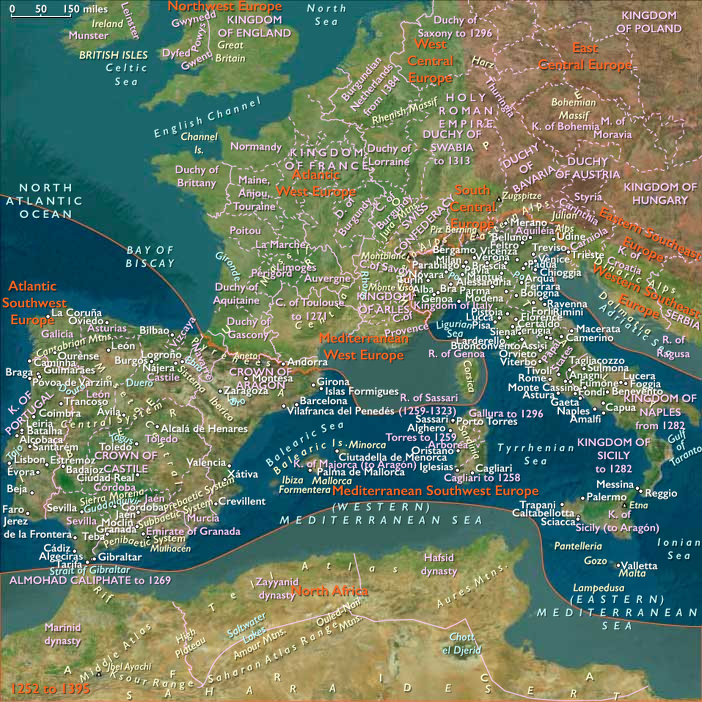
Subregions
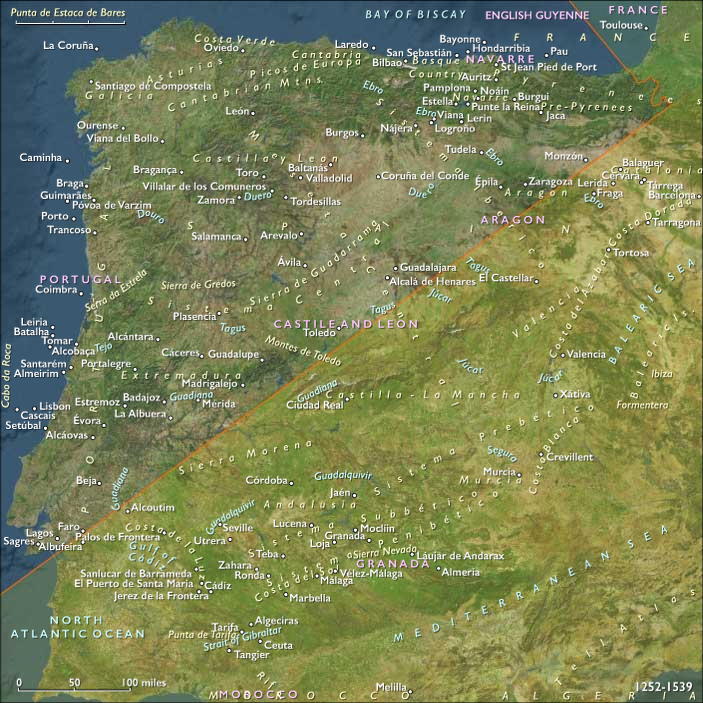
Years: 1252 - 1395
People
Groups
- Jews
- Benedictines, or Order of St. Benedict
- Islam
- Portuguese people
- León, Kingdom of
- Burgundy, Duchy of
- Christians, Roman Catholic
- Portugal, (second) County of
- Hospitallers of St. John of Jerusalem
- Templar, Knights (Poor Knights of Christ and of the Temple of Solomon)
- Almohad Caliphate
- Portugal, Burgundian (Alfonsine) Kingdom of
- Santiago, Order of
- Calatrava, Order of
- Franciscans, or Order of St. Francis
- Calatrava, Order of
- Dominicans, or Order of St. Dominic
Topics
Subjects
Regions
Subregions