
The Seljuq army is returning towards Turkish …
Years: 1177 - 1177
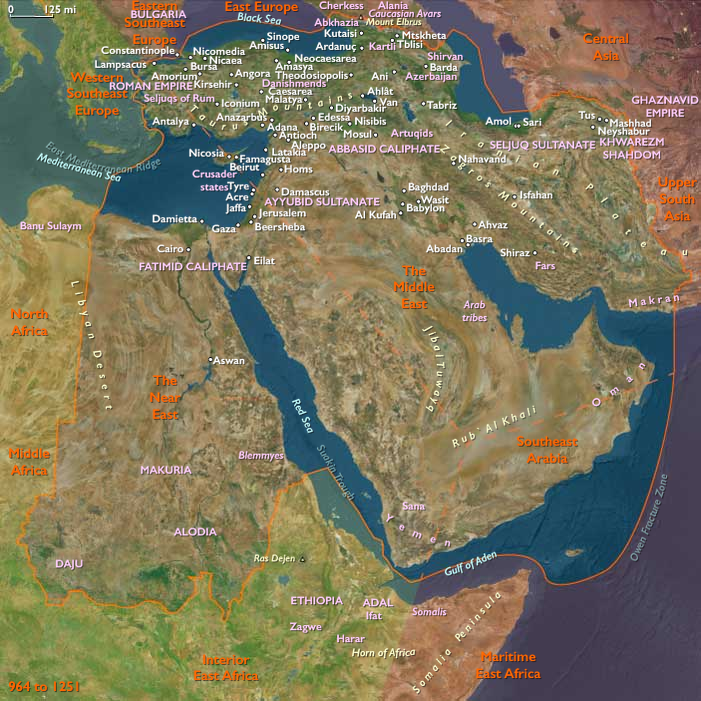
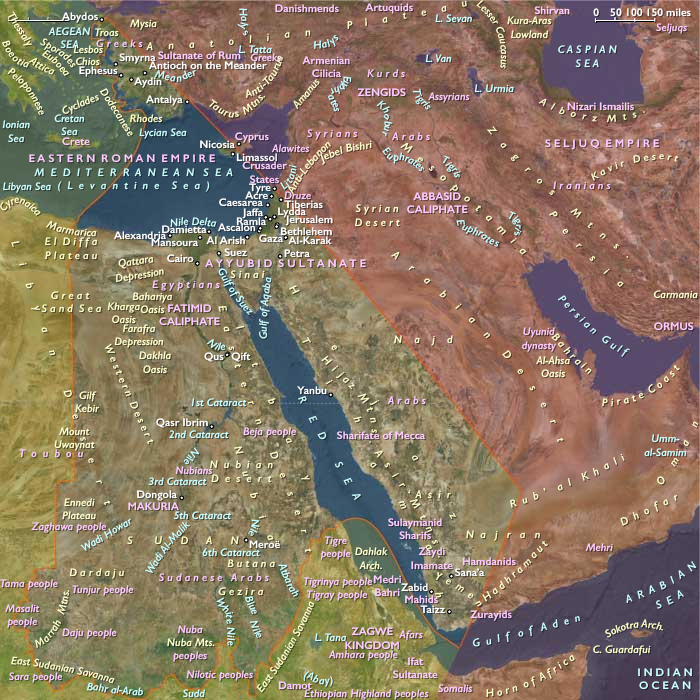
The Seljuq army is returning towards Turkish territory when it approaches a "choke point" in its journey, where the great eastern highway crosses the Meander River by way of a bridge (probably ruined or semi-derelict), near the villages, or forts, of Hyelion and Leimocheir.
The imperial troops have concealed themselves and are divided into two corps, separated by the river.
They catch the Seljuq army in an ambush when it has partially crossed over the river, destroying it as a fighting force.
The imperial light troops play a prominent role in the battle; posted on high ground they are described as raining missiles down onto the near helpless Seljuqs.
Many of the Seljuq soldiers tumble into the river and are drowned.
The Seljuq commander, known as "Atapakos" in Greek sources—evidently a bearer of the title of Atabeg—tries to help his forces cross the river by rallying the most heavily armed of his cavalry and attacking the imperial forces.
This attack having failed, he tries to save himself by swimming across the river with his horse.
When he reaches the opposite shore, however, he is killed by an Alan soldier of the imperial force.
Following the death of their commander, the Seljuq troops flee in disorder, with a great number of them being drowned in the river; Choniates stating that only a few out of many thousands were able to save themselves.
On the imperial side, the general Michael Aspietes falls; he is drowned in the Meander when thrown by his wounded horse.
The imperial victory is followed up by punitive expeditions against the Turkmen nomads settled around the upper Meander Valley.
The imperial strategy at this battle, ambushing a raiding army on its return journey when it is slowed by plunder and captives, is exactly what is prescribed in much earlier imperial military treatises, such as the Tactica of Leo VI (886–912).
This points to a retention by imperial commanders of knowledge of the successful military strategies of the past.
Locations
People
Groups
- Greeks, Medieval (Byzantines)
- Turkmen people
- Roman Empire, Eastern: Komnenos dynasty, restored
- Rûm, Sultanate of
Topics
- Komnenian restoration
- Crusades, The
- Inter-Crusade Period
- Byzantine-Seljuk Turk War of 1158-76
- Hyelion and Leimocheir, Battle of
Commodoties
Subjects
Regions
Subregions
Years: 1177 - 1177
Locations
People
Groups
- Greeks, Medieval (Byzantines)
- Turkmen people
- Roman Empire, Eastern: Komnenos dynasty, restored
- Rûm, Sultanate of
Topics
- Komnenian restoration
- Crusades, The
- Inter-Crusade Period
- Byzantine-Seljuk Turk War of 1158-76
- Hyelion and Leimocheir, Battle of
Commodoties
Subjects
Regions
Subregions