
The Survival of Lower Navarre under the …
Years: 1515 - 1515
June
The Survival of Lower Navarre under the House of Albret (1515)
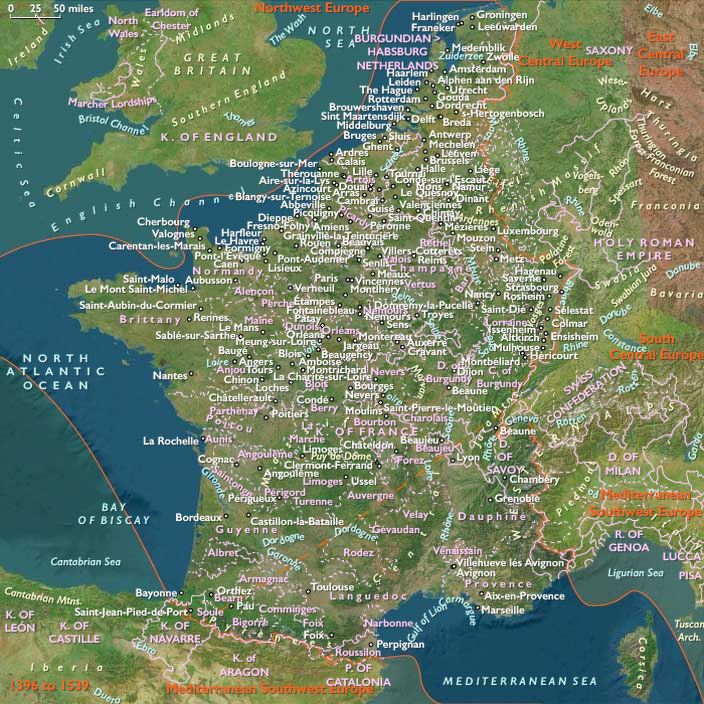
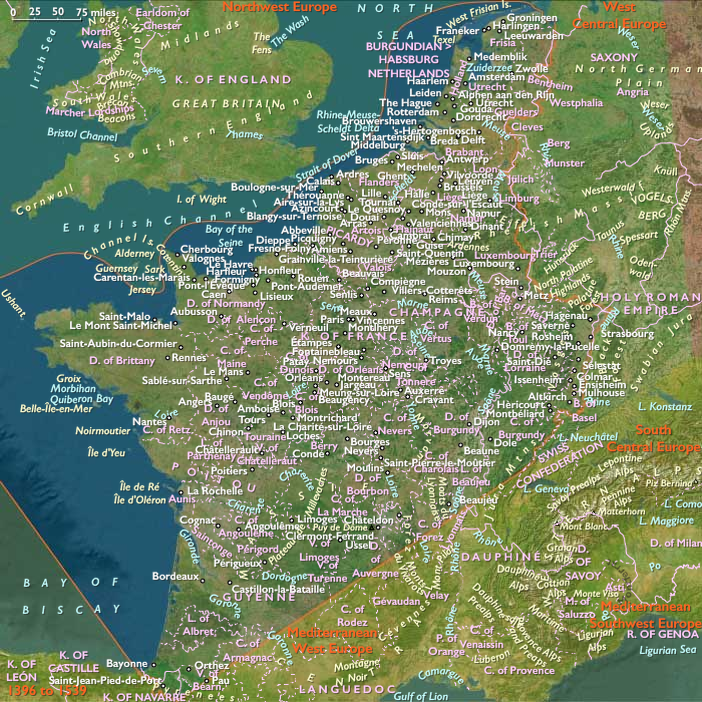
Following the military occupation and formal annexation of Navarre south of the Pyrenees by Ferdinand II of Aragon in 1512, the northern portion of the kingdom, known as Lower Navarre, managed to preserve its independence. Under the leadership of the influential French noble family, the House of Albret, Lower Navarre resisted incorporation into Ferdinand’s domains, thus maintaining a distinct political identity.
Context: Annexation of Navarre by Ferdinand of Aragon
In 1512, Ferdinand II's Castilian and Aragonese forces occupied the southern part of Navarre—known as Upper Navarre—effectively annexing it to the Crown of Castile. The annexation aimed at consolidating Ferdinand’s territorial and political authority, thus eliminating a strategically vulnerable neighbor during ongoing European conflicts. However, the mountainous and geographically isolated northern portion, Lower Navarre, proved more difficult to subdue fully.
Independence of Lower Navarre and the Albret Dynasty
Lower Navarre remained politically autonomous under the Albret family, a French noble lineage deeply entrenched in the politics of southern France and closely connected to the French crown through strategic marriage alliances. This dynastic affiliation, alongside geographic defensibility, allowed the House of Albret to retain their independence and prevent Ferdinand’s complete domination.
Strategic and Diplomatic Implications
Lower Navarre’s independence under the Albret family represented a key point of diplomatic tension and negotiation between France and Spain, as both crowns sought influence over this strategically located region. Its position north of the Pyrenees made Lower Navarre a natural ally of France, enabling it to rely on French diplomatic support and military protection against further Spanish incursions.
Consequences and Historical Legacy
The continued independence of Lower Navarre had enduring political implications. Eventually, in 1589, Henry of Navarre—descendant of the Albret dynasty—ascended to the French throne as Henry IV, thereby uniting the crowns of Navarre and France. This development profoundly impacted the geopolitical structure of Western Europe, firmly aligning Lower Navarre and its legacy with French political history.
In the long term, Lower Navarre’s survival as an independent territory until its incorporation into France contributed significantly to shaping regional identities, laying the groundwork for lasting cultural and historical distinctions between the Spanish-ruled Upper Navarre and the French Lower Navarre.
Locations
People
- Alonso de Aragón
- Catherine of Navarre
- Diego Fernández de Córdoba y Arellano
- Fadrique Álvarez de Toledo
- Ferdinand II of Aragon
- Gaston of Foix
- Germaine of Foix
- Henry VIII of England
- Joanna of Castile
- John III of Navarre
- Louis I d'Orléans
- Louis XII of France
Groups
- Papal States (Republic of St. Peter)
- Navarre, Kingdom of
- Christians, Roman Catholic
- Béarn, Viscountcy of
- Aragón, Kingdom of
- Aragon, Crown of
- Castile, Crown of
- Foix, County of
- France, (Valois) Kingdom of
- Holy Roman Empire
- England, (Tudor) Kingdom of
- Landsknechts
Topics
Commodoties
Subjects
Regions
Subregions
Related Events
Showing 10 events out of 39125 total
Years: 1515 - 1515
June
Locations
People
- Alonso de Aragón
- Catherine of Navarre
- Diego Fernández de Córdoba y Arellano
- Fadrique Álvarez de Toledo
- Ferdinand II of Aragon
- Gaston of Foix
- Germaine of Foix
- Henry VIII of England
- Joanna of Castile
- John III of Navarre
- Louis I d'Orléans
- Louis XII of France
Groups
- Papal States (Republic of St. Peter)
- Navarre, Kingdom of
- Christians, Roman Catholic
- Béarn, Viscountcy of
- Aragón, Kingdom of
- Aragon, Crown of
- Castile, Crown of
- Foix, County of
- France, (Valois) Kingdom of
- Holy Roman Empire
- England, (Tudor) Kingdom of
- Landsknechts
Topics
Commodoties
Subjects
Regions
Subregions