
The second large-scale campaign by the Rus' …
Years: 943 - 943
The second large-scale campaign by the Rus' in the Caspian region is dated to 943, when Igor is the supreme leader of the Rus', according to the Primary Chronicle.
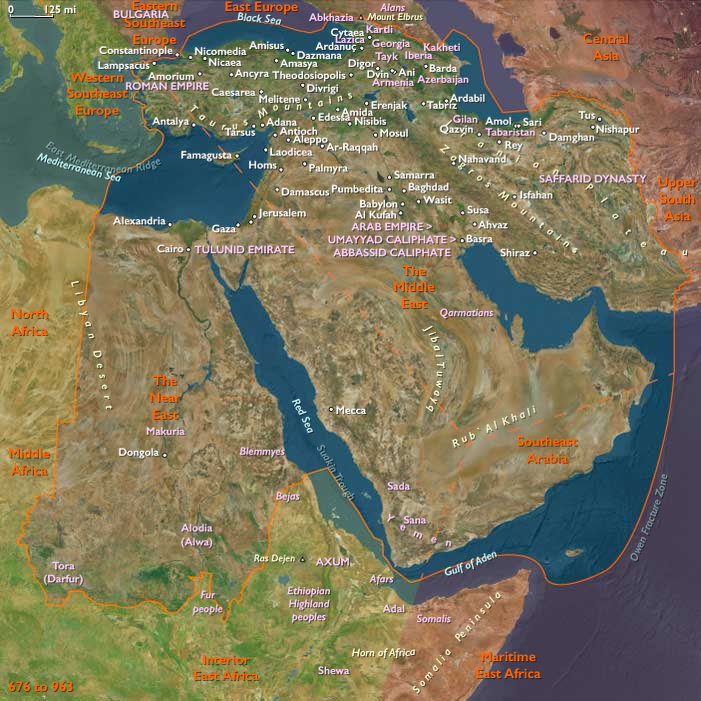
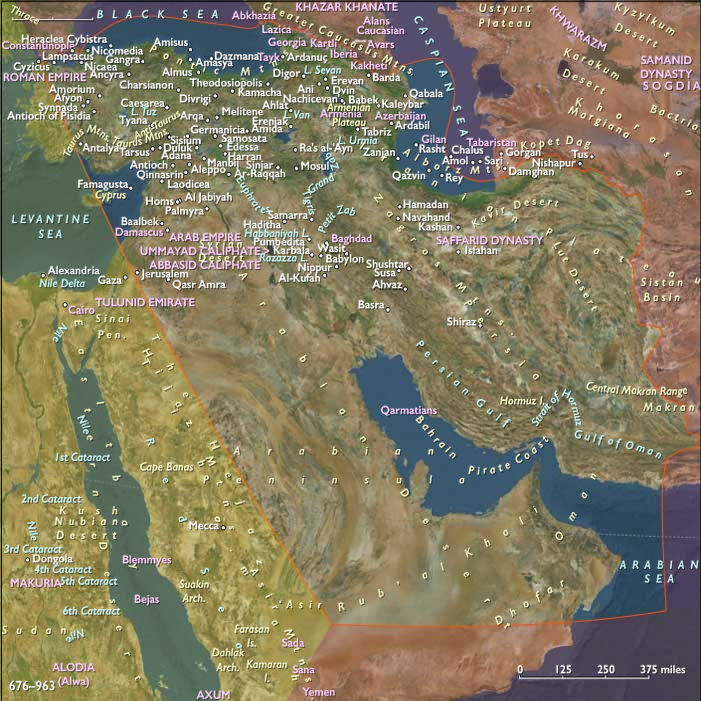
During the 943 expedition, the Rus' row up the Kura River, deep into the Caucasus, defeat the forces of Marzuban bin Muhammad, and capture Bardha'a, the capital of Arran.
The Rus' allow the local people to retain their religion in exchange for recognition of their overlordship; it is possible that the Rus' intended to settle permanently here.
According to ibn Miskawaih, the local people broke the peace by stone-throwing and other abuse directed against the Rus', who then demanded that the inhabitants evacuate the city.
This ultimatum is rejected, and the Rus' begin killing people and holding many for ransom.
The slaughter is briefly interrupted for negotiations, which soon break down.
The Rus' stay in Bardha'a for several months, using it as a base for plundering the adjacent areas, and amass substantial spoils.
The city is saved only by an outbreak of dysentery among the Rus'.
Encouraged by the epidemic, the Muslims approach the city.
The Rus', their chief riding on a donkey, make an unsuccessful sally after which they lose seven hundred warriors, but evade encirclement and retreat to the Bardha'a fortress, where they are besieged by the Muslims.
Exhausted by the disease and the siege, the Rus' "left by night the fortress in which they had established their quarters, carrying on their backs all they could of their treasure, gems, and fine raiment, boys and girls as they wanted, and made for the Kura River, where the ships in which they had issued from their home were in readiness with their crews, and three hundred Russes whom they had been supporting with portions of their booty."
(Vernadsky, George (1959).
The Origins of Russia.
Oxford, Clarendon Press).
The Muslims then exhume from the Rus' graves the weapons that had been buried beside the warriors.
George Vernadsky proposed that Oleg of Novgorod was the donkey-riding chief of the Rus' who attacked Bardha'a.
Vernadsky identified Oleg with Helgu, a figure mentioned in the Schechter Letter.
According to that document, Helgu went to Persia by boat and died there after a failed attack on Constantinople in 941.
On the other hand, Lev Gumilev, drawing on the name of the Rus' leader (as recorded in Arabian sources), hypothesizes that this leader was Sveneld, a Varangian chieftain whose wealth was noted in the Primary Chronicle under 945.
Locations
Groups
- Polytheism (“paganism”)
- Christianity, Chalcedonian
- Islam
- Varangians
- Rus' people
- Novgorod, Principality of
- Kievan Rus', or Kiev, Great Principality of
Topics
Commodoties
Subjects
Regions
Subregions
Years: 943 - 943
Locations
Groups
- Polytheism (“paganism”)
- Christianity, Chalcedonian
- Islam
- Varangians
- Rus' people
- Novgorod, Principality of
- Kievan Rus', or Kiev, Great Principality of
Topics
Commodoties
Subjects
Regions
Subregions