
Filters:
The Schmalkaldic League had quickly become more …
Years: 1539 - 1539
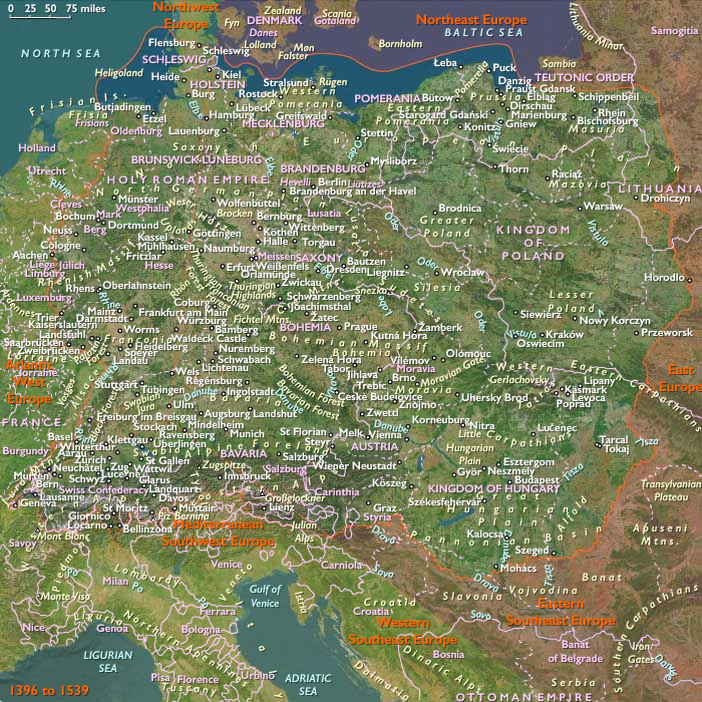
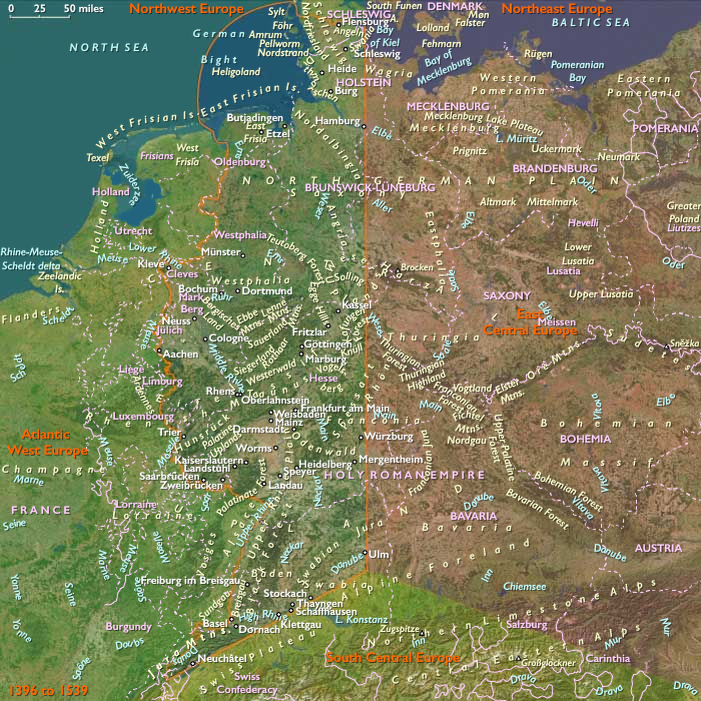
The Schmalkaldic League had quickly become more of a territorial political movement, as breaking from the Catholic Church offers significant economic advantages.
The league in December 1535 admits anyone who will subscribe to the Augsburg Confession, thus Anhalt, Württemberg, Pomerania, as well as the free imperial cities of Augsburg, Frankfurt am Main, and Kempten join the alliance.
Francis I of France, while vigorously persecuting Protestants at home, has nevertheless supported the Protestant princes from 1535 in their struggle against their common foe.
The Schmalkaldic League had allied in 1538 with newly reformed Denmark, and in 1539 the League acquires Brandenburg, which is under the leadership of Joachim II Hector.
Locations
People
- Charles V, Holy Roman Emperor
- Francis I of France
- Huldrych Zwingli
- Joachim II Hector Hohenzollern
- Martin Luther
- Philip I of Hesse
Groups
- Augsburg, Prince-Bishopric of
- Christians, Roman Catholic
- Kempten in the Allgäu, Imperial Ducal Abbey (Free City) of
- Swiss Confederacy, Old (Swiss Confederation)
- France, (Valois) Kingdom of
- Saxony, Electorate of
- Frankfurt am Main, Imperial Free City of
- Anhalt-Dessau, Principality of
- Anhalt-Köthen, Principality of
- Brandenburg, (Hohenzollern) Margravate of
- Holy Roman Empire
- Pomerania, Wendish Duchy of
- Württemberg, Duchy of
- Hesse, Landgraviate of
- Lutheranism
- Protestantism
- Habsburg Monarchy, or Empire
- Schmalkaldic League
- Denmark-Norway, Kingdom of
Topics
Subjects
Regions
Subregions
Years: 1539 - 1539
Locations
People
- Charles V, Holy Roman Emperor
- Francis I of France
- Huldrych Zwingli
- Joachim II Hector Hohenzollern
- Martin Luther
- Philip I of Hesse
Groups
- Augsburg, Prince-Bishopric of
- Christians, Roman Catholic
- Kempten in the Allgäu, Imperial Ducal Abbey (Free City) of
- Swiss Confederacy, Old (Swiss Confederation)
- France, (Valois) Kingdom of
- Saxony, Electorate of
- Frankfurt am Main, Imperial Free City of
- Anhalt-Dessau, Principality of
- Anhalt-Köthen, Principality of
- Brandenburg, (Hohenzollern) Margravate of
- Holy Roman Empire
- Pomerania, Wendish Duchy of
- Württemberg, Duchy of
- Hesse, Landgraviate of
- Lutheranism
- Protestantism
- Habsburg Monarchy, or Empire
- Schmalkaldic League
- Denmark-Norway, Kingdom of
Topics
Subjects
Regions
Subregions