
A common historical perspective on the seventeenth …
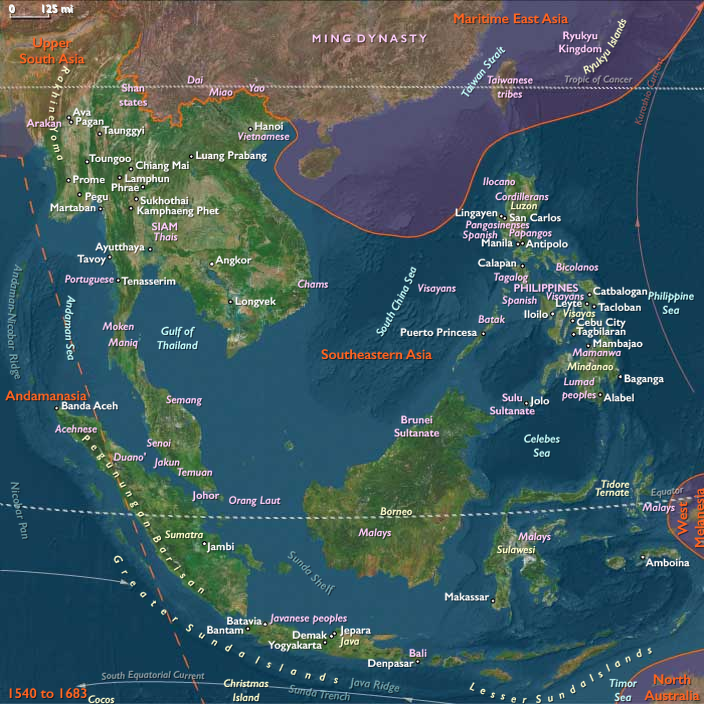
Years: 1540 - 1683
A common historical perspective on the seventeenth and eighteenth centuries is to portray the VOC as a uniquely powerful military and economic juggernaut that steadily and deliberately constructed the empire that came to be known as the Netherlands East Indies
In the twentieth century, such a view was frequently shared by Dutch colonial officials and Indonesian nationalists, who spoke of "three hundred and fifty years of Dutch rule" in the archipelago.
The truth, however, is more modest.
The VOC was neither the "first (modern) multinational corporation," as has sometimes been claimed, nor the instrument of a state policy of colonial expansion.
It was founded in the Netherlands in 1602 as an effort to manage the competition and risk of the growing number of Dutch expeditions to the Indonesian archipelago (ten companies, ten voyages, and sixty-five ships between 1595 and 1601), and to compete with the East India Company, formed by the English two years earlier, for control of the Asian trade.
The VOC's initial charter establishes its sole right among Dutch enterprises to do business in Asia and gives it exceptional powers, such as those of keeping an army and using military force, making treaties with local rulers, building fortifications, and issuing coinage.
In addition, it calls for little government oversight and does not require the new company to pay dividends to investors at the end of each voyage (as had been the practice), allowing it to amass large sums of money over longer periods of time.
The purpose of this state-supported enterprise is primarily to make a profit.
At home the directors, known as the Heeren XVII (Seventeen Gentlemen), recognize that fighting wars, establishing colonies (rather than simple trading posts and fortifications), and becoming involved in local disputes diminishes profits, and they generally warn against such activities.
Groups
- Javanese people
- Acehnese people
- Dutch people
- Portuguese people
- English people
- Tidore, Sultanate of
- Aceh, or Atjeh, Sultanate
- Ternate, Sultanate of
- Portugal, Avizan (Joannine) Kingdom of
- England, (Tudor) Kingdom of
- Makassar people
- Portuguese Malacca
- Spaniards (Latins)
- Spain, Habsburg Kingdom of
- Banten Sultanate
- Mataram, Sultanate of
- Netherlands, United Provinces of the (Dutch Republic)
- East India Company, British (The Company of Merchants of London Trading into the East Indies)
- Dutch East India Company in Indonesia
- Dutch East India Company (Vereenigde Oostindische Compagnie or VOC in Dutch, literally "United East Indies Company")
- England, (Stuart) Kingdom of
Topics
Commodoties
Subjects
Regions
Subregions
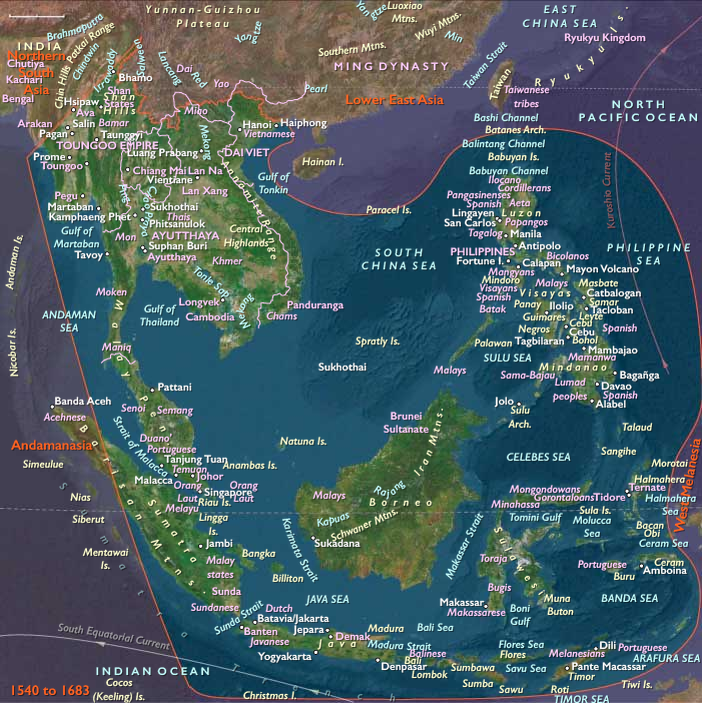
Years: 1540 - 1683
Groups
- Javanese people
- Acehnese people
- Dutch people
- Portuguese people
- English people
- Tidore, Sultanate of
- Aceh, or Atjeh, Sultanate
- Ternate, Sultanate of
- Portugal, Avizan (Joannine) Kingdom of
- England, (Tudor) Kingdom of
- Makassar people
- Portuguese Malacca
- Spaniards (Latins)
- Spain, Habsburg Kingdom of
- Banten Sultanate
- Mataram, Sultanate of
- Netherlands, United Provinces of the (Dutch Republic)
- East India Company, British (The Company of Merchants of London Trading into the East Indies)
- Dutch East India Company in Indonesia
- Dutch East India Company (Vereenigde Oostindische Compagnie or VOC in Dutch, literally "United East Indies Company")
- England, (Stuart) Kingdom of
Topics
Commodoties
Subjects
Regions
Subregions