
Both armies have begun to move and …
Years: 1812 - 1812
September
Both armies have begun to move and rebuild.
The Russian retreat is significant for two reasons; firstly, the move is to the south and not the east; secondly, the Russians immediately begin operations that will continue to deplete the French forces.
Platov, commanding the rear guard on September 8, had offered such strong resistance that Napoleon had remained on the Borodino field.
On the following day, Miloradovitch assumes command of the rear guard, adding his forces to the formation.
Another battle is given, throwing back French forces at Semolino and causing losses of two thousand on both sides; however, some 10,000 wounded will be left behind by the Russian Army.
The Russian retreat is significant for two reasons; firstly, the move is to the south and not the east; secondly, the Russians immediately begin operations that will continue to deplete the French forces.
Platov, commanding the rear guard on September 8, had offered such strong resistance that Napoleon had remained on the Borodino field.
On the following day, Miloradovitch assumes command of the rear guard, adding his forces to the formation.
Another battle is given, throwing back French forces at Semolino and causing losses of two thousand on both sides; however, some 10,000 wounded will be left behind by the Russian Army.
Locations
People
- Alexander I of Russia
- Duke Eugen of Württemberg
- Jérôme Bonaparte
- Louis-Nicolas Davout
- Michael Andreas Barclay de Tolly
- Mikhail Kutuzov
- Napoleon
Groups
- Portuguese people
- Poles (West Slavs)
- Austria, Archduchy of
- Baltic Germans
- Russians (East Slavs)
- Cossacks
- Spaniards (Latins)
- Denmark-Norway, Kingdom of
- Portugal, Bragança Kingdom of
- Russian Empire
- Britain (United Kingdom of Great Britain and Ireland)
- Switzerland
- France, (first) Empire of
- Italy, Bonapartist Kingdom of
- Rhine, Confederation of the (Rhine Confederation)
- Naples, Bonapartist Kingdom of
- Warsaw, Duchy of
- Spain, Bonapartist Kingdom of
Topics
Commodoties
Subjects
Regions
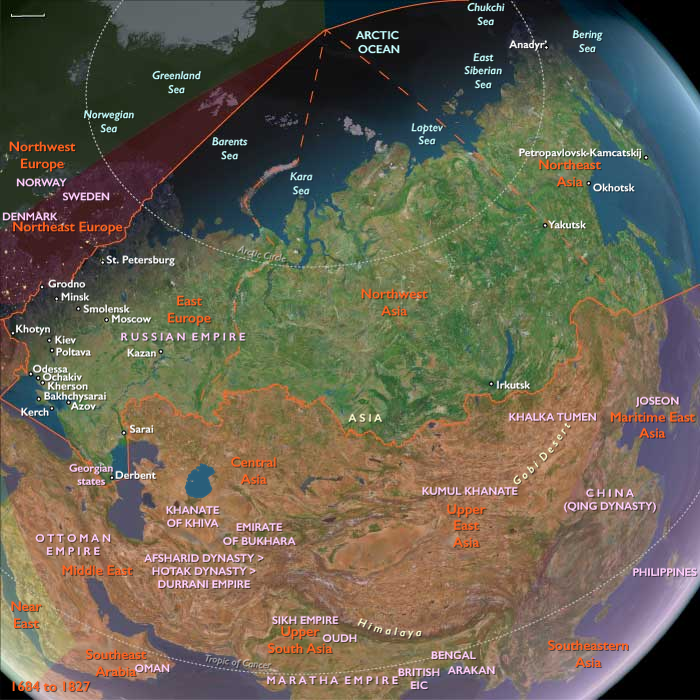
Subregions
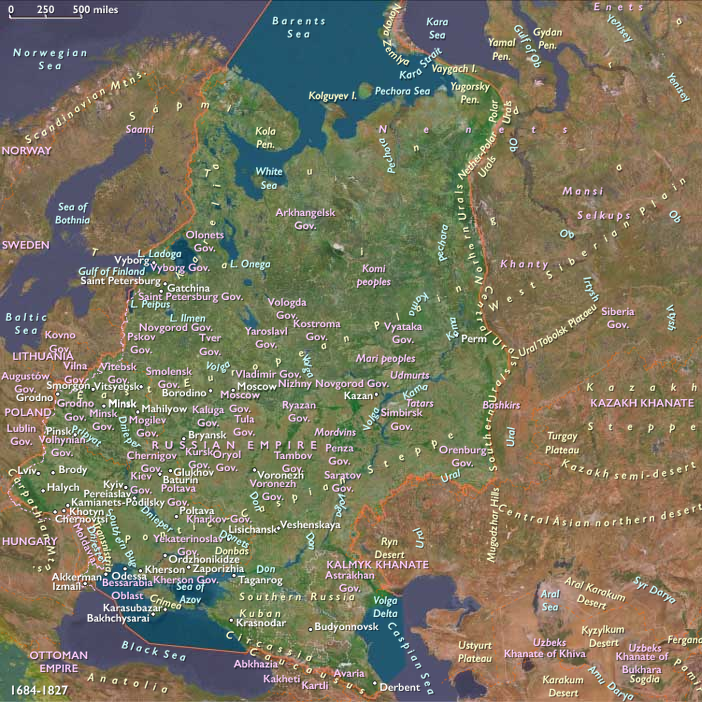
Related Events
Showing 10 events out of 21390 total
Years: 1812 - 1812
September
Locations
People
- Alexander I of Russia
- Duke Eugen of Württemberg
- Jérôme Bonaparte
- Louis-Nicolas Davout
- Michael Andreas Barclay de Tolly
- Mikhail Kutuzov
- Napoleon
Groups
- Portuguese people
- Poles (West Slavs)
- Austria, Archduchy of
- Baltic Germans
- Russians (East Slavs)
- Cossacks
- Spaniards (Latins)
- Denmark-Norway, Kingdom of
- Portugal, Bragança Kingdom of
- Russian Empire
- Britain (United Kingdom of Great Britain and Ireland)
- Switzerland
- France, (first) Empire of
- Italy, Bonapartist Kingdom of
- Rhine, Confederation of the (Rhine Confederation)
- Naples, Bonapartist Kingdom of
- Warsaw, Duchy of
- Spain, Bonapartist Kingdom of
Topics
Commodoties
Subjects
Regions
Subregions