The growth of poppies for their opium …
Years: 321BCE - 310BCE
The growth of poppies for their opium content spreads slowly eastward from Mesopotamia and Greece.
Alexander had introduced opium to the people of Persia and India; the substance was apparently unknown in the latter country.
Opium is at first taken in the form of pills or is added to beverages.
The oral intake of raw opium as a medicine does not appear to have produced widespread addictions in ancient Asian societies.
Groups
Topics
Commodoties
Subjects
Regions
Subregions
Related Events
Filter results
Showing 10 events out of 64277 total
The rule of Alexander's empire following his death in 323 BCE had been given to his half-brother Philip Arrhidaeus and Alexander's son Alexander IV.
However, since Philip is mentally ill and Alexander IV born only after the death of his father, a regent had been named in Perdiccas.
The former generals of Alexander had meanwhile been named satraps of the various regions of his empire.
Alexander’s successors are the founders of the territorial kingdoms of the Hellenistic world, in which warfare will be almost continual from 321 BCE to 301 BCE.
The twenty-year power struggle will divide Alexander’s empire into several parts, including mainland Greece and Macedonia, Syria and Mesopotamia, and Egypt.
Macedonia itself remains the heart of the empire, and its possession, along with the control of Greece, is keenly contested.
The rival generals, ultimately seven in number with the addition of Antipater's son Cassander and Antipater's appointee, Polyperchon, are known to modern historians as the “Diadochi,' (Greek: “successors”), a term introduced by German historian Johann Gustav Droysen in the nineteenth century.
Several satraps are eager to gain more power, and when Ptolemy, satrap of Egypt, rebels with other generals, Perdiccas moves against the former but is killed by a mutiny in his camp.
Ptolemy declines the regency and instead brings to the office Peithon and Arrhidaeus.
This designation meets the strong opposition of Eurydice, wife of king Philip III, leading, in the meeting called in 321 BCE at Triparadisus of all the diadochi, to their replacement with Antipater.
The meeting also proceeds to divide again the satrapies between the various generals.
Alexander’s army also has introduced the lute and new musical theories into India, heavily influencing the course of Indian music. (The Indian vina, a lute-like plucked instrument developed subsequently, is the precursor of the sitar.)
The Middle East: 321–310 BCE
The Partition of Babylon and the Rise of the Diadochi
Division of Alexander’s Empire
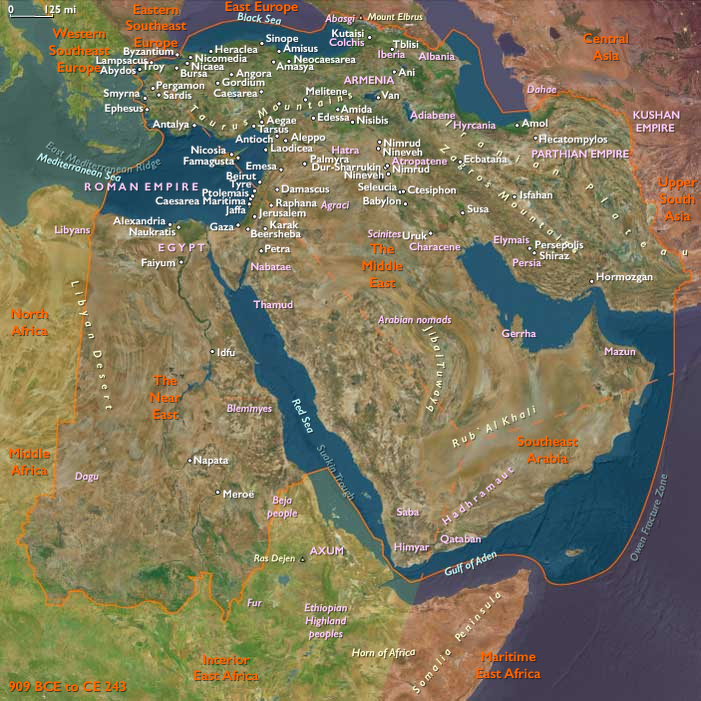
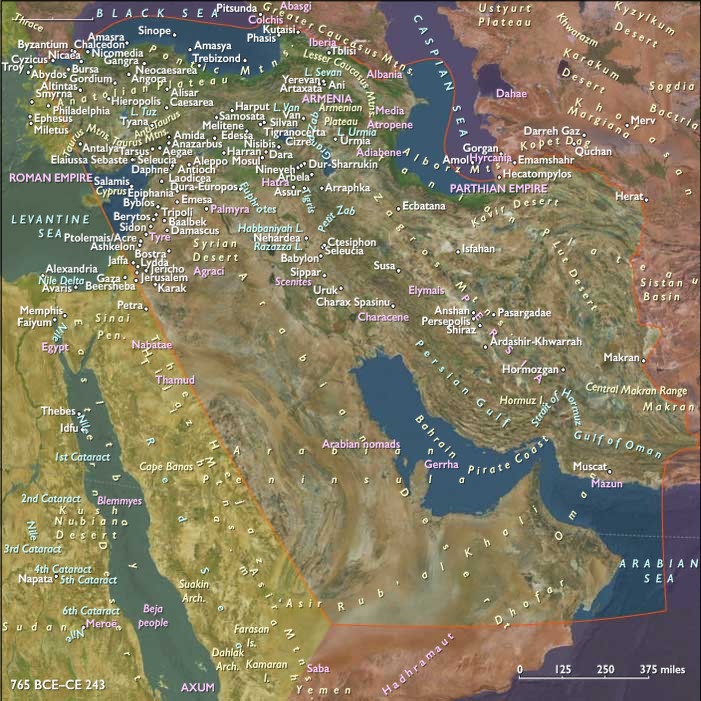
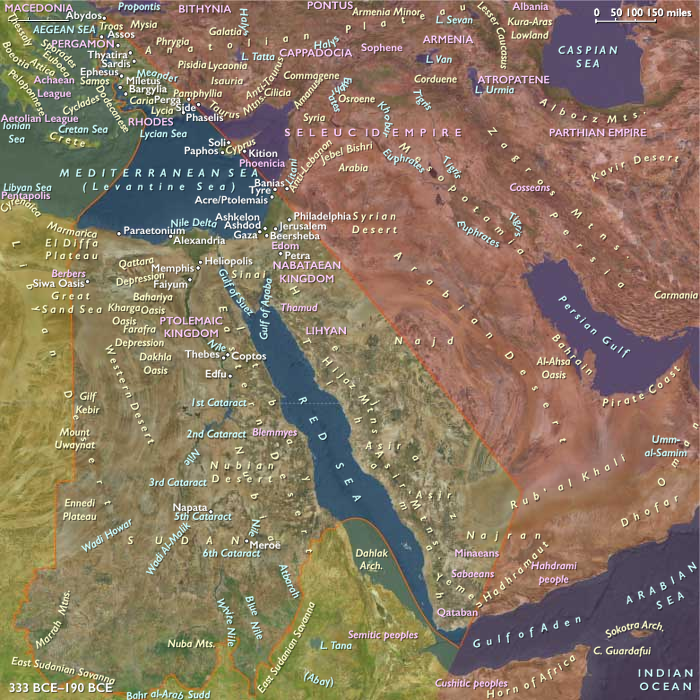
The death of Alexander in 323 BCE leads to the Partition of Babylon, dividing his empire among his top generals and companions, known as the Diadochi. Laomedon the Mitylenaean is appointed ruler of Syria, and Peithon governs the southern part of Media (Media Magna) up to the Caspian Straits. Philoxenus assumes rulership of Cilicia, while the feeble-minded half-brother of Alexander, Arrhidaeus, nominally governs Mesopotamia and Arbelitis.
Seleucus and the Satrapy of Babylon
Seleucus is established as the satrap of Babylon, positioning him strategically within the fertile Mesopotamian heartland. His governance begins to lay the foundation for what will become the extensive Seleucid Empire. Meanwhile, Antigenes, captain of the Macedonian Silver Shields, is appointed prefect of the province of Susa and tasked with collecting tribute alongside three thousand potentially mutinous Macedonian troops.
Regional Rulership and Autonomy
Peucestas maintains his governance of Persis, while Tlepolemus rules Carmania. The smaller northern region, previously a sub-satrapy known as Matiene, emerges as Media Atropatene, governed by Atropates, the former Achaemenid governor and father-in-law of Perdiccas, the regent of Alexander’s designated successor. Additionally, Philip rules Parthia, and Stasander governs the territories of the Arians and Drangians.
Governance in Anatolia and Cappadocia
In Anatolia, Nicanor receives control of Cappadocia, and Arrhidaeus (distinct from Alexander’s brother) administers Hellespontine Phrygia. These appointments establish the immediate political landscape after Alexander’s demise, though they also set the stage for subsequent conflicts among the successors, who soon seek greater autonomy and territorial control.
The Maurya Empire is founded in 321 BCE by Chandragupta Maurya, who has overthrown the Nanda Dynasty and rapidly expanded his power westwards across central and western India, taking advantage of the disruptions of local powers in the wake of the withdrawal westward by the Greek armies of Alexander the Great.
Originating from the kingdom of Magadha in the Indo-Gangetic plains (modern Bihar, eastern Uttar Pradesh) in the eastern side of the Indian subcontinent, the Empire has its capital city at Pataliputra (modern Patna).
Near East (321–310 BCE): Consolidation of Hellenistic Rule and Jewish Autonomy
In the aftermath of Alexander the Great’s death, the Near East continues to be shaped by the intense rivalries among his successors, the Diadochi, who compete fiercely for dominion over his fragmented empire. Amid these tumultuous shifts, local societies and traditions manage varying degrees of autonomy.
Alexander had notably left the Jews of Judea largely undisturbed, respecting their religion and local governance. Throughout this era, the Jewish state remains under the leadership of the high priest, who serves as both spiritual and administrative head. This figure likely collaborates with a council of elders to manage internal affairs, preserving religious customs and maintaining social stability amid wider regional conflicts.
As Alexander's former generals consolidate their hold over territories in the Near East, Judea enjoys a delicate balance of autonomy under the shifting oversight of the Diadochi. The preservation of Jewish religious and political structures in this turbulent age underscores a significant continuity within the broader context of profound Hellenistic transformations across the region.
Alexander had left the Jews undisturbed in their religion and customs.
The high priest remains the head of the Jewish state, perhaps assisted by a council of elders.
Mediterranean Southwest Europe (321–310 BCE): Rome's Struggles and Turning Point in the Second Samnite War
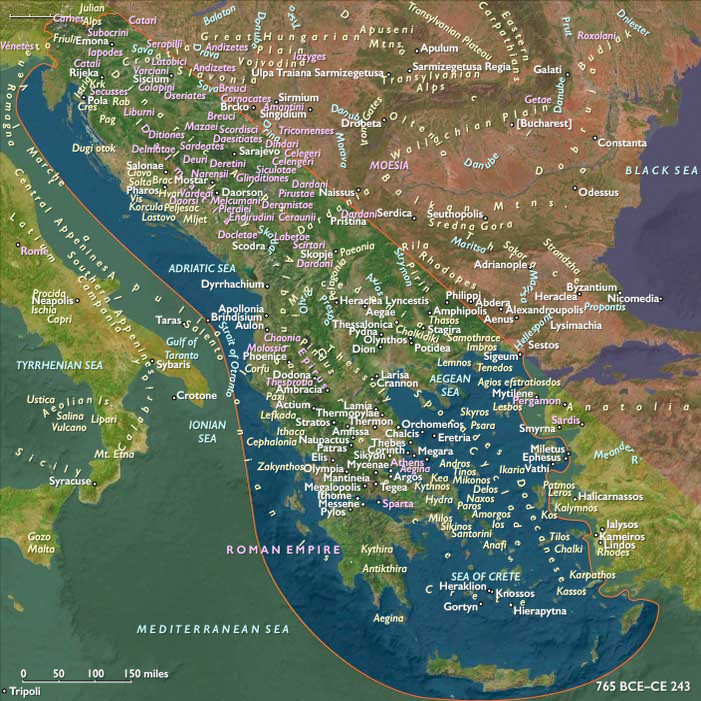
The era 321–310 BCE in Mediterranean Southwest Europe sees Rome initially suffer significant setbacks during the ongoing Second Samnite War, testing its political resilience and military capability. However, this period also marks a turning point, as Rome manages to recover and reassert its dominance, reshaping the geopolitical balance of power in central Italy.
Early Roman Setbacks
Throughout the early years of this era, Rome experiences severe defeats against the Samnites, significantly shaking its military confidence and threatening its regional alliances. The Samnites, successful in numerous engagements, bring Campania to the brink of abandoning its alliance with Rome. The Romans, acknowledging the gravity of their situation, negotiate peace agreements with certain Samnite towns to stem their losses and stabilize their positions.
Turning of the Tide
In 311 BCE, however, the conflict expands dramatically. As Rome is struggling to maintain its footing, several Etruscan city-states enter the war, joining the Samnites in opposition to Roman expansion. The Etruscan decision coincides with the expiration of a previously established forty-year peace agreement, significantly escalating the scope of the conflict.
Roman Resurgence and Strategic Shifts
Faced with this new alliance of adversaries, Rome mobilizes its resources and military strategy more effectively. After initial setbacks, Roman forces start achieving decisive victories against both the Samnites and their Etruscan allies. The war evolves into a broader struggle for control over much of Italy, showcasing Rome's resolve and military innovation.
Broader Regional Context
In this period, southern Iberia and the western Mediterranean islands remain largely stable politically, maintaining ongoing trade and cultural exchanges. However, the intensified warfare in Italy indirectly influences commercial and diplomatic activities throughout the region, particularly affecting interactions among Greek, Carthaginian, and indigenous Iberian communities.
Legacy of the Era
The era 321–310 BCE proves crucial for Mediterranean Southwest Europe, marking a significant pivot in the Second Samnite War. Rome’s ability to recover from earlier setbacks and effectively counter combined threats from the Samnites and Etruscans lays a strong foundation for its emerging dominance. These military and diplomatic developments foreshadow Rome's future expansion, reshaping regional alliances and power dynamics in the decades to follow.
The tide turns in 311, when the Samnites are joined by Etruscan cities that have decided to join a showdown against Roman power.
The intervention of the Etruscans in 311 BCE occurs as the forty years’ peace reaches its end.
After the first shock, the Romans continuously defeat both their enemies.
The war becomes a contest for the dominance of much of Italy.
Rome has suffered serious defeats during the first half of the Second, or Great, Samnite War.
Success has seemed to flow with the Samnites until 314 BCE.
Campania is on the verge of deserting Rome.
Peace is established between Rome and some Samnite towns.
North Africa (321–310 BCE)
Carthaginian Resilience, Cyrenaic Stability, and Berber Consolidation
Carthaginian Naval Supremacy and Regional Adaptation
From 321 to 310 BCE, Carthage maintains strong maritime dominance, strategically enhancing its naval power to secure crucial Mediterranean trade routes and safeguard its territorial possessions. Amid the complex geopolitical aftermath of Alexander the Great's death, Carthage remains cautious yet adaptive, focusing primarily on consolidating control over northern Tunisia and essential colonies such as Leptis and Oea (modern Tripoli).
Carthage further solidifies its economic relationships with Berber tribes in the interior, maintaining a mutually beneficial flow of resources. Key trading centers like Tangier flourish, enhancing economic cooperation and integration between coastal settlements and inland Berber populations.
Diplomatic Prudence and Regional Stability
Carthaginian diplomacy during this era is characterized by careful vigilance, skillfully navigating the shifting alliances and rivalries among emerging Hellenistic states. Avoiding direct entanglements, Carthage maintains strategic relations with Greek city-states, particularly Syracuse, ensuring ongoing peace and stability. This measured diplomatic approach enables Carthage to protect its commercial interests and territorial integrity amid regional uncertainties.
Cyrenaica’s Economic Robustness and Diplomatic Skill
The Greek Pentapolis—Cyrene, Barce (Al Marj), Euhesperides (Benghazi), Teuchira (Tukrah), and Apollonia (Susah)—continues its economic prosperity, driven by stable exports of grain, fruit, horses, and the highly valued medicinal plant Silphium. Cyrene maintains significant investments in infrastructure and religious institutions, underscoring sustained regional strength and political independence.
Cyrenaica skillfully negotiates its diplomatic position within the changing dynamics of Hellenistic rule in Egypt and the broader Mediterranean. By balancing external pressures from neighboring powers, the Pentapolis successfully retains its autonomy and Greek cultural heritage.
Strengthened Berber Economic Integration and Autonomy
Berber communities continue deepening their integration with Carthaginian trade networks, embracing advanced agricultural techniques, maritime practices, and artisanal skills. Key coastal cities, notably Oea (Tripoli), sustain their roles as essential economic hubs, fostering stable regional prosperity.
Inland Berber tribes preserve their autonomy, maintaining traditional governance systems and cultural identities. Their indirect participation in prosperous coastal trade networks bolsters economic resilience and regional stability.
Intensified Cultural Interaction and Religious Syncretism
Cultural exchanges among Berber, Carthaginian, and Greek communities intensify, stimulating vibrant artistic and artisanal development, notably in pottery, textiles, and metalwork. Religious syncretism further matures, blending indigenous Berber spiritual practices with Phoenician and Greek traditions, enriching regional cultural complexity and cohesion.
Sustained Regional Stability Amid Changing Times
By 310 BCE, North Africa continues demonstrating notable political stability, economic vitality, and rich cultural integration. Carthage’s careful maritime and diplomatic strategies, Cyrenaica’s effective regional negotiations, and robust Berber integration together form a resilient foundation, securing continued prominence and influence in the Mediterranean.