
The Romani, although they are refugees from …
Years: 1499 - 1499
The Romani, although they are refugees from the conflicts in southeastern Europe, are often suspected by the local populations in the West as being associated with the Ottoman invasion because of their physical features seemed related to the Turks. (The German Reichstags at Landau and Freiburg in 1496-1498 had declared that the Romani were spies of the Turks).
In Western Europe, such suspicions and discrimination against a people who were a visible minority results in persecution, often violent, with efforts to achieve ethnic cleansing until the modern era.
In times of social tension, the Romani suffer as scapegoats; for instance, they are accused of bringing the plague during times of epidemics.
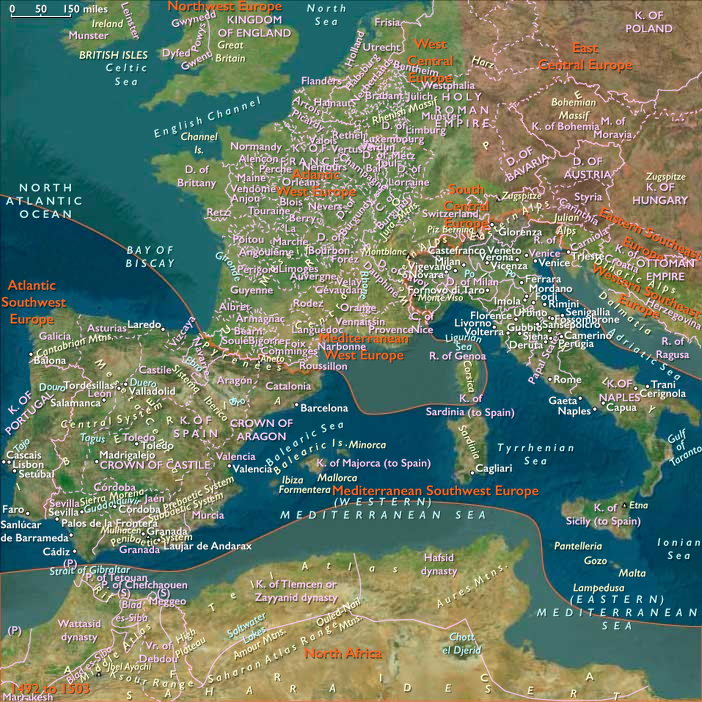
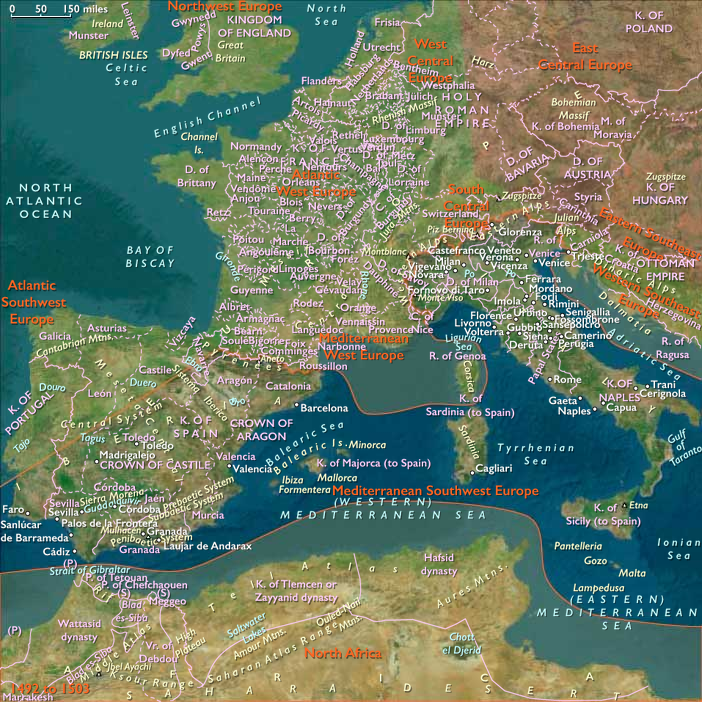
Spanish legislation in 1499 orders Gypsies to find a trade and master and cease traveling together, within sixty days, on pain of one hundred lashes and banishment.
The punishment for repeat offenders is amputation of ears, sixty days in chains, and banishment.
Third-time offenders are to become enslaved by those who capture them.
Locations
Groups
Subjects
Regions
Subregions
Years: 1499 - 1499
Locations
Groups
Subjects
Regions
Subregions