
Filters:
The Official Division of the Roman Empire …
Years: 364 - 375
The Official Division of the Roman Empire (364 CE) and the Growing Vulnerability of the West
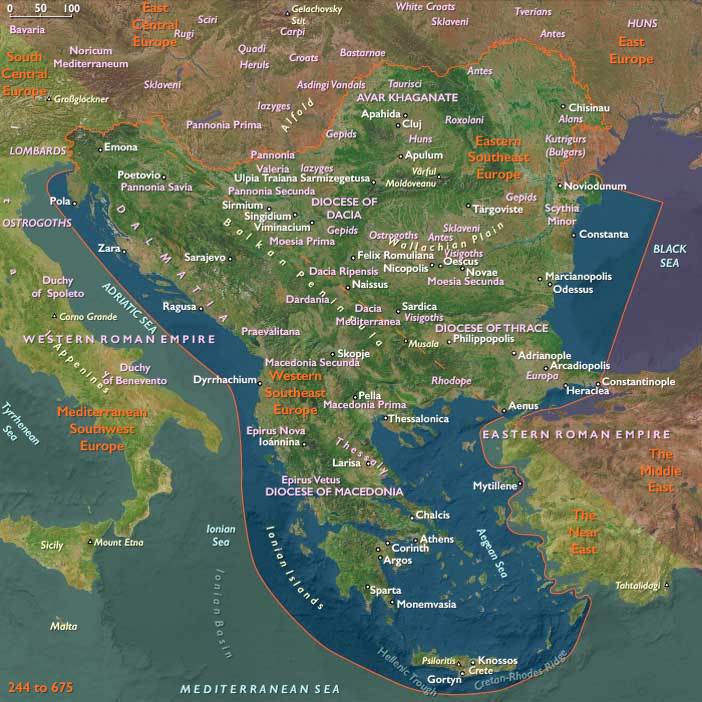
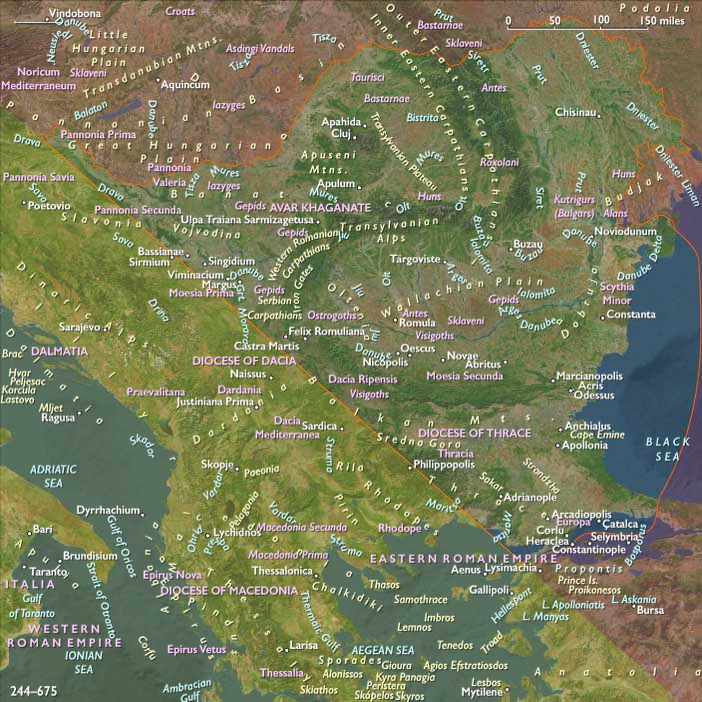
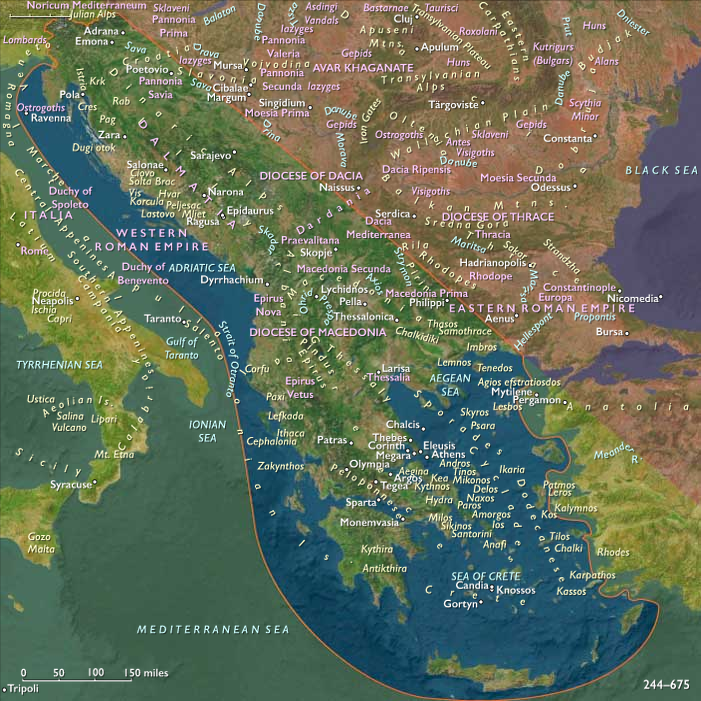
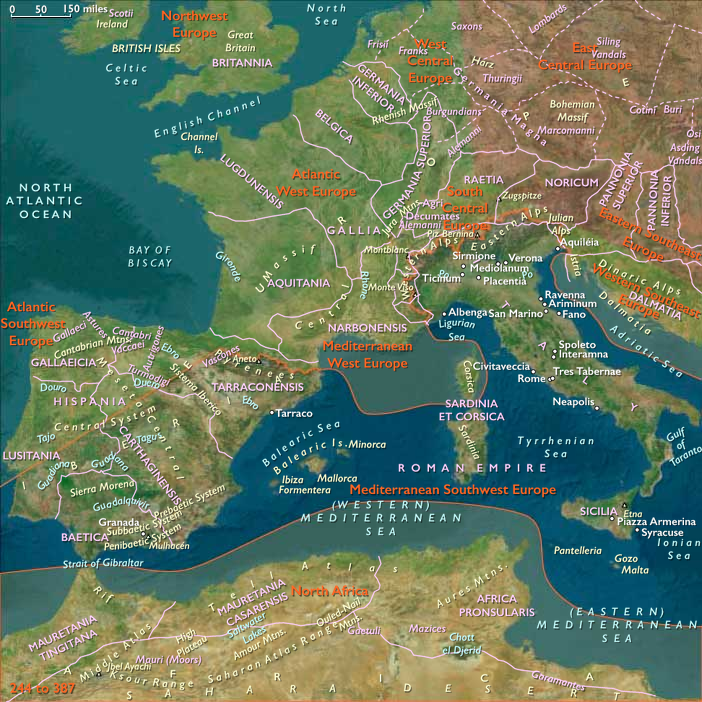
The division of the Roman Empire became official in 364 CE, when Emperor Valentinian I took control of the Western Roman Empire, while his brother Valens ruled the Eastern Roman Empire. This division, though initially intended as an administrative strategy, further weakened the empire’s ability to defend itself, especially in the West, where economic struggles and political instability left it increasingly vulnerable to barbarian incursions.
1. The Official Division of the Empire (364 CE)
- In 364 CE, after the brief rule of Jovian, the empire was officially divided:
- Valentinian I ruled the West, governing from Mediolanum (Milan) and Rome.
- Valens ruled the East, initially based in Constantinople, which would become the permanent capital of the Eastern Empire.
- The division reflected growing administrative challenges, as a single emperor could no longer effectively manage the vast empire.
2. Economic and Administrative Disruptions
- The Western Roman Empire faced severe financial problems, including:
- Declining tax revenues due to depopulation and economic decline.
- Increased military expenses to defend its borders.
- Corrupt administration and political infighting, which weakened the government.
- In contrast, the Eastern Roman Empire remained wealthier and more stable, with stronger trade connections to the Mediterranean and Asia.
3. Increased Barbarian Invasions
- As the West struggled, barbarian groups began launching more frequent and destructive raids.
- The most significant threats included:
- The Goths, who had been pressured by the advancing Huns and were seeking refuge within Roman borders.
- The Vandals and Alans, who began probing the empire’s western frontiers.
- The Franks and Alemanni, who continued to raid Gaul.
- These invasions further destabilized Roman control, as the Western Empire lacked the resources and manpower to defend its borders effectively.
4. Consequences of the Division
- While the Eastern Empire managed to reinforce its defenses, the West became increasingly vulnerable.
- The weakening of the Western military led to a reliance on barbarian mercenaries (foederati), who would later turn against Rome.
- The empire’s fragmentation made it easier for external enemies to exploit divisions between East and West.
5. Conclusion: A Precursor to the Fall of the West
The division of the Roman Empire in 364 CE was meant to strengthen imperial administration, but it ultimately led to a growing imbalance between East and West.
- While the Eastern Empire survived and thrived, the Western Empire spiraled into decline, ultimately collapsing in 476 CE.
- This period marked the beginning of the end for Rome in the West, as economic troubles, political instability, and barbarian invasions pushed it toward fragmentation and collapse.
Though the empire still endured, the events of 364 CE set the stage for the Western Roman Empire’s fall and the rise of medieval Europe.
Groups
- Polytheism (“paganism”)
- Dacians, or Getae, or Geto-Dacians
- Goths (East Germanic tribe)
- Mithraic Mysteries
- Thervingi (East Germanic tribe)
- Greuthungi (East Germanic tribe)
- Roman Empire: Constantinian dynasty (Constantinople)
- Roman Empire: Valentinian dynasty (Rome)
Topics
Commodoties
Subjects
Regions
- The Near and Middle East
- Southeast Europe
- Central Europe
- West Europe
- North Europe
- North Africa
- Southwest Europe


Subregions
- East Central Europe
- Eastern Southeast Europe
- Middle East
- Near East
- Western Southeast Europe
- South Central Europe
- Mediterranean West Europe
- Mediterranean Southwest Europe
- North Africa
- Atlantic Southwest Europe
- Atlantic West Europe
- West Central Europe
- Northwest Europe






Years: 364 - 375
Groups
- Polytheism (“paganism”)
- Dacians, or Getae, or Geto-Dacians
- Goths (East Germanic tribe)
- Mithraic Mysteries
- Thervingi (East Germanic tribe)
- Greuthungi (East Germanic tribe)
- Roman Empire: Constantinian dynasty (Constantinople)
- Roman Empire: Valentinian dynasty (Rome)
Topics
Commodoties
Subjects
Regions
- The Near and Middle East
- Southeast Europe
- Central Europe
- West Europe
- North Europe
- North Africa
- Southwest Europe
Subregions
- East Central Europe
- Eastern Southeast Europe
- Middle East
- Near East
- Western Southeast Europe
- South Central Europe
- Mediterranean West Europe
- Mediterranean Southwest Europe
- North Africa
- Atlantic Southwest Europe
- Atlantic West Europe
- West Central Europe
- Northwest Europe